2019 Porsche 935
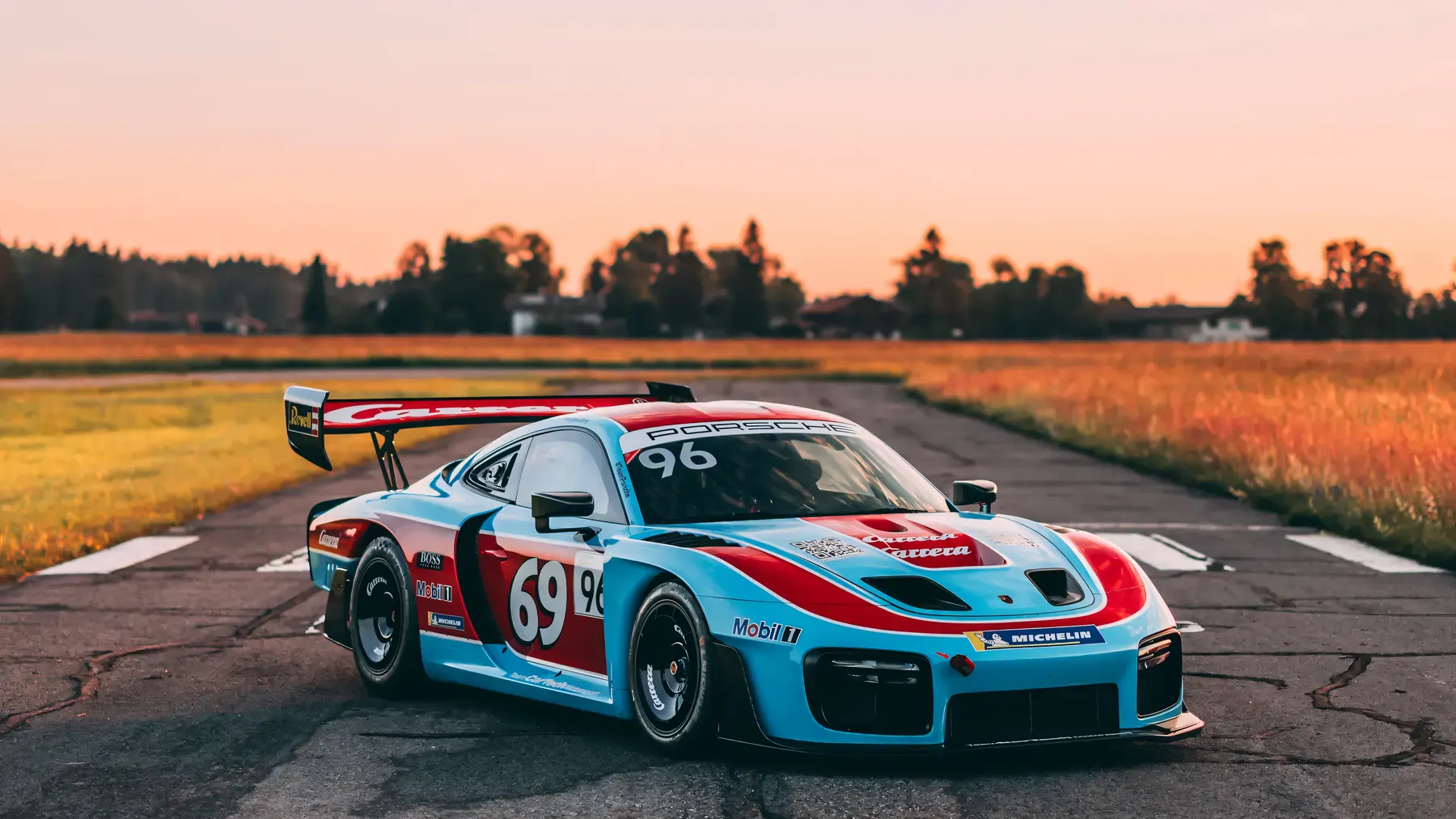
The 935/78 earned its nickname by being white, enormous, and difficult to kill - a whale of a race car that arrived at Le Mans in 1978 more concept than competition, yet finished eighth overall while more conventional machinery around it fragmented under the strain. The following year, a more sorted iteration of the same turbocharged lineage became the first GT-based car to win the 24 Heures de la Sarthe in almost three decades, and the first ever to do so with a rear-mounted engine. That is the specific weight the 935 badge carries. When Porsche announced in 2018 that it would build 77 new examples - the number a deliberate echo of the 935/77 variant - each priced at $829,000 and based on the 991.2-generation GT2 RS Clubsport, it was making an extremely deliberate claim: that four decades on, it had found a machine worthy of picking up that thread.
The context matters, because the original 935 programme was one of the most audaciously successful factory-backed customer racing efforts in history. Introduced in 1976 as Porsche’s answer to the FIA’s Group 5 regulations, the original caught its rivals completely off guard, remaining unbeaten at the Daytona 24 Hours for six consecutive years and at the Sebring 12 Hours for seven. It conquered the World Championship of Makes and spawned more than 50 customer copies for private teams worldwide. The new 935 was born into that shadow, and Weissach’s engineers knew it.
Strictly speaking, the 2019 car shares nothing with Group 5 regulations or the original programme beyond turbocharging and the rear-engine layout. It is a non-homologated, track-only Clubsport model - built for customers who wanted something beyond the already ferocious GT2 RS Clubsport but fancied wearing their motorsport heritage rather more visibly. Priced at $829,000 against the Clubsport’s $478,000, the 935 sits at the apex of Porsche’s customer sport offering, with all 77 examples reportedly spoken for almost immediately after the Paris announcement. When Goodwood’s Andrew Frankel drove the car up the Festival of Speed hill in 2019, he was told that at that price, Porsche could have sold every car ten times over. The lesson seems obvious: when you build a legend correctly, the question of whether anyone will pay for it doesn’t arise.
Under the extravagant bodywork - and it truly is extravagant - the 935 and the GT2 RS Clubsport are mechanically the same machine. Both share the 3.8-litre twin-turbocharged water-cooled flat-six from the road-going GT2 RS, producing 700 horsepower at 7,000 rpm and 750 Nm of torque from just 2,200 rpm. Power flows through a seven-speed PDK gearbox with rigid suspension mounting, driving the rear axle through a racing limited-slip differential. Suspension is MacPherson up front with three-way adjustable racing dampers, multi-link at the rear, and the entire system is calibrated specifically for slick tyres - Michelin Pilot Sport GTs. A full FIA-specification roll cage, six-point harness, Recaro racing seat, 115-litre fuel cell, air jacking system, and dual brake circuits complete the transition from road-derived to genuinely race-ready. Kerb weight lands at approximately 1,380 kilograms - more than 135 kilograms lighter than the street-legal GT2 RS.
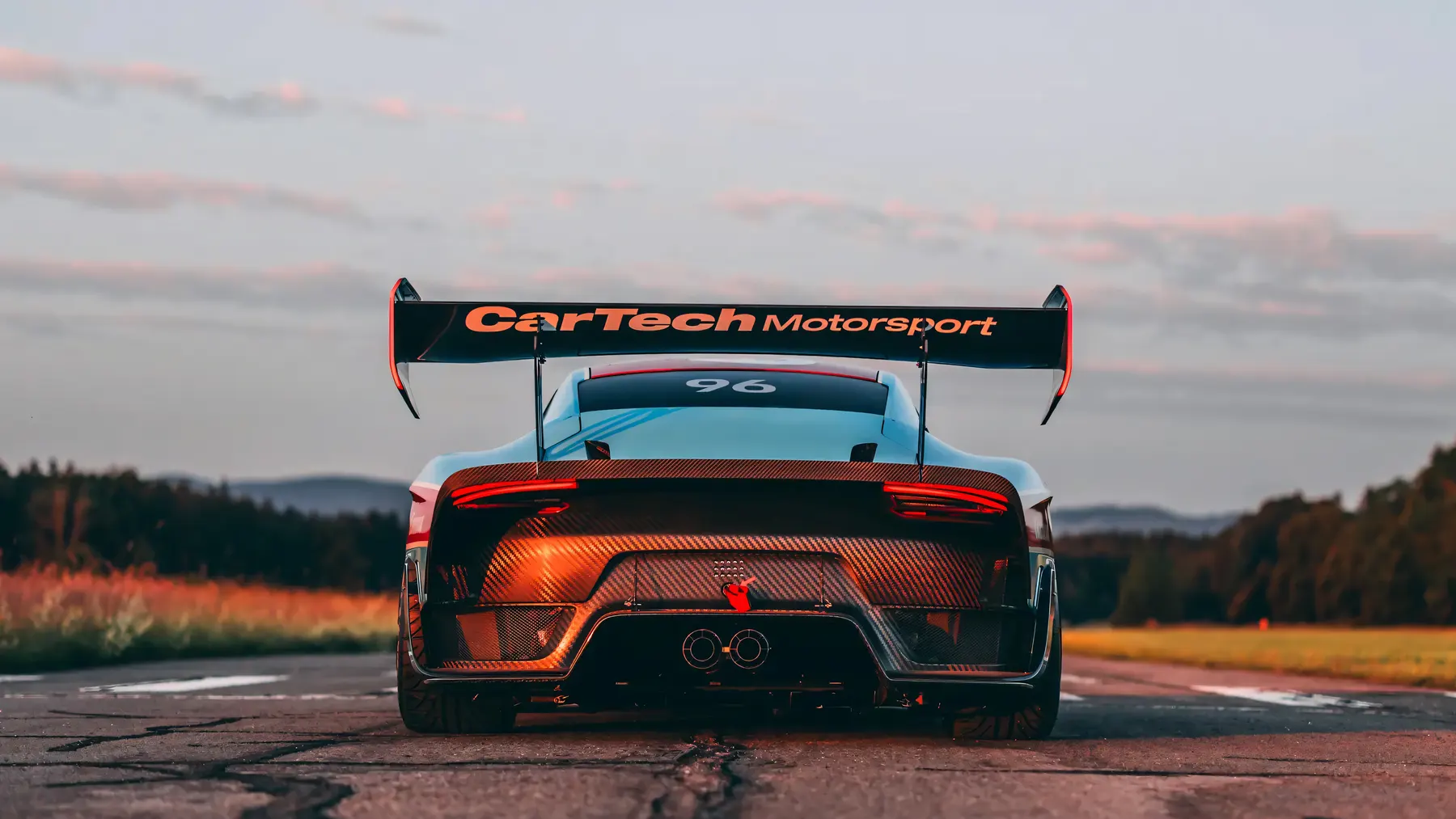
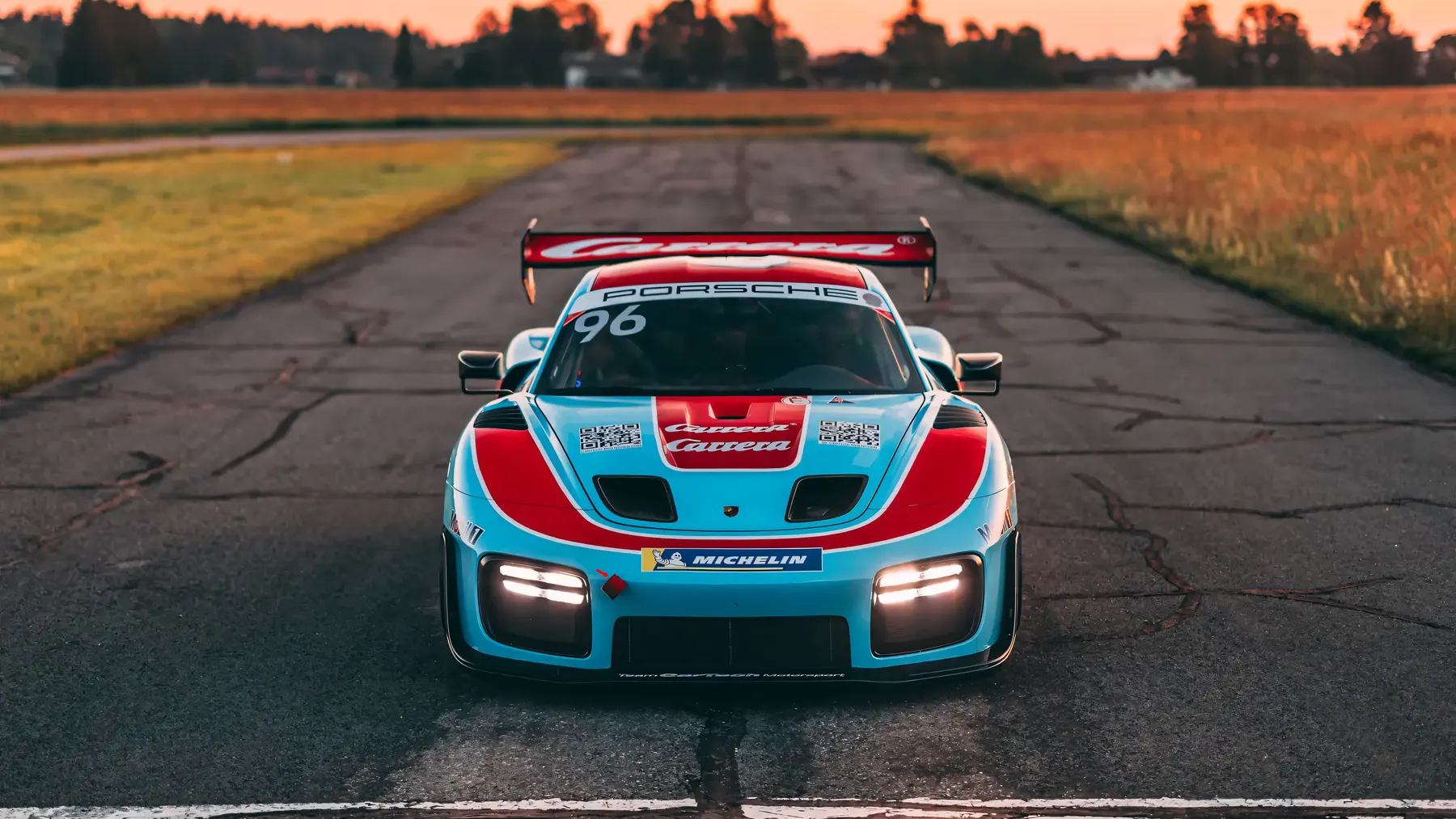
What separates the 935 from its Clubsport sibling beyond the price is the body. Porsche’s designers spent considerable effort recreating the visual grammar of the 935/77 and 935/78, producing a carbon-fibre and Kevlar skin that flares and bulges with aggressive intent. The rear haunches are vast, the long tail echoes the 935/78’s aerodynamic treatment, and a pair of massive adjustable wings dominates the rear perspective. But the detailing is where the 935 becomes genuinely compelling as a design object: the wing mirrors are lifted directly from the 911 RSR endurance racer, the tail lights reference the 919 Hybrid LMP1 car, and the titanium rear exhausts - centrally mounted in a twin-pipe “machine gun” arrangement - are a direct homage to the 1968 Porsche 908. Porsche called these “Heritage Design” elements, but they read more like a love letter written in exhaust pipe geometry. An emergency escape hatch built into the roof completes the picture, a regulatory necessity that also serves as an architectural reminder that this is, beneath the theatre, a serious machine.
On track, the 935 consistently surprises journalists expecting something more brutal. The Car and Driver team, who drove the car at the Lausitzring ahead of customer deliveries, noted that despite the costs, the rarity, and the 700 horsepower, the car is “so reliably trusty that before you know it, you’re pushing much harder than you thought you ever would in things this rare, expensive, and borrowed”. The PSM stability and traction control systems are adjustable rather than intrusive, intervening gently over bumps without creating the sensation of being electronically managed out of all fun. The brakes demand the longest initial adjustment - the pedal requires genuine leg strength and sinks further toward the floor than expected - but once calibrated, they are discussed with near-religious enthusiasm: deep braking zones, massive deceleration, zero fade. Frankel, at Goodwood, noted how the 935 uses the classic 911 technique of relying on rear-axle traction to compensate for mid-corner understeer, something the platform executes with particular authority when 700 horsepower is discharging through fully warmed Michelin slicks.
The genuine innovations deserve acknowledgment. The PDK gearbox, often dismissed in road car contexts as insufficiently involving, reveals its proper character here: ultra-fast, predictably precise under race conditions, and considerably less exposed to driver error than a sequential manual in an unfamiliar machine. The electronic assistance systems make the car accessible enough that a competent but non-professional driver can genuinely deploy its performance without half a day of cautious familiarisation laps. The aerodynamic downforce from those massive wings is also real - functional rather than theatrical - genuinely loading the rear axle at the speeds a properly configured circuit provides.
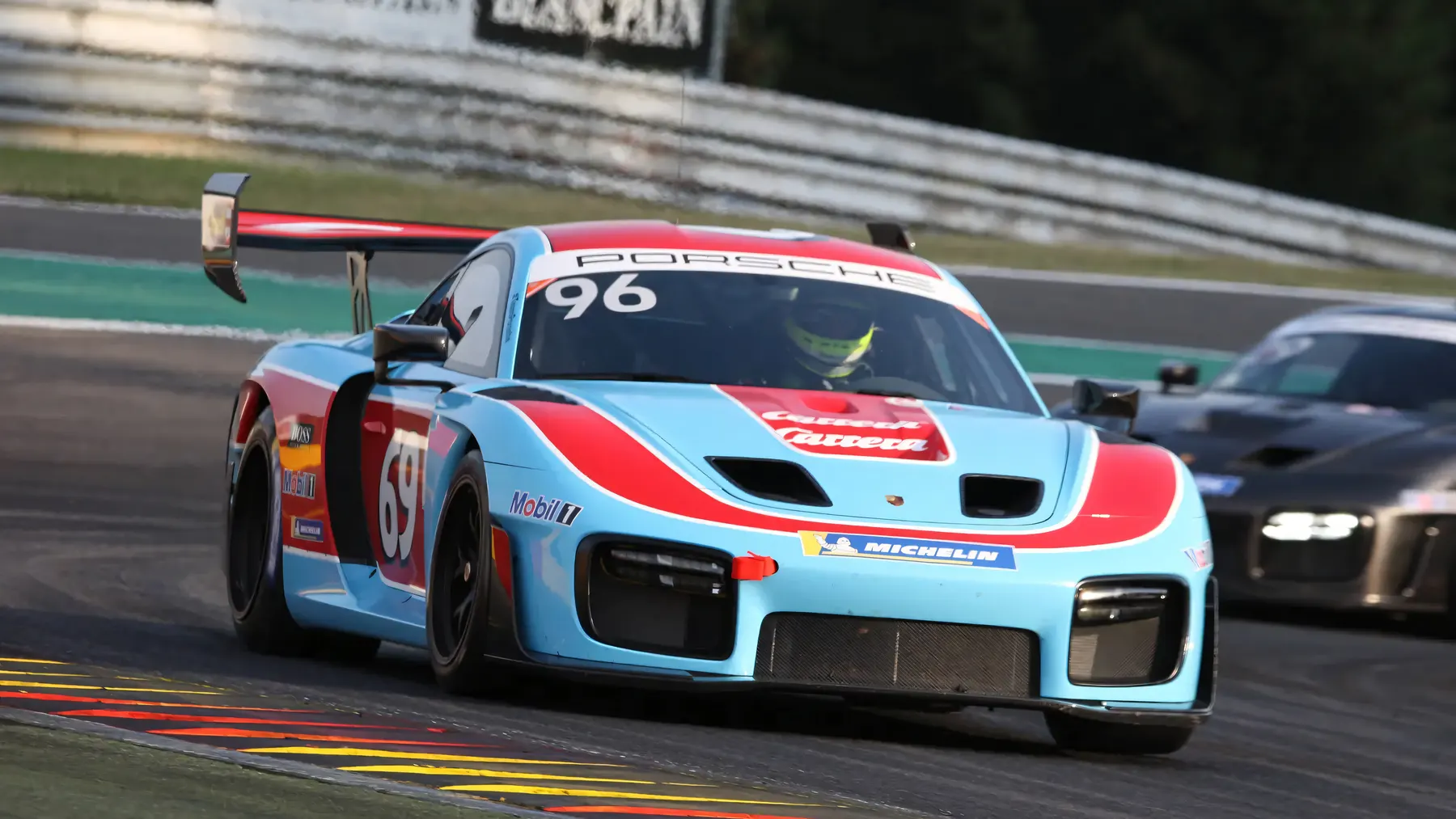
The honest drawbacks, though, deserve equal air time. The 935’s most significant structural weakness is philosophical: it exists in a regulatory vacuum. Unlike the GT2 RS Clubsport, for which Porsche built a corresponding one-make racing series, the 935 has no formal competition home. It cannot participate in any sanctioned championship because Porsche never pursued homologation - not because the car lacks performance, but because the project was positioned elsewhere. Three examples did compete at the Spa-Francorchamps GT2 Supersportscar Weekend in July 2019, demonstrating that the car can race where promoters accommodate it. But for most owners, this is a machine whose natural habitat is a rolling track day rather than a grid start - glorious, certainly, but faintly melancholy given the racing DNA being consciously invoked. The $351,000 premium over the GT2 RS Clubsport buys exactly the body, because the two cars are mechanically identical beneath the skin. The body is magnificent, and it does provide genuine aerodynamic function, but some portion of that premium is being charged for heritage and visual drama rather than lap time. There is also the matter of turbo lag at lower revs - a characteristic acknowledged in Porsche’s own technical documentation - which means the 935 doesn’t deliver the linear, immediate thrust of some naturally aspirated rivals.
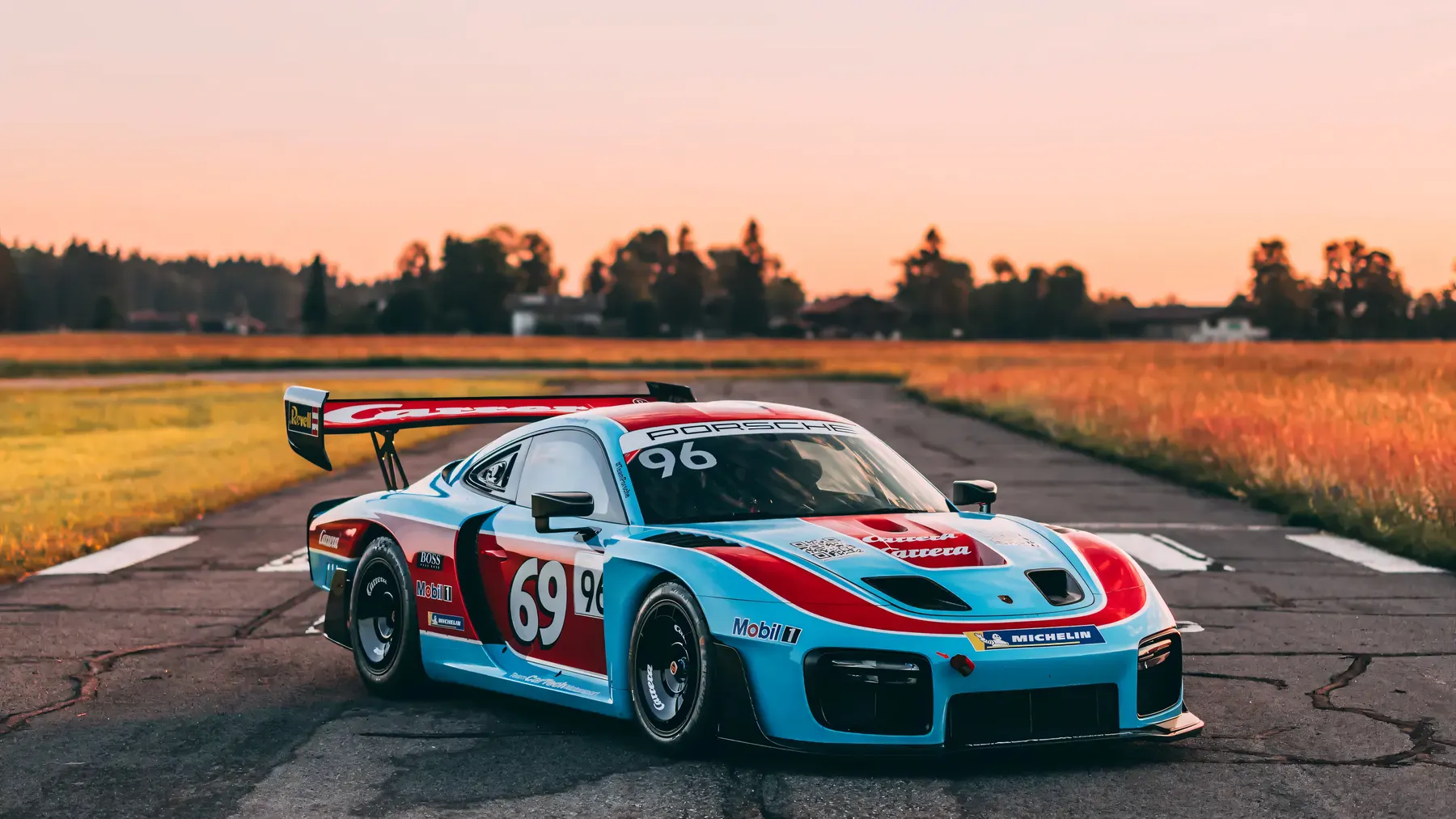
None of this diminishes what the 935 represents culturally. For Porsche, the 2018 announcement served double duty: marking the company’s 70th anniversary while canonising the original 935’s place in motorsport history. The fact that Porsche chose the 935 specifically - rather than the 917, the 956, or the 962 - says something deliberate about which era the company regards as most viscerally connected to its core identity. The original programme was customer racing in its most expansive form: factory cars raced by privateers, technology trickling from Weissach into the hands of ambitious gentlemen competitors. The new car can’t fully replicate that model, but it acknowledges it honestly.
Critical reception was warm bordering on enraptured, with near-universal praise for the combination of driving accessibility and visual drama. Top Gear noted that the £750,000 asking price was simultaneously impossible to justify and impossible to argue with. The consensus across major automotive publications held that the 935 delivers exactly what Porsche promises - a proper racing machine, beautifully presented - without misrepresenting its competitive limitations. The irony that the original 935/78 “Moby Dick” produced well over 840 horsepower in full race configuration, against this car’s 700, was noted with amusement rather than criticism; the new car makes no claim to being a technical development of its predecessor, only a respectful descendant.
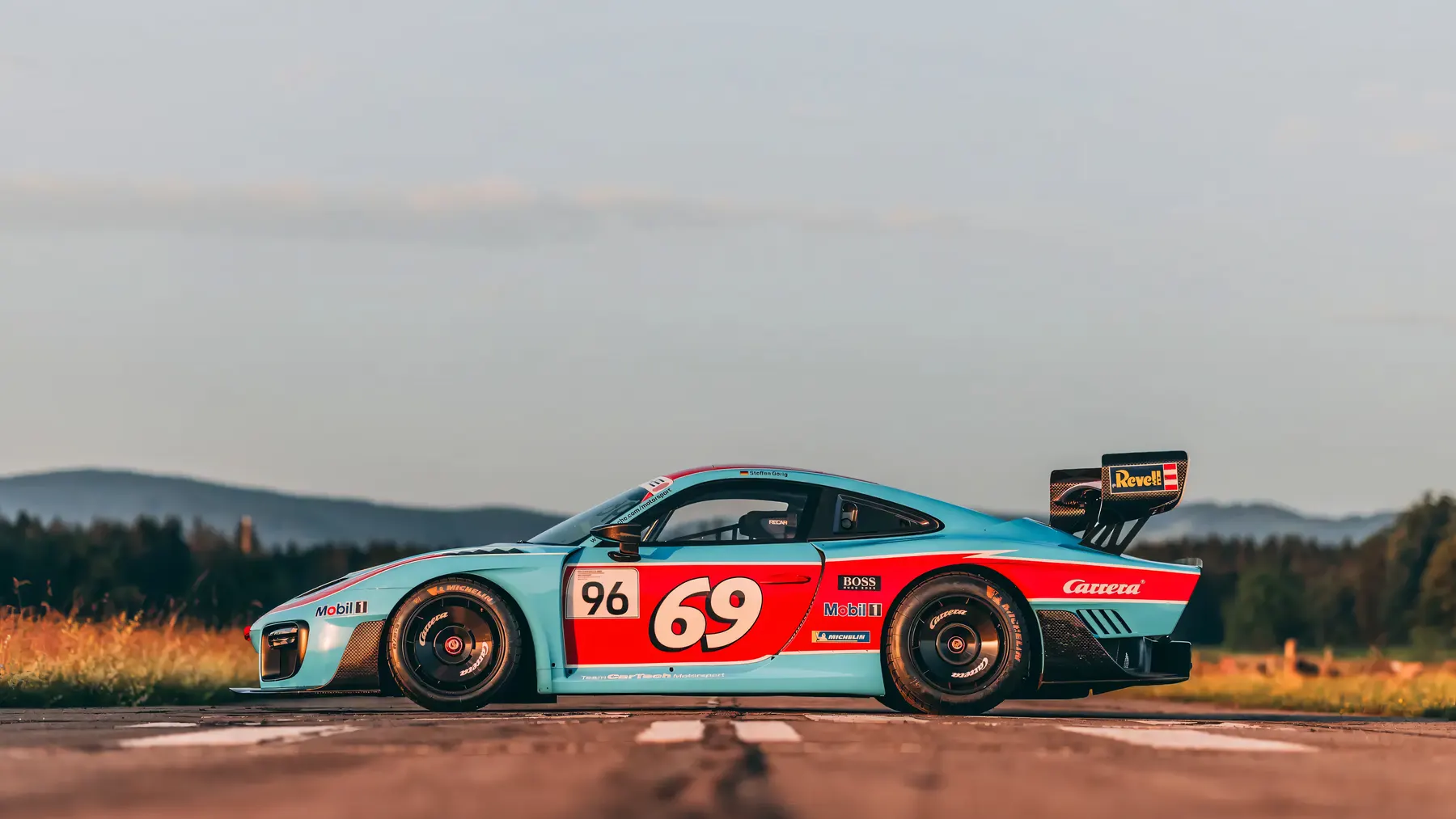
The 935 ends where it began: as an act of remembrance that happens to also function as a genuine driving machine. Porsche could have built a show car, a museum piece, or a limited-edition road car. Instead, it built something that requires slick tyres, a helmet, and a circuit - precisely the right answer for a name that earned its immortality at Daytona, Sebring, and La Sarthe. The 935/78 was a white whale that consumed its pursuers. The 2019 car is something more considered: a love letter in carbon fibre, written at 340 kilometres per hour.