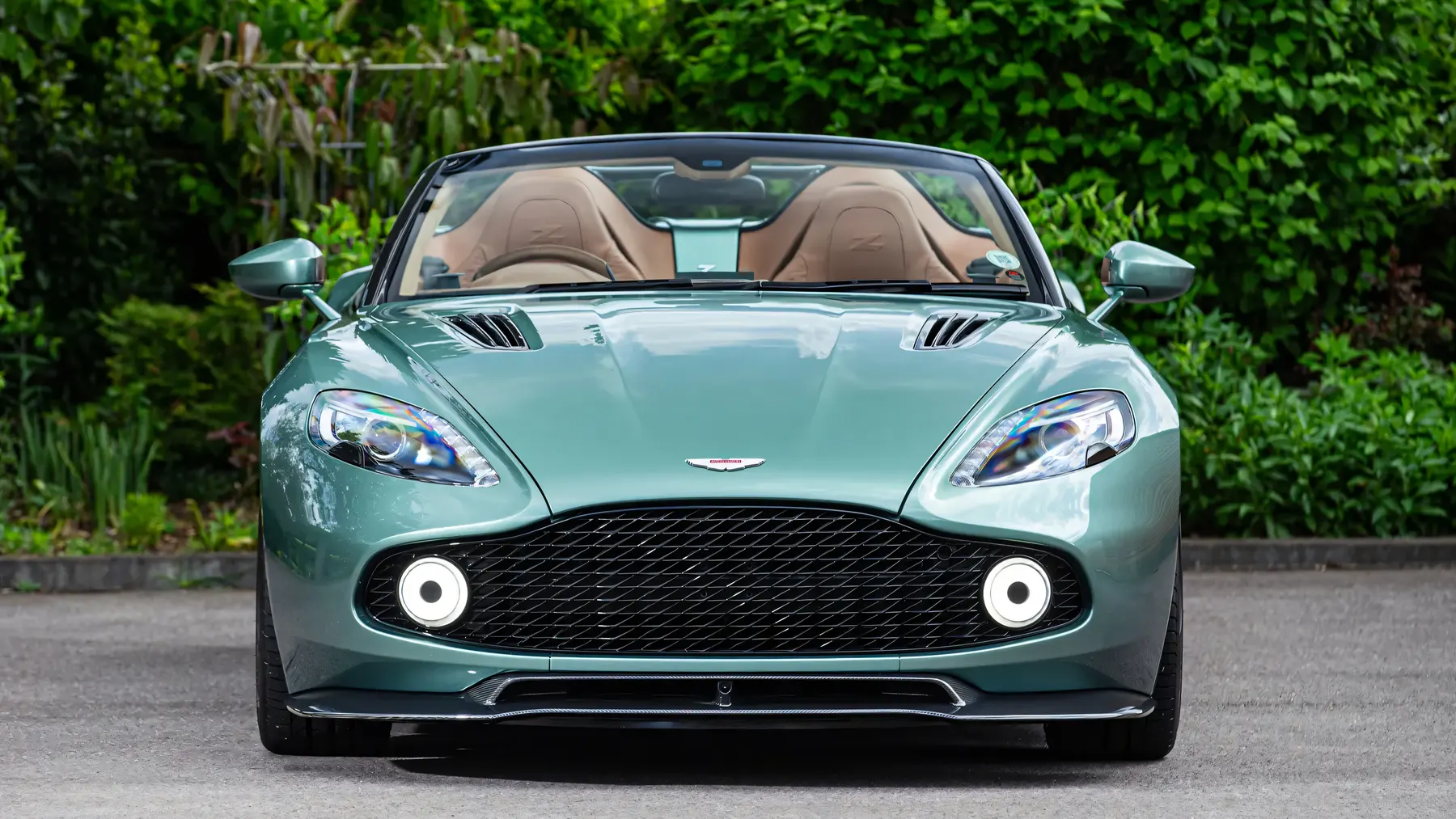
2018 Aston Martin Vanquish Zagato Speedster
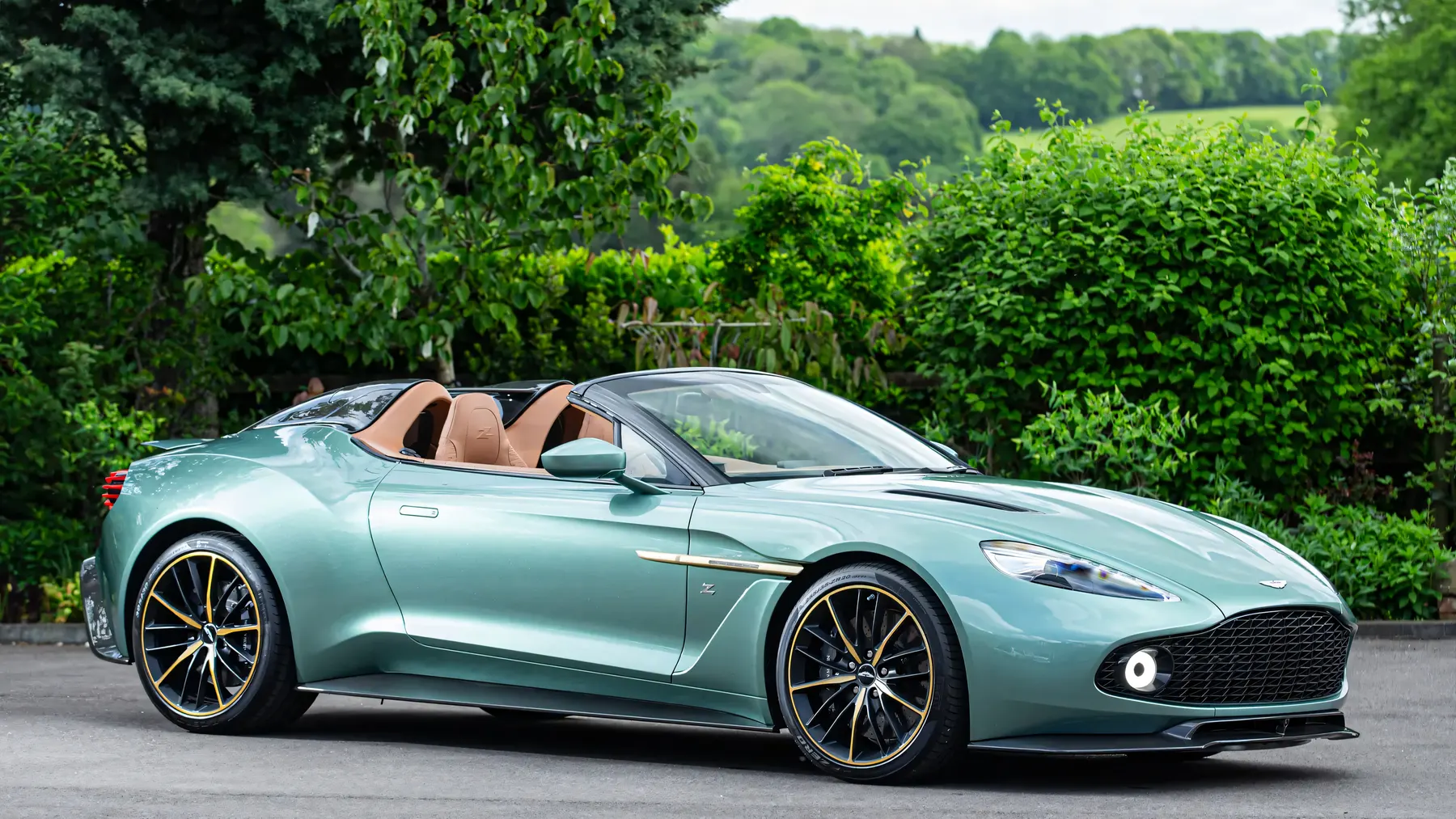
Twenty-eight. That is the entire global production run of the Aston Martin Vanquish Zagato Speedster - and every last one was committed to a buyer before a single carbon fibre panel had been laid up, let alone delivered. In an era when manufacturers shamelessly deploy “limited edition” as a marketing shorthand for mild colour updates, the Speedster’s instantaneous sell-out feels genuinely, almost defiantly, earned.
The roots of this particular creation run far deeper than the mid-2010s moment that conjured it into existence. the Aston Martin and Zagato relationship was hatched as far back as 1960, when the DB4 GT Zagato debuted at the London Motor Show wearing Ercole Spada’s lighter, more aerodynamic aluminium coachwork - a collaboration born of competitive need and elevated by aesthetic genius. Only 19 original examples were built, and the car’s racing career, which saw it circulate circuits like Goodwood in the hands of legends including Sir Stirling Moss and Jim Clark, forged a mythological reputation that both companies have been drawing on - carefully, selectively, and mostly wisely - ever since. The Vanquish Zagato family represents the most structurally ambitious expression of that legacy: a four-body-style programme conceived in partnership between Aston’s design chief Marek Reichman and Andrea Zagato, grandson of company founder Ugo, lending the collaboration an almost dynastic character.
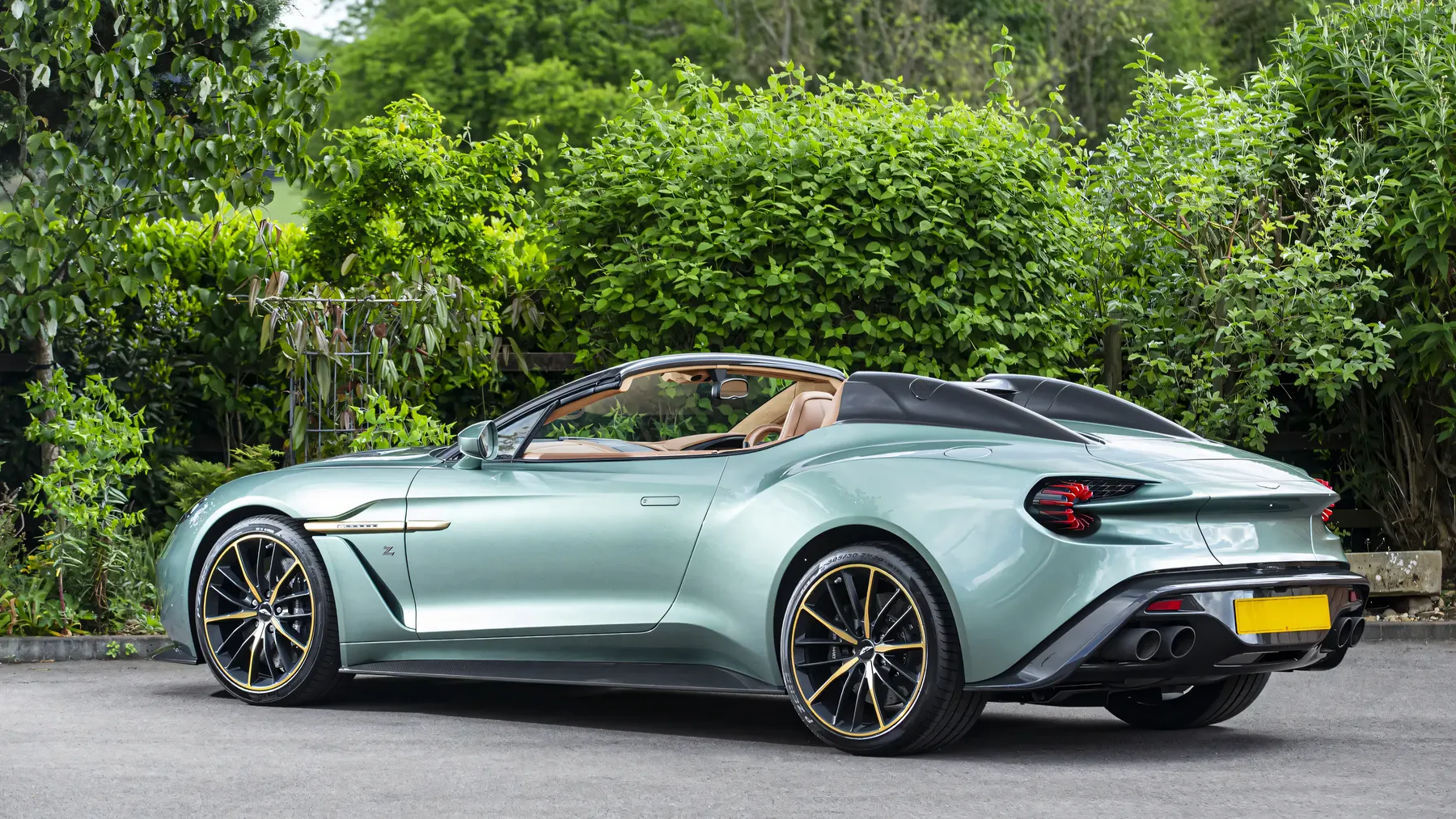
The concept version of the Vanquish Zagato made its public bow at the Concorso d’Eleganza Villa d’Este on Lake Como in May 2016, which for a car of this temperament feels almost too perfectly scripted. From there, the coupé and Volante arrived with production runs of 99 units each, and the programme seemed complete. Then, in August 2016, Aston Martin announced two further variants: the Shooting Brake - an elegantly improbable carbon fibre estate that extended the roof into a powered tailgate - and the Speedster, which dispensed with a roof entirely. The Speedster was unveiled to the world at the 2017 Pebble Beach Concours d’Elegance in California, a venue that underscores exactly what kind of car this is. At just 28 units, compared to 99 apiece for the coupé, Volante, and Shooting Brake, it sat at the extreme tip of a 325-car pyramid already defined by rarity. Marek Reichman was direct about the intent: “We want Zagato to remain something very special. We’re creating collectibles, future concours cars.”
All four body styles share the underpinnings of the Vanquish S, which means a front-mid mounted, all-alloy, quad-cam 5,935cc naturally aspirated V12 producing 592 brake horsepower and 465 lb ft of torque, fed through the third-generation Touchtronic paddle-shift automatic - an eight-speed unit that replaced the earlier six-speed from 2014 onwards. On paper, 592bhp through rear wheels in a roughly 1,739kg grand tourer delivers a 0–62mph sprint of around 3.5 seconds and a claimed top speed of 201mph. What the numbers cannot convey is the texture of that V12 at full chat: naturally aspirated, quad-cam, free-breathing and utterly without the synthetic interference of forced induction, it builds to a note that the evo magazine test described as “gloriously raucous” and deliberately louder than the standard Vanquish’s exhaust would ever be allowed to be in series production. It is the sort of engine that justifies its own existence on acoustic grounds alone.
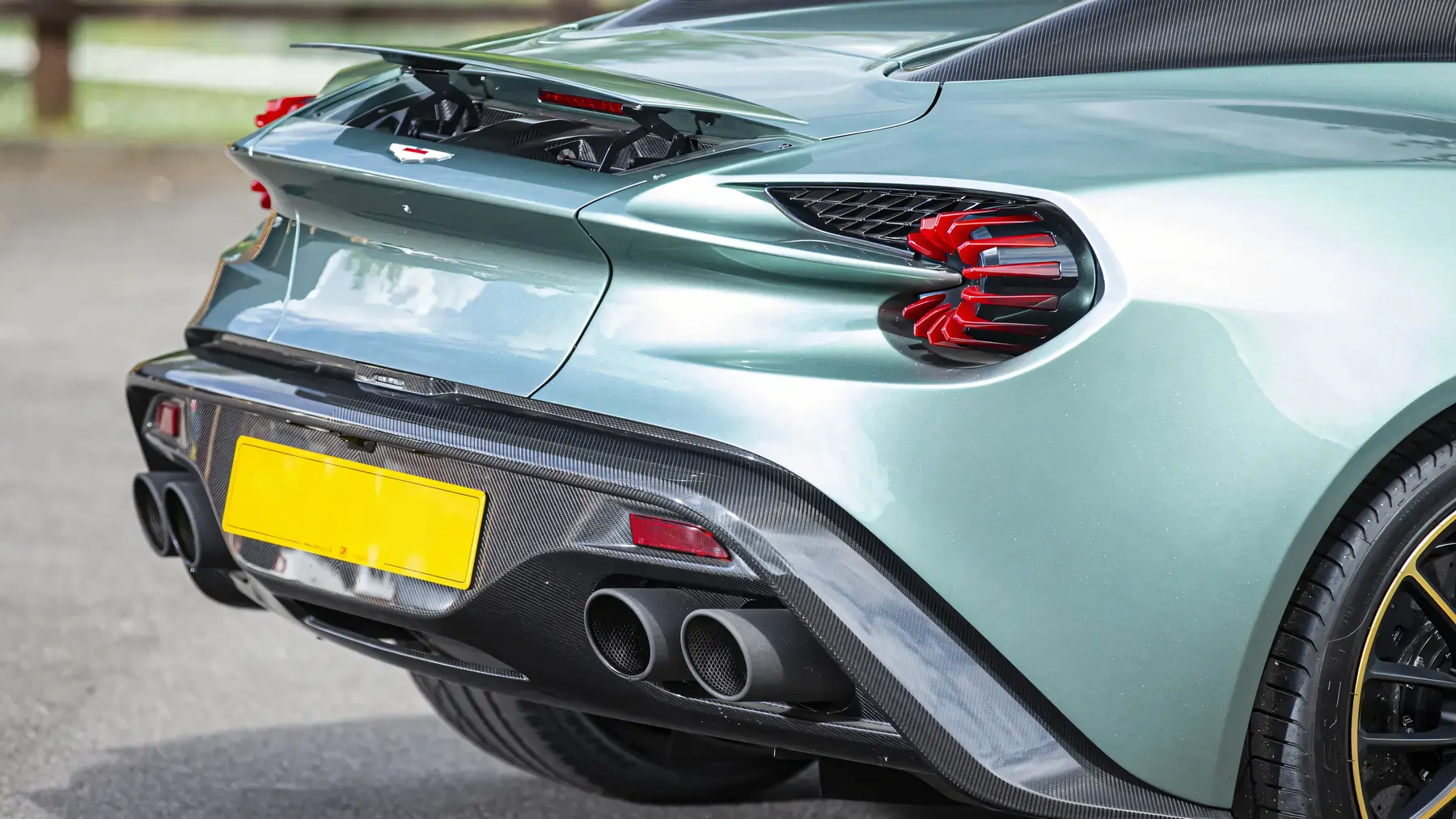
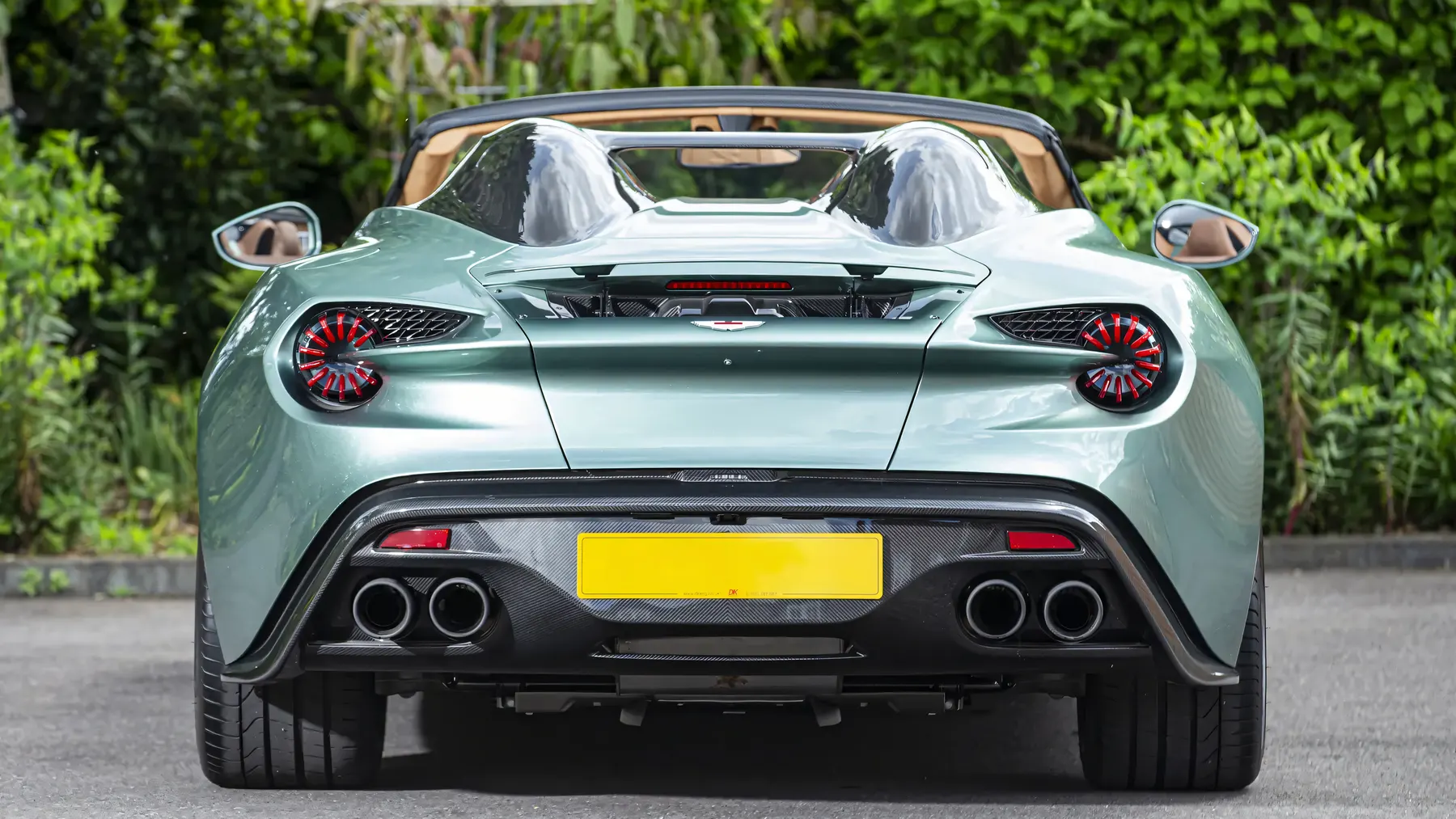
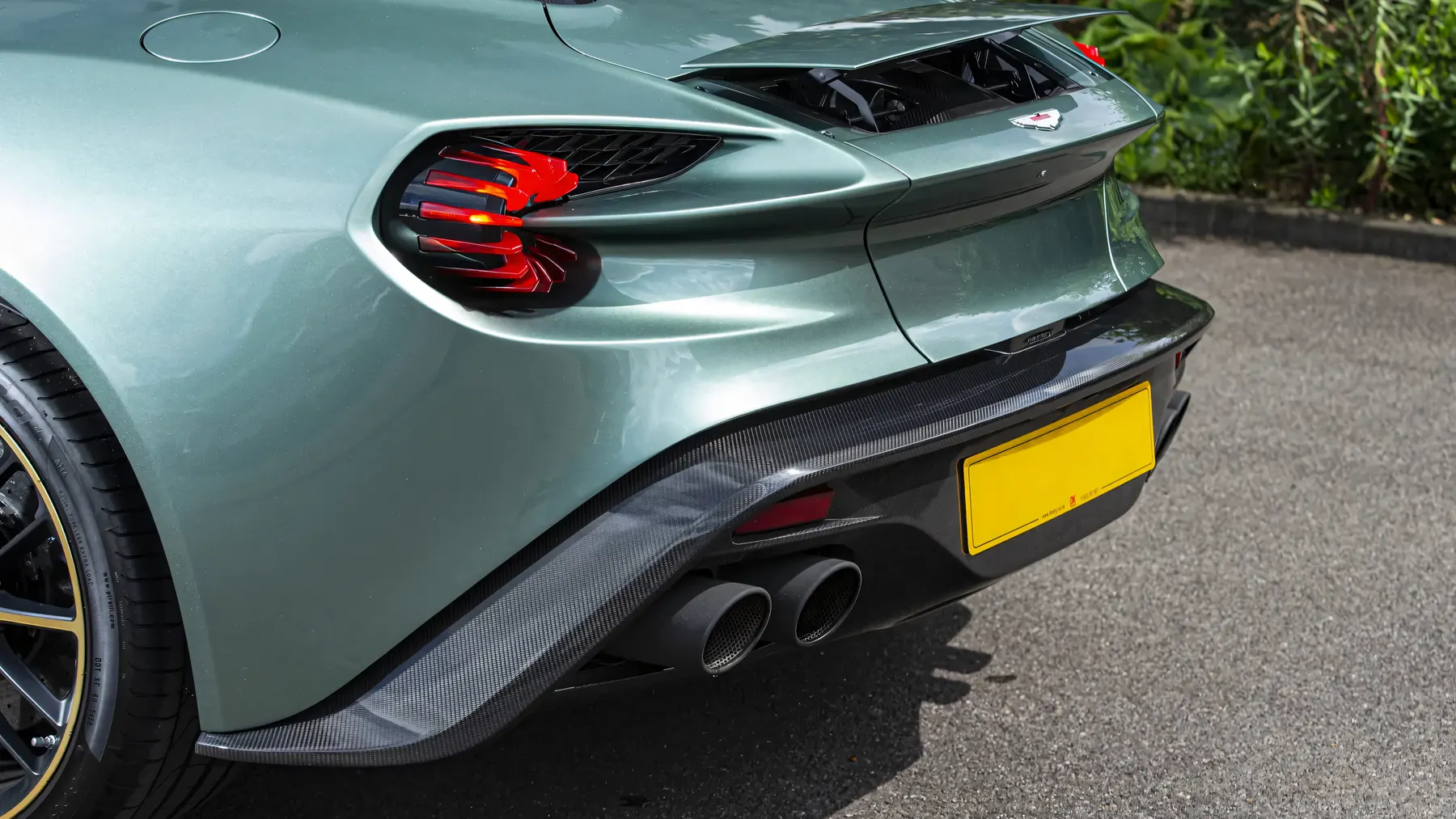
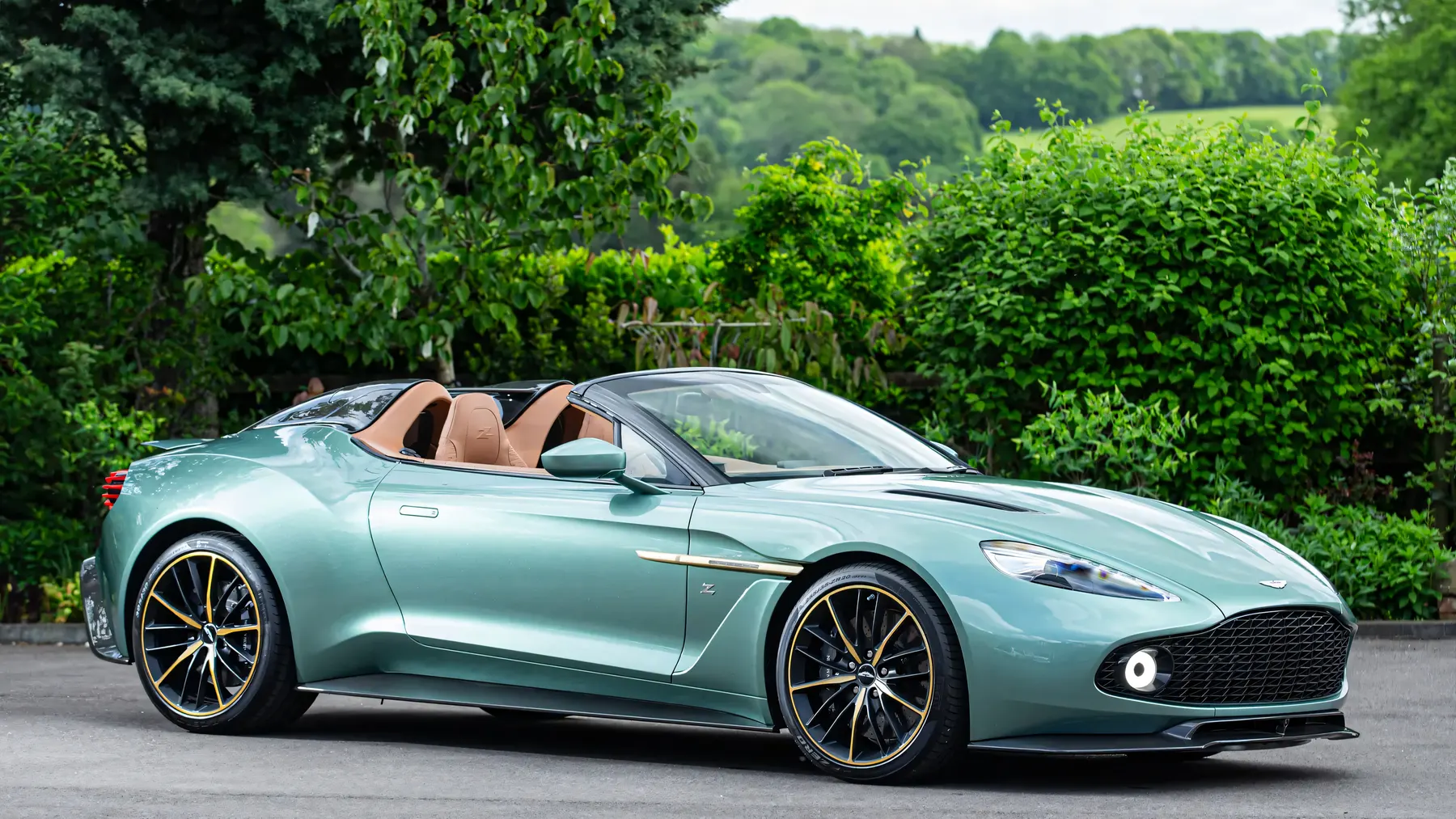
All body panels on the Speedster are constructed from carbon fibre - a distinction shared across the Zagato family but felt most acutely here, where the visual drama of the material is completely unmediated by glass or steel. The defining feature of the Speedster’s silhouette is the pair of “Speed Humps” that rise behind each occupant: tall, streamlined cowls that flow back from the seat line with just enough sculptural authority to prevent the car reading as an amputated coupé. They are, unmistakably, Zagato’s celebrated double-bubble roof signature reinterpreted for a car without a roof - a neat piece of design logic that keeps the Italian house’s visual DNA intact even in its most extreme open-top form. The tail is punctuated by blade-style rear lights lifted directly from the Aston Martin Vulcan track car, while three-dimensional “Z” motifs are pressed into both the front grille mesh and the rear vent inserts, threading a single stylistic narrative across the entire car. It is a vocabulary of details - exacting, assured, and recognisably the product of two design cultures in genuine conversation rather than polite compromise.
On the road, the Vanquish Zagato drives with a directness that the standard Vanquish does not always suggest it should be capable of. The suspension is tuned slightly firmer than the Vanquish S - just enough to communicate intent without brutality - and the steering, beautifully weighted and alive around the straight-ahead, gives the driver a sense of the car’s mass shifting and its balance evolving through a corner. The evo reviewer who drove the Zagato coupé noted that it felt “almost as though the suspension has all been rose-jointed, such is the sense of connection” with tyre loading and chassis behaviour. For the Speedster, with even less structure above the waistline, that communication is presumably more immediate still - though complete open-air rigidity testing is not something any owner has publicly documented in detail, and torsional stiffness without a roof or even a conventional windscreen frame is always a variable to consider. Aston Martin relied on the VH platform’s inherent carbon fibre subframe and substantial cross-member to hold the structure together, and by all accounts it holds up respectably in practice.
What the Speedster does with absolute conviction is deliver an experience that is at once visceral and refined - the specific trick that Aston Martins at their best have always managed. The V12 fills any silence, the carbonfibre tub transmits texture without harshness, and the Touchtronic III shifts with enough speed to feel modern without banishing the sensation that a human being is participating in the process. The car also feels smaller than its dimensions suggest, with the long bonnet easier to place than expected and a balance that rewards progressive commitment rather than punishing it.
There are, however, real and honest compromises embedded in the Speedster’s character. The VH platform, for all its qualities, was already a familiar architecture by the time the Zagato variants arrived - Mike Duff of Car and Driver wrote that the standard Vanquish S contained plenty of technology you would find on “a mainstream car costing a tenth of the price just isn’t there,” pointing to the limits of what the platform could offer at its price point. Without a roof, weather protection depends entirely on the driver’s tolerance for improvisation. The Speedster has no conventional hood mechanism; it is, categorically, a fair-weather machine, a car that asks you to check the forecast before leaving the garage. This is not a criticism of the car’s engineering so much as an honest statement of its character, but any prospective owner should understand that the Speedster is more sculpture than daily tool. The ageing naturally aspirated V12, for all its sublime sound, was also beginning to look environmentally embattled compared to the turbocharged alternatives arriving elsewhere in the market during this period - a tension that Aston Martin would resolve only with subsequent model generations.
The Speedster arrived at a specific moment in Aston Martin’s corporate history - a time when the company was mining its own heritage very deliberately to sustain commercial momentum and reinforce its collectible credentials. That the four-variant Zagato programme totalling just 325 cars could generate the kind of attention and pre-commitment that it did speaks to the enduring strength of the Aston-Zagato identity as a cultural asset. The Speedster, as the rarest member of the family, sits at the convergence of several significant narratives: the six-decade partnership between two of the automotive world’s great design cultures, the final flowering of the second-generation Vanquish platform before the DBS Superleggera took over in 2018, and the dying days of the great naturally aspirated V12 as an unreconstructed, unapologetically inefficient expression of what a performance engine should feel like.
Critical reception was broadly enthusiastic, weighted predictably towards the visual impact and the acoustic experience. Jeremy Clarkson, reviewing the standard Vanquish S, captured the essential character when he described the car as “flowing and smooth when you want it to be, raucous and mad when you don’t, and utterly, bewitchingly beautiful always” - a verdict that applies with even greater intensity to the Speedster’s more extreme form. The academic objections - the dated technology, the platform’s age, the limited practicality - were real but largely irrelevant to the people buying these cars, because practicality was never the point. The Speedster was, from first sketch to final delivery, a statement object, a car built to commemorate a relationship and to create the kind of artefact that rewards being looked at from across a concours lawn as much as being driven with genuine verve.
Whether 28 was the right number is almost philosophical. Fewer, and the project becomes a one-off curio; more, and the exclusivity that defines its meaning begins to dissolve. At 28, the Vanquish Zagato Speedster occupies a careful, credible position: rare enough to matter, produced in sufficient numbers to constitute a genuine model rather than a prototype. It is the purest expression of the Zagato idea in its modern Aston Martin form - a car that carries its lineage visibly, drives with honest conviction, and will, in all likelihood, be studied on concours lawns long after most of the cars announced alongside it have been forgotten entirely.
Related Notes
- 2018 Aston Martin Vanquish Zagato Volante
- 1989 Aston Martin V8 Vantage Volante ‘X-Pack’
- 1965 Aston Martin DB5 Convertible
- Italian Coachbuilding Houses
- Modern Materials Carbon Fiber and Aluminum
- Aston Martin Q by AM Personalization Program
- Aston Martin DB Vantage