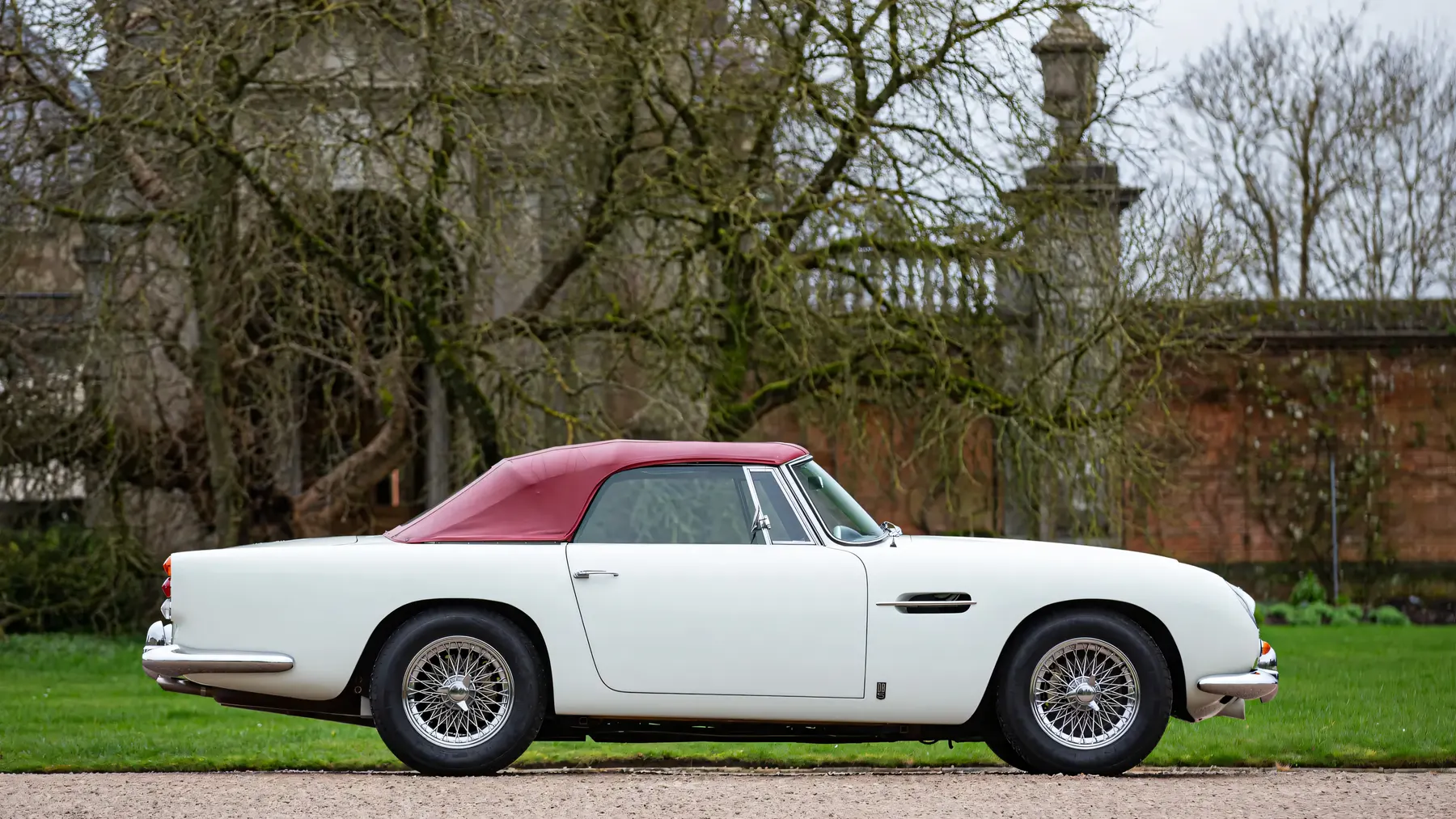
1965 Aston Martin DB5 Convertible
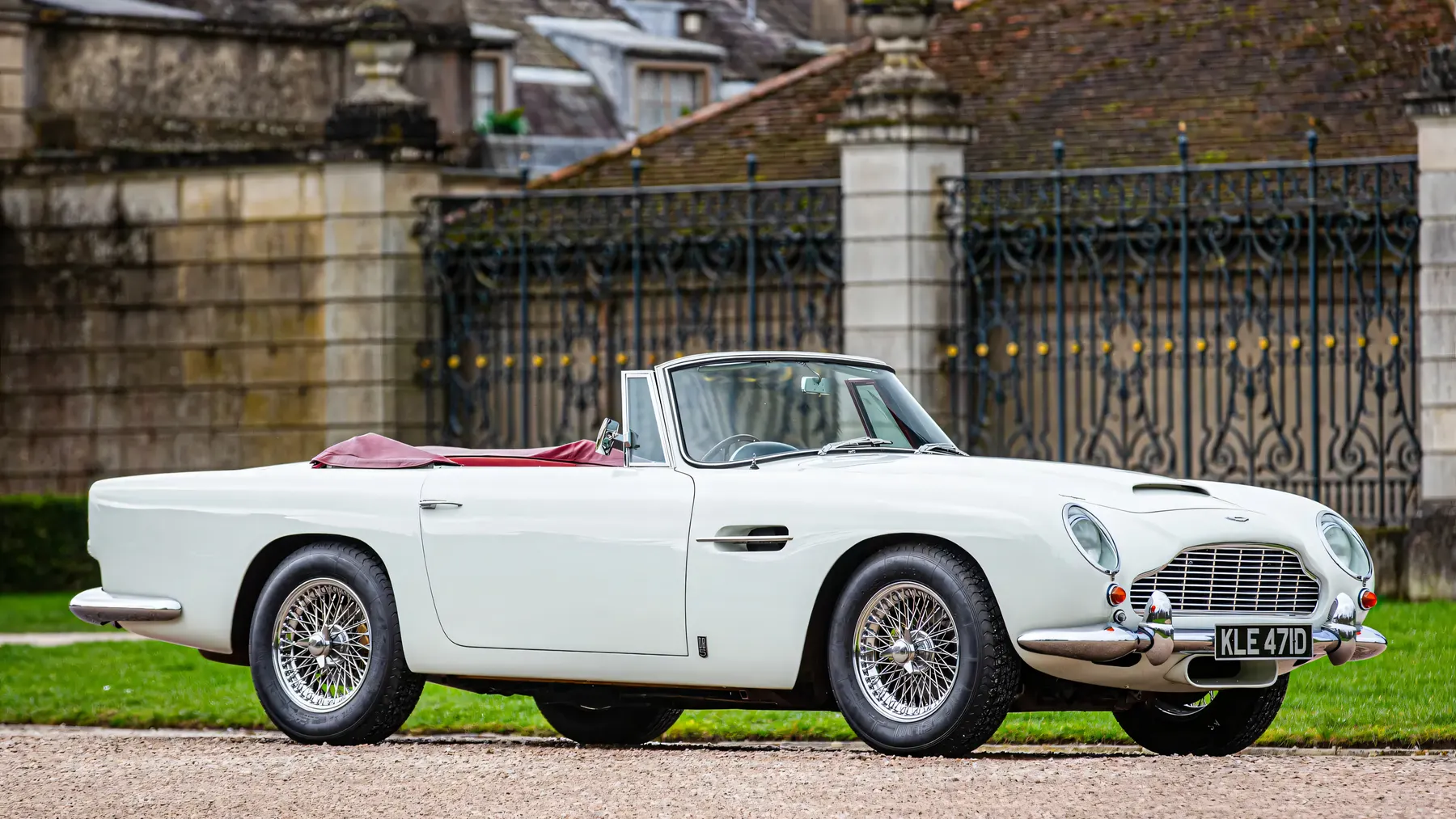
The open car occupied the summit of the DB5 range throughout its production life, offered without the “Volante” designation - that name would arrive only with the subsequent Short Chassis Volante of 1965-66, which was built on DB5 underpinnings but wore DB6 split bumpers and Triumph TR4 rear lights. Of the 123 DB5 Convertibles produced, just 19 were left-hand drive, making the right-hand-drive variant overwhelmingly dominant with 85 examples. Twelve cars were factory-fitted with the Vantage engine, which pushed output to 314bhp and elevated the top speed beyond 150mph, while at least one further example received a factory DB6-specification Vantage unit - rare configurations that collectors have always regarded with particular covetousness. The DB5 Convertible is therefore the original open Aston: elemental, unadorned, and all the more compelling for it.
The engineering foundation was exceptional from the outset. Touring of Milan’s Superleggera construction method - a lightweight network of small-diameter steel tubes over which aluminium-alloy body panels were draped and fixed - gave the car its structure without the mass that conventional steel construction would have demanded. The heart of the matter was the all-aluminium 4.0-litre straight-six, enlarged from the DB4’s 3.7 litres by boring out to 96mm, and fed by three SU carburettors breathing through a twin-cam head to produce 282bhp at 5,500rpm and 288lb-ft of torque at 3,850rpm. The ZF five-speed gearbox - which progressively replaced the original David Brown four-speeder during the production run before becoming standard fitment - was considered a revelation in period, offering a mechanical precision that matched the car’s Grand Touring ambitions. A Borg-Warner three-speed automatic was available for those disinclined to row their own, and Girling disc brakes on all four corners were carried over from the DB4 GT, a genuine performance credential.
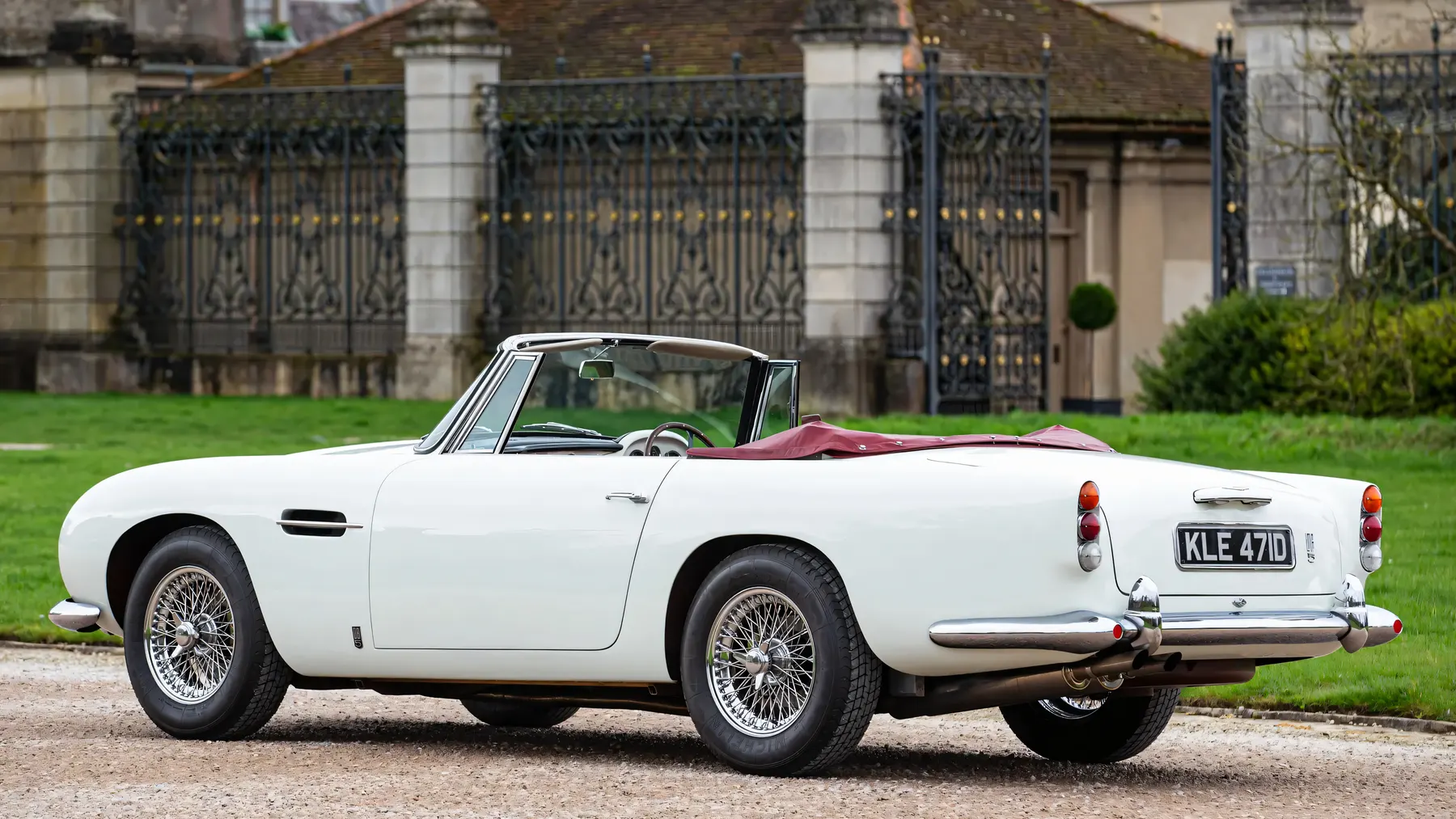
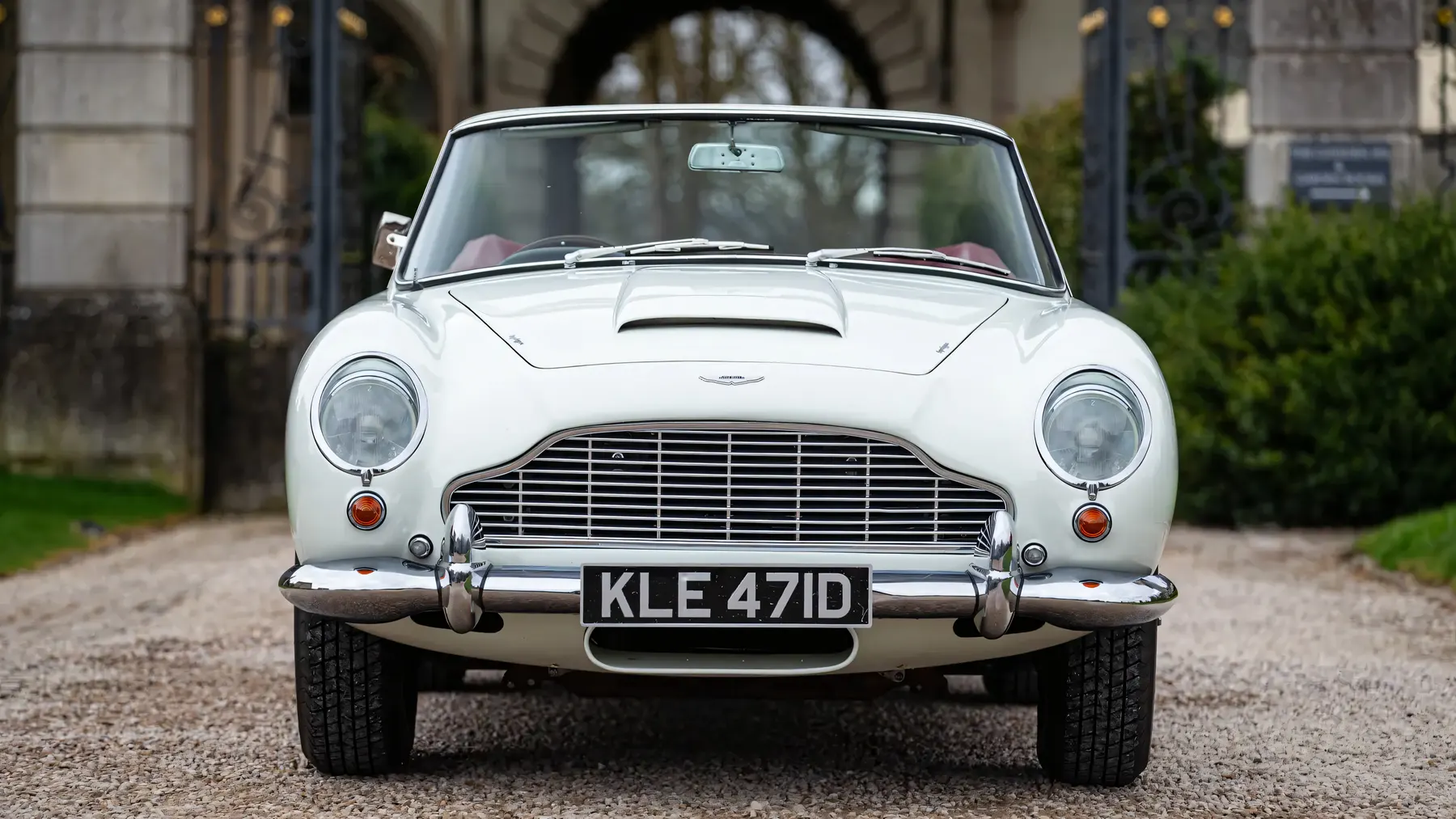
Visually, the DB5 Convertible is the product of Touring’s stylists working in productive alignment with Aston Martin’s own sensibilities, and the result is a shape that occupies a timeless middle ground - neither dated nor self-consciously nostalgic. The faired-in headlamps, the clean flanks unmarked by unnecessary decoration, the gently tapering profile that on the Convertible simply ceases to exist when the hood is stowed - it all coheres with an unhurried confidence. Standard specification included full Connolly leather trim, wool-pile carpets, electric windows, reclining seats, chrome wire wheels, twin fuel tanks, oil cooler, and a fire extinguisher - the latter detail suggesting Newport Pagnell held a pragmatic view of what spirited ownership might involve.
Behind the wheel, the DB5 Convertible demands a recalibration of expectations and then immediately rewards them. The seating position is both commanding and, by modern standards, mildly comedic - high, close to the wheel, in a cockpit that prioritised elegance over ergonomic science. Turn the key and the triple-carb straight-six settles immediately into a purposeful idle; wind past 3,000rpm and the note develops into something genuinely magnificent - layered, analogue, entirely unreproducible by any synthesised soundtrack. The brakes require commitment rather than modulation - a meaningful shove rather than a light touch. The live rear axle, inherited from the DB4 era and shared with the saloon, means that corners must be approached with respect rather than aggression, the rear occasionally asserting itself on imperfect surfaces. This is not a car that forgives inattention, but it absolutely rewards engagement.
The strengths are numerous and genuine. The engine’s character - that specific combination of torque spread, exhaust note, and mechanical feel through the throttle - is the sort of experience that explains why serious money continues to exchange hands for sixty-year-old machinery. The Superleggera construction gave the DB5 a structural efficiency and weight consciousness that many contemporaries couldn’t match. In Convertible form, the car adds something more: the sensory completeness of hearing that straight-six without the intermediary filter of a roof, feeling the ambient temperature shift through a mountain pass, experiencing the grand tour as Touring of Milan surely intended it. In this context, the Convertible is not merely a variant - it is the most direct argument for why the DB5 exists at all.
The compromises, however, are real and should be stated plainly. The live rear axle is the most persistent engineering criticism directed at the car - independent rear suspension was achievable at Newport Pagnell in this period, and its absence makes the DB5 a less sophisticated handler than its price and legend might imply. The 0-60 sprint in approximately eight seconds was respectable for 1963 but never startling, and the 145mph top speed was more frequently encountered on paper than in practice. Interior room for rear occupants is notional. And maintaining a DB5 Convertible to the standard its rarity demands is an exercise in sustained financial commitment - parts availability, specialist knowledge, and the inherent complexity of Superleggera bodywork mean that ownership is never a casual arrangement.]
None of which has dimmed the DB5’s cultural luminosity. In 2013, the Royal Mail placed the car on a “British Auto Legends” commemorative postage stamp - a distinction that speaks to the depth of the model’s penetration into national identity. Aston Martin itself returned to the nameplate in 2020, commissioning 25 continuation DB5 saloons built at Newport Pagnell, each fitted with functional Bond gadgetry developed alongside Goldfinger’s special effects supervisor Chris Corbould OBE - and each carrying a price of approximately £3.3 million. The Convertible, meanwhile, has continued to appreciate beyond even the saloon, with the finest examples commanding values that reflect both their scarcity and their irreplaceable character.
Critical reception, across both original period road tests and modern retrospectives, has been largely reverential - occasionally to a fault. Autocar’s assessments in period praised the engine and gearbox while acknowledging the handling limitations of the rear axle, a balanced verdict that neither time nor sentiment has revised. Modern evaluators invariably note the physical engagement the car demands: brakes that want a genuine push, a gearchange that rewards deliberate inputs, steering that communicates without electronic interpretation. The sensation, as one period-familiar road tester described it, is of a car that “heaves a bit in the corners” but one through which “you can feel everything that’s going on” - an honest summary that captures both the limitation and the magic simultaneously.
Related Notes
- 2018 Aston Martin Vanquish Zagato Speedster
- 2018 Aston Martin Vanquish Zagato Volante
- 1989 Aston Martin V8 Vantage Volante ‘X-Pack’
- Italian Coachbuilding Houses
- 1960 Maserati 3500 GT by Touring
- Modern Materials Carbon Fiber and Aluminum