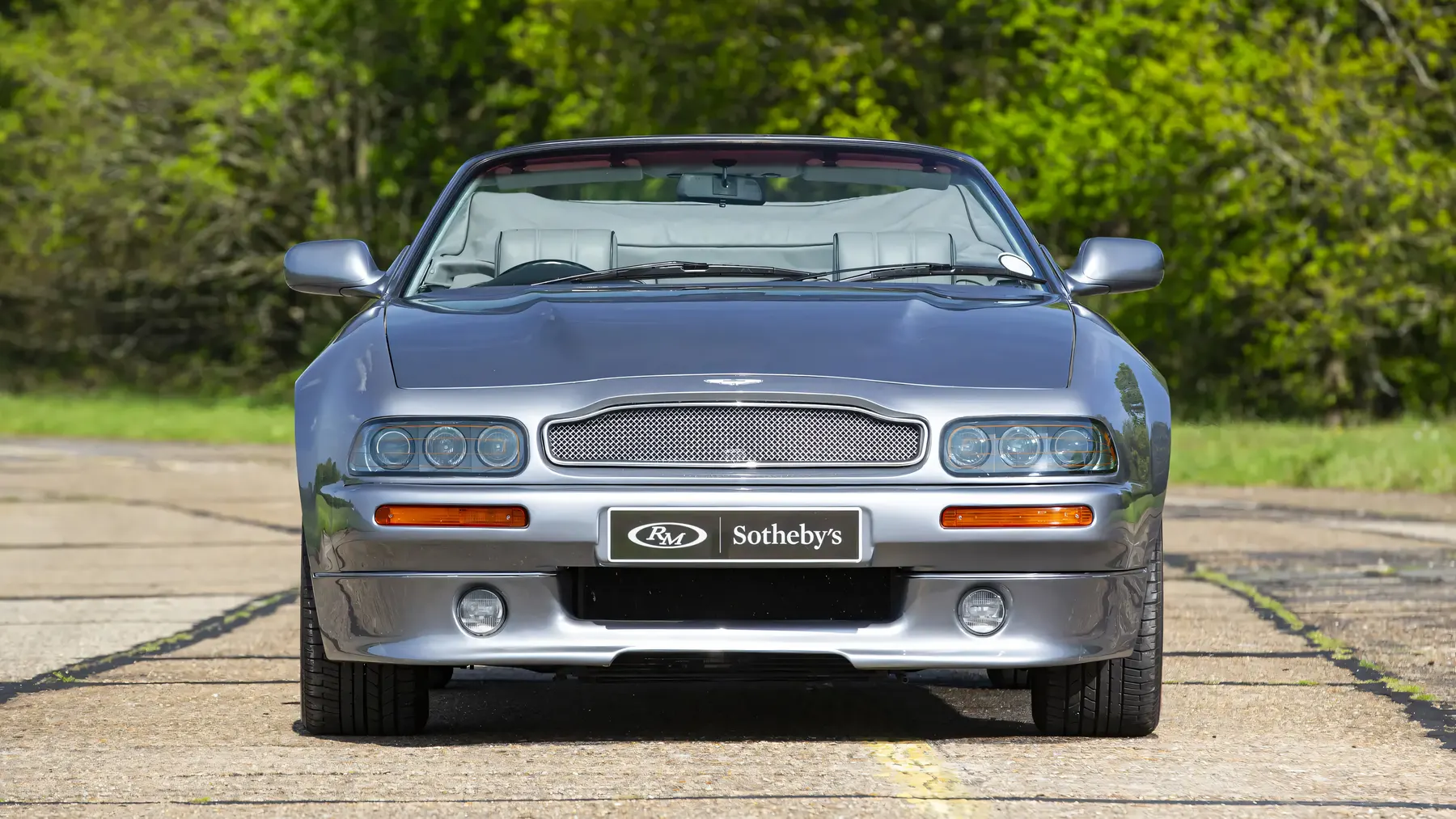
1998 Aston Martin V8 LWB Volante
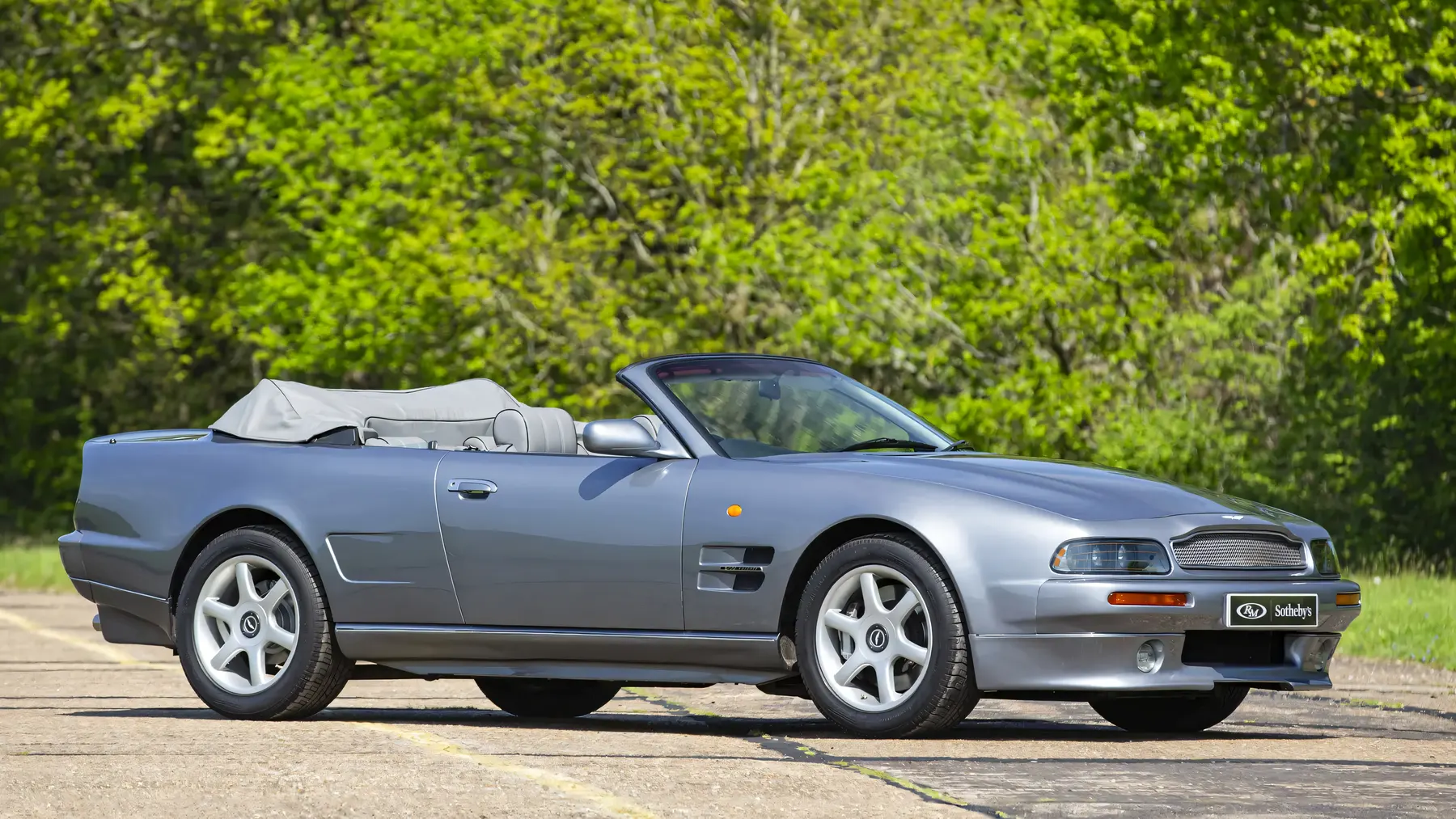
When the engineers at Newport Pagnell grafted an extra 200 millimetres into the wheelbase of the V8 Volante, they were doing something that felt almost against the grain of Aston Martin’s DNA — making a car more accommodating. More civilised. More useful. And yet the result was one of the quietly magnificent endpoints of a manufacturing era: the V8 Volante Long Wheelbase, a proper four-seat grand touring convertible that slipped out of Tickford Street in just 63 examples between 1997 and 2000, and which history has been rather slow to appreciate.
To understand why this car exists at all, you need to follow a thread that runs back through the whole Virage saga. The Virage was Aston Martin’s post-Ford-takeover flagship, unveiled at Birmingham in 1988 with all the architectural confidence of a car that knew its own mind. Its 32-valve, 5.3-litre V8 — the work of the legendary Tadek Marek — underpinned everything from the gentle Volante open-car to the thunderous twin-supercharged Vantage of 1993, which arrived with something in the region of 550 bhp and a personality that bordered on antisocial. By contrast, the Virage Volante, which debuted at Birmingham in 1990 and entered production in 1992, was the family’s more refined member — a two-plus-two convertible for people who wanted their open-air motoring with a glass of something good rather than a fire extinguisher within reach. Between 224 and 233 examples were built before the last of the narrow-body Volantes rolled out in 1996 and 1997, a figure that hints at how hand-to-mouth production at Newport Pagnell had always been.
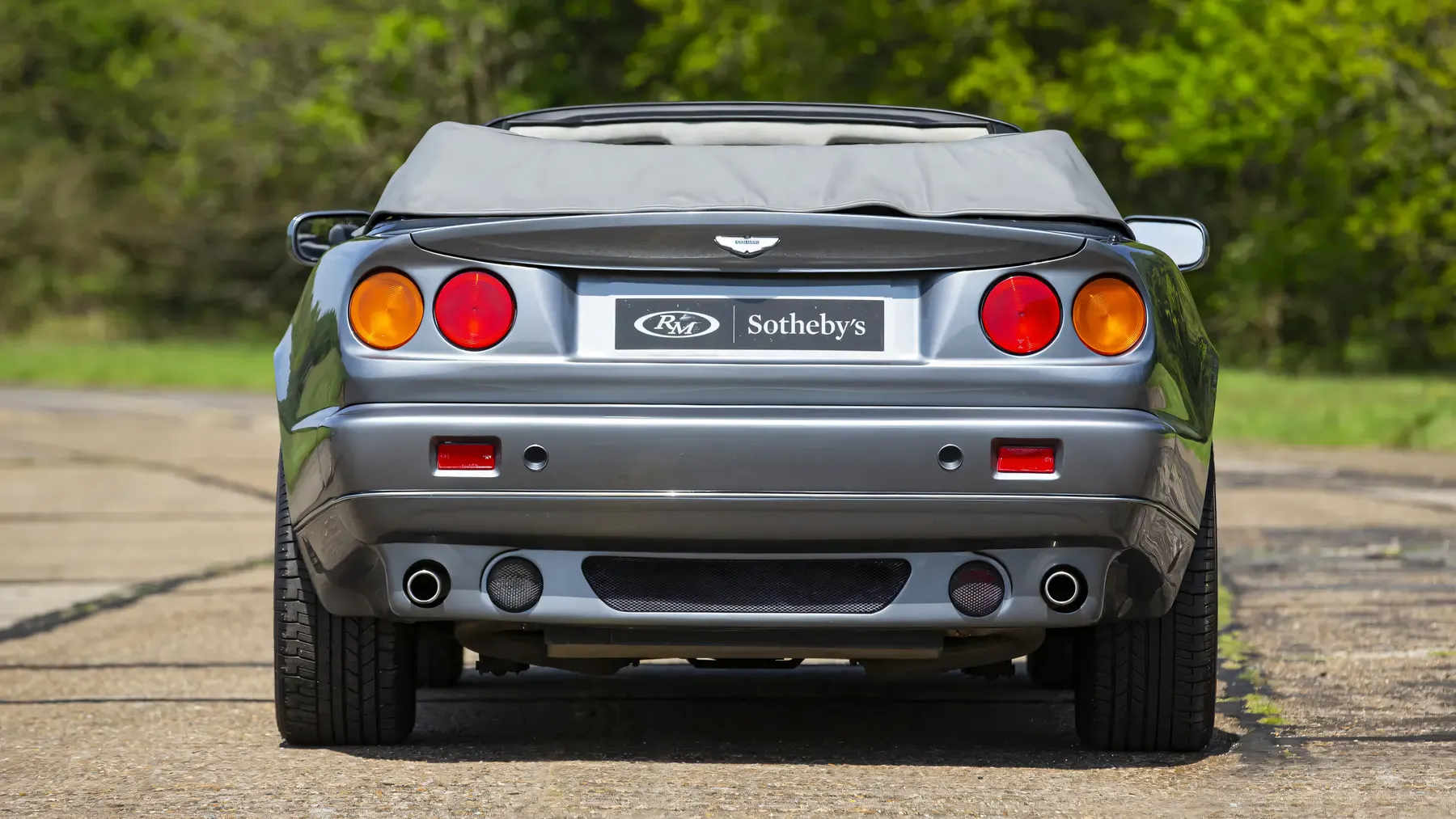
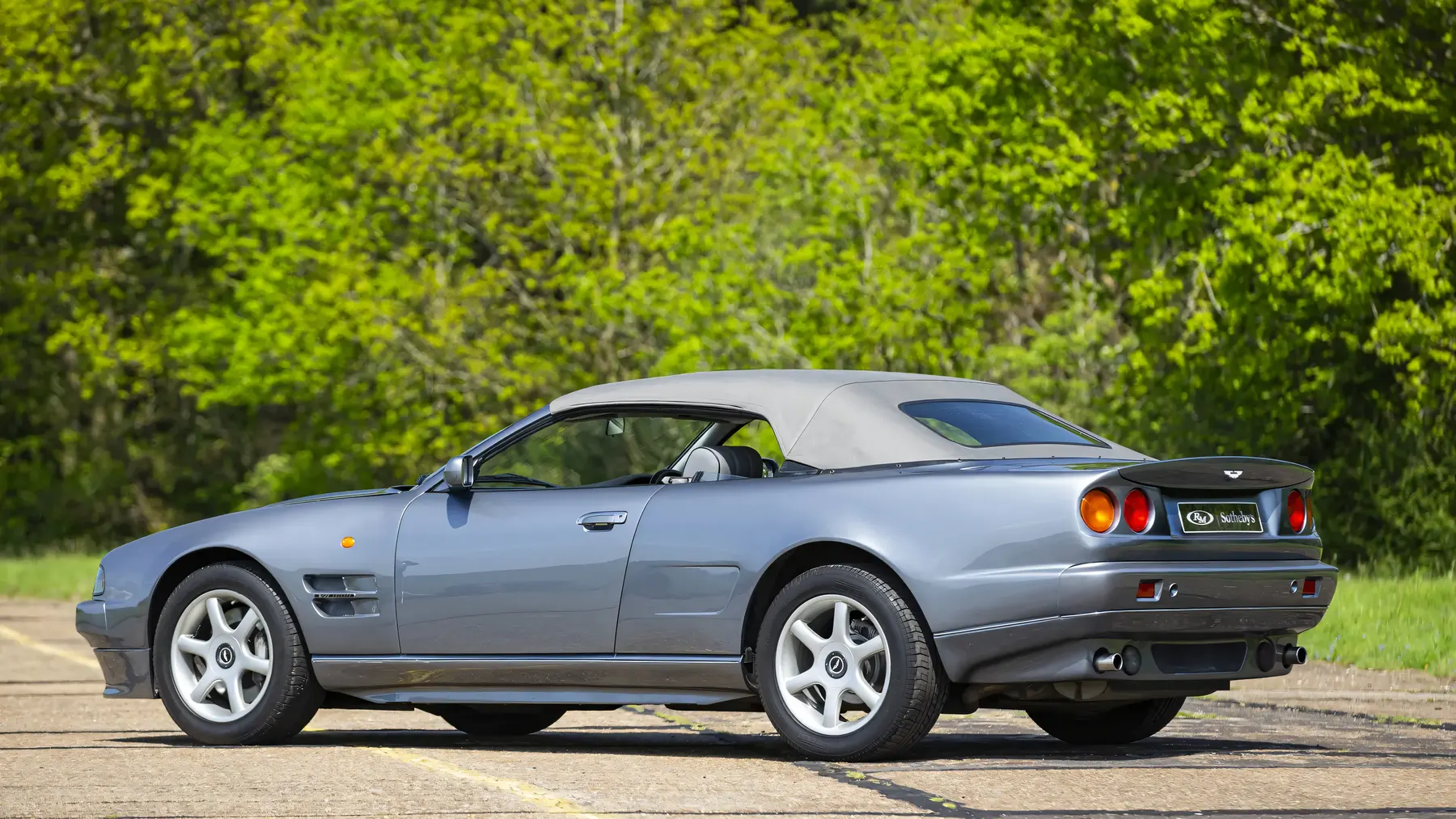
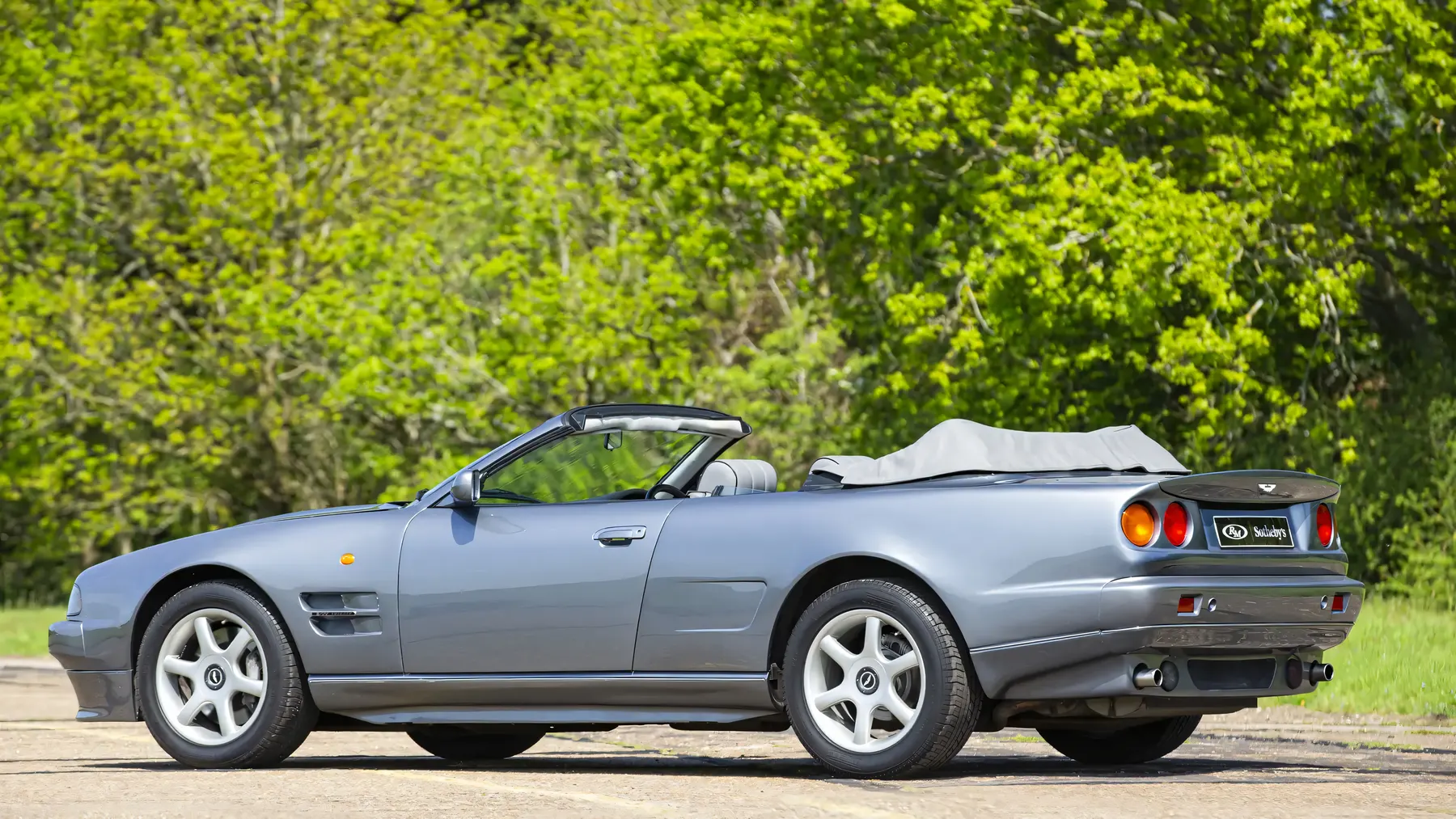
The V8 Coupé arrived in 1996 as the naturally aspirated sibling to the Vantage — cleaner arches, a mesh grille, six-spoke alloys, and a demeanour that was authoritative without being belligerent. It needed a convertible companion, and the answer was neither a simple re-bodied Coupé nor a carryover of the old narrow-body Volante. Newport Pagnell stretched the platform by a full 200 mm, creating a wheelbase that belongs exclusively to this model — no other V8 Aston ever shared it — and in doing so manufactured genuine rear-seat usability in a convertible that wears a racing pedigree on its bonnet badge. The identifying detail, for the spotters among us, is the air vent-style indent ahead of the rear wheel arches: a subtle, almost apologetic acknowledgement of the longer body. Otherwise, the LWB Volante carries the V8 Coupé’s revised face and squared-off muscularity, which is a design language that rewards attention even if it never quite seduces at first glance.
The engine was the naturally aspirated, 5,340cc all-alloy V8 in its refined, final-generation tune, producing 350–359 bhp at 6,000 rpm and 369 lb-ft of torque at 4,300 rpm. Those aren’t frightening numbers by any era’s reckoning, but the character of that engine matters as much as the data. This was an engine with proper mass and mechanical personality — a twin-cam, four-valves-per-cylinder unit whose lineage stretched back decades, revving with a note that is more operatic chest-register than high-pitched shriek. Every example of the LWB Volante was paired exclusively with the four-speed Chrysler Torqueflite automatic, a transmission with a lock-up torque converter and switchable sport and touring modes. No manual option was offered — a decision reflecting the car’s positioning as a luxury express rather than a driver’s tool, and one that enthusiasts have occasionally mourned. The compensation was a short 4.09 final drive ratio, which gives the car urgency off the line that the modest horsepower figure alone might not suggest.
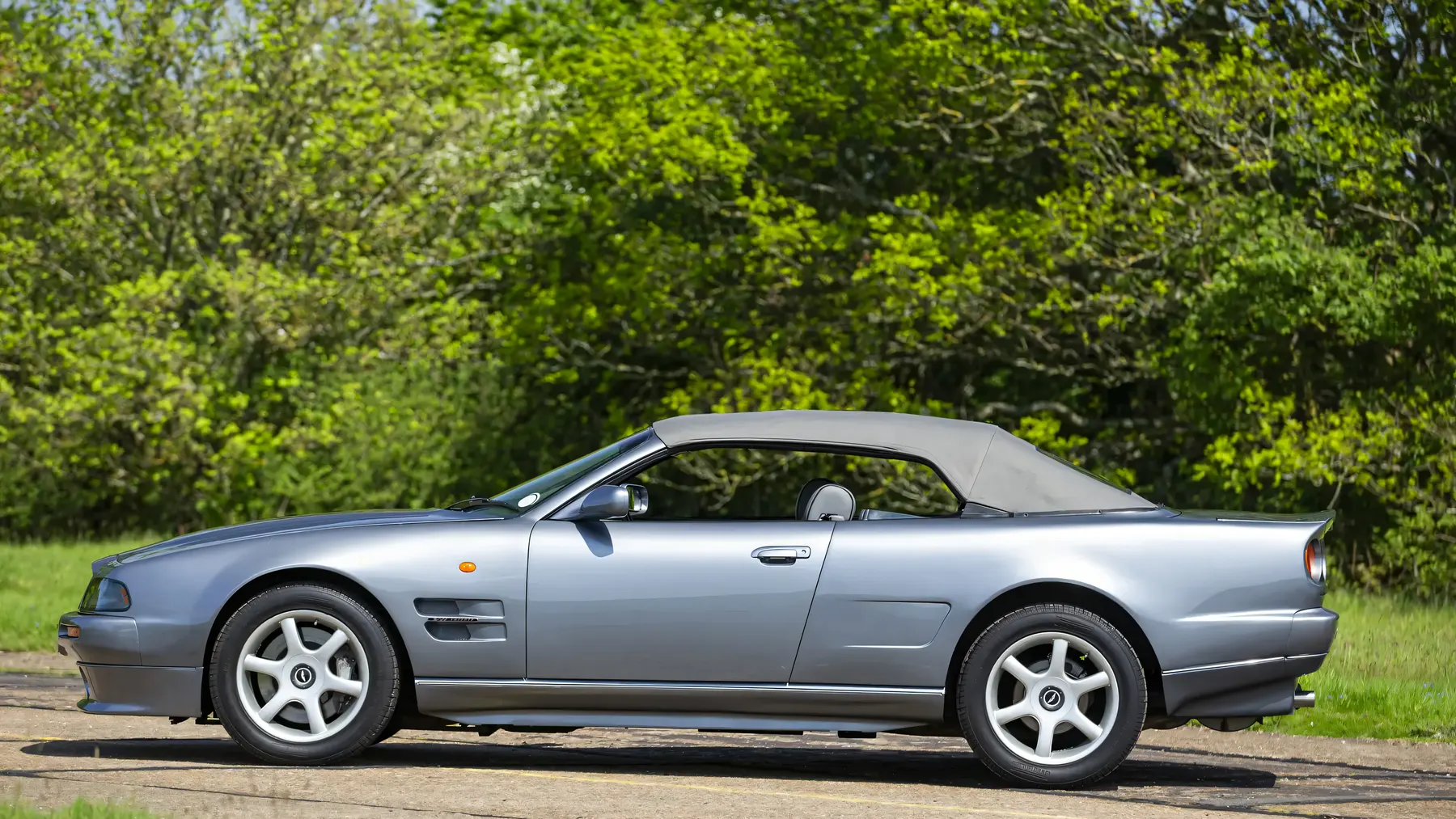
Performance figures put 0–60 mph at 6.5 seconds and top speed at over 150 mph, though some sources cite 155 mph as the governed ceiling. These are solid numbers for the late 1990s in a convertible weighing up to 2,050 kg — the LWB Volante was never light, and the open body with its double-skinned, electrically operated fabric roof adds mass and some structural compromise compared with the Coupé. The roof itself was a genuine piece of engineering: fully insulated, entirely automatic with no manual catches or levers, and when stowed, it stood quite proud above the boot lid — a visual reminder that packaging compromises don’t disappear in a grand convertible, they merely move. A leather tonneau cover could restore some visual composure.
Inside, the LWB Volante justified its existence convincingly. The extra wheelbase translated directly into rear-seat legroom that surpassed even the Rolls-Royce Corniche — a remarkable claim for a car with sporting pretensions, and one that Aston Martin was not shy about making. Connolly leather, burr walnut fascia trim, climate control, eight-way powered seats, and provision for a CD multi-changer hidden in the dash: the cabin was properly equipped for its price point and its era. Whether it felt as opulent as a Corniche was perhaps a different question — Rolls-Royce’s Newport Pagnell rival had a particular quality of silence and plushness that reflected decades of exclusive refinement — but the Aston could answer back with genuine performance and the emotional charge that a Rolls-Royce of that period, for all its magnificence, somewhat deliberately withheld.
On the road, the LWB Volante occupies an interesting middle ground. The power-assisted steering and co-axial spring-damper suspension at both ends give reasonable composure on fast, open roads, but the car is not designed to be hustled. The combination of the automatic gearbox, considerable weight, and an open structure that cannot match the rigidity of the Coupé means that tight, technical driving reveals its limits with some honesty. The V8 engine does its best work when the driver settles into its rhythm — a measured, purposeful lope across long distances where the torque reserves make overtaking feel effortless and the exhaust note settles into something genuinely beguiling. It is, fundamentally, a car that rewards patience and punishes impatience.
The drawbacks are real and worth naming. Weight is the persistent companion to every dynamic limitation: at over two tonnes kerb, the LWB Volante asks a lot of its brakes — front and rear ventilated discs — and those discs, while adequate, belong to a generation of hardware that predates the carbon-ceramic era by some distance. The gearbox, for all its torque-converter elegance, is a period piece: three or four ratios felt entirely acceptable in 1997, but back-to-back with anything more modern, the gaps between ratios are evident. Fuel economy was never discussed in polite company. And the exclusive reliance on automatic transmission, while appropriate to the car’s character, closes off a mode of engagement that the V8 engine would have rewarded.
What the LWB Volante represents historically is something that only becomes clearer with distance: the last genuinely hand-built Aston Martin open car, produced by a factory and a method of coachbuilding tradition that had been operating essentially unchanged since the 1950s. Newport Pagnell would give way to Gaydon; the Vanquish would arrive in 2000 carrying a new architecture and new ambitions; the DB7 was already pulling the brand towards a different kind of customer. In that context, 63 examples of the LWB Volante is not a footnote but an endpoint — and most of them, built in left-hand drive for export markets, have dispersed globally, making right-hand drive survivors in their country of original manufacture genuinely rare. The total production run of the entire Virage and V8 family across all variants stood at just 1,050 cars by the end of the 2000 model year, which contextualises the LWB Volante’s 63 examples precisely: these were cars built in numbers that most manufacturers would lose in a rounding error.
Critical reception at the time was respectful rather than rapturous. Reviewers acknowledged the car’s spaciousness and its engine’s character while noting, not unfairly, that its square-edged design hadn’t aged with the same grace as the earlier DB-series cars, and that the price placed it in rarefied air where Rolls-Royce and Bentley had longer track records of delivering quieter cabins and smoother powertrains. The V8 Volante’s defenders — and they were numerous — pointed to exactly those things that the establishment critics soft-pedalled: the engine’s honest mechanical voice, the rarity, the sense that each car had been assembled by people who knew its name. The market, too, has gradually recalibrated. Values for LWB Volantes have strengthened steadily as the combination of tiny production numbers, the unique wheelbase, and the historical significance of being the last of a lineage has crystallised in collectors’ minds.
The LWB Volante was never the most dramatic Aston of its period — that title belonged emphatically to the supercharged Vantage — but there is an argument that it was the most complete. It did something that Aston Martin had rarely managed before and wouldn’t attempt again for many years: it built a convertible that could genuinely carry four adults at speed, in comfort, wrapped in hand-crafted materials, with an engine worth listening to. That Newport Pagnell achieved this in 63 cars, each one different in its details, using techniques that belonged more to the coachbuilding tradition than to mass production, is the detail that settles the argument about whether this model matters. It does, precisely because nothing quite like it will ever be made again.
Related Notes
- Tadek Marek and the Engine That Built Aston Martin
- 1989 Aston Martin V8 Vantage Volante ‘X-Pack’
- 1965 Aston Martin DB5 Convertible
- 2018 Aston Martin Vanquish Zagato Volante
- 2018 Aston Martin Vanquish Zagato Speedster
- Aston Martin DB Vantage
- Italian Coachbuilding Houses
- William Towns Bodywork
- The Aston Martin Virage and V8 Family
- Newport Pagnell Factory and Hand-Assembly Tradition
- Chrysler Torqueflite in British Sports Cars
- The DB7 and Aston Martin’s Shift to Gaydon
- Rolls-Royce Corniche