1956 Jaguar XK 140 MC Coupe by Ghia
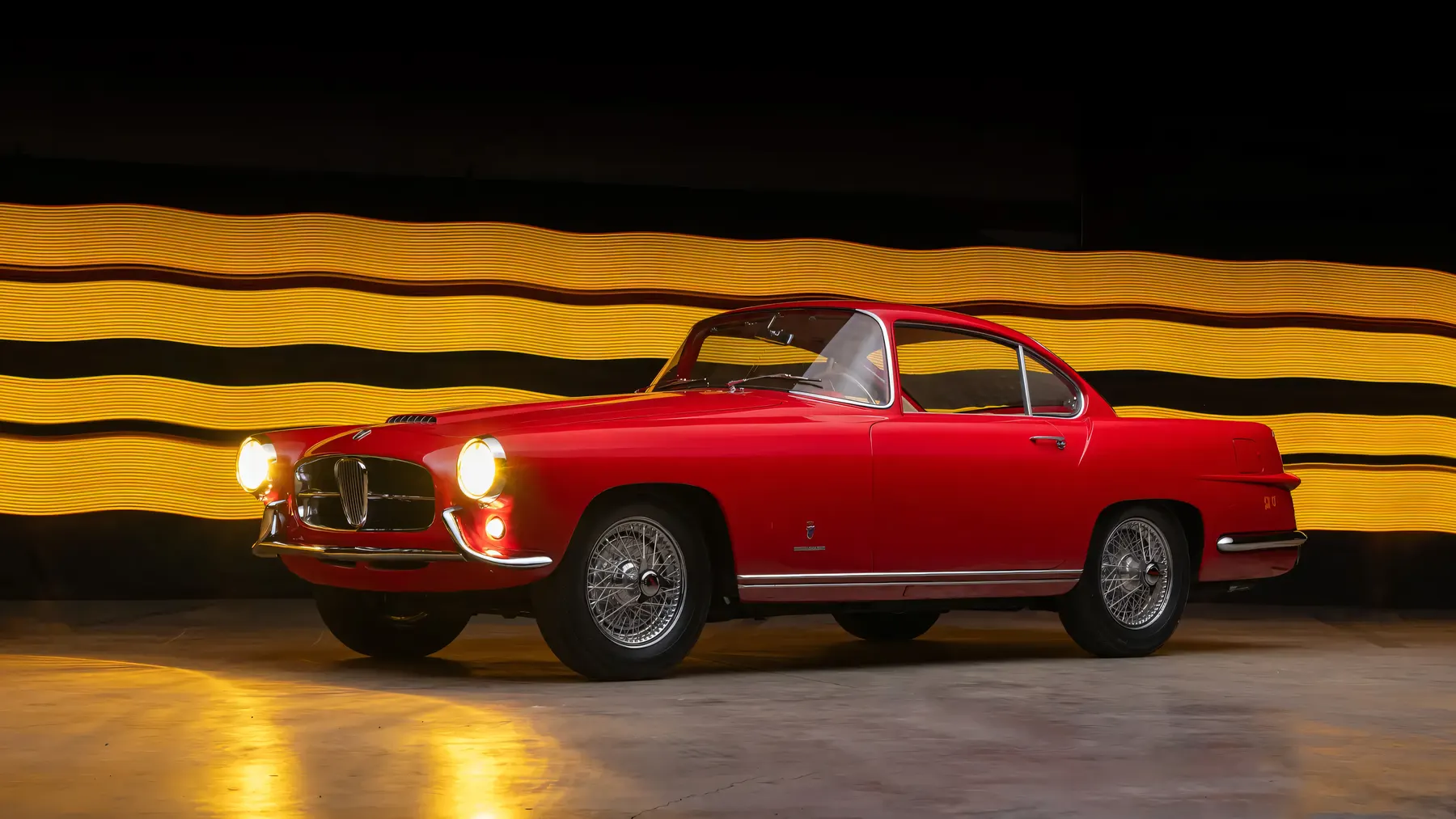
Turin has a particular talent for looking at something already beautiful and deciding it isn’t quite finished. In the mid-1950s, when Jaguar’s XK 140 arrived as a rolling chassis at the gates of Carrozzeria Ghia’s workshop, the coachbuilders there saw not a completed sports car but a proposition - a 2,591 mm wheelbase, a silken twin-cam straight-six, and roughly a metre of unbroken bonnet ahead of the firewall that invited something more dramatic than Coventry had seen fit to provide. The result of that invitation was among the rarest and most formally audacious Jaguars ever bodied: the XK 140 MC Coupé by Ghia, of which no more than four examples are believed to exist.
The XK 140 itself arrived in October 1954 as Jaguar’s refinement of the already celebrated XK 120, a car that had shocked the postwar world with its 120 mph top speed and then spent several years being driven hard enough that its limitations became apparent. William Lyons addressed those limitations methodically: the rack-and-pinion steering of the 120 gave way to a more precise recirculating-ball unit, the engine was moved forward by 76 mm to free up passenger space, and the standard power output rose to 190 bhp from the 3,442cc double-overhead-cam straight-six. The Special Equipment variant - sold in the United States as the MC, for Modified C-type - went further still, fitting the C-type cylinder head with larger valves, high-lift camshafts, twin 1.75-inch SU H8 carburettors in sand-cast housings, and a 9.0:1 compression ratio to liberate 210 bhp at 5,750 rpm, with 213 lb-ft of torque arriving at 4,000 rpm. Jaguar quoted a top speed in excess of 125 mph for the standard car; the MC variant was meaningfully quicker, and road testers confirmed 0–60 mph runs in the region of 7.8 seconds - formidable for any mid-1950s production sports car, in a class populated by cars costing considerably more.
The XK 140 offered three factory body styles - an open two-seater, a fixed-head coupé, and a drophead coupé - all built in pressed steel by Pressed Steel Company and assembled at Browns Lane, Coventry. Jaguar was not by temperament an enterprise that encouraged deviation from this arrangement. And yet, quietly, it was prepared to supply rolling chassis without bodywork to coachbuilders whose clients could make a compelling case. Approximately ten such chassis were released for custom coachwork during the XK 140’s production run, with an eleventh retained by Jaguar for internal experimental use. That Ghia of Turin would be among the recipients of those chassis was, in retrospect, almost inevitable: the firm had already demonstrated precisely what it could do with the closely related XK 120, producing the extraordinary Supersonic - a series of dramatically tailfinned, panoramic-screened coupés whose long-bonnet, short-deck proportions had established a visual language that Ghia’s designers were clearly reluctant to abandon.
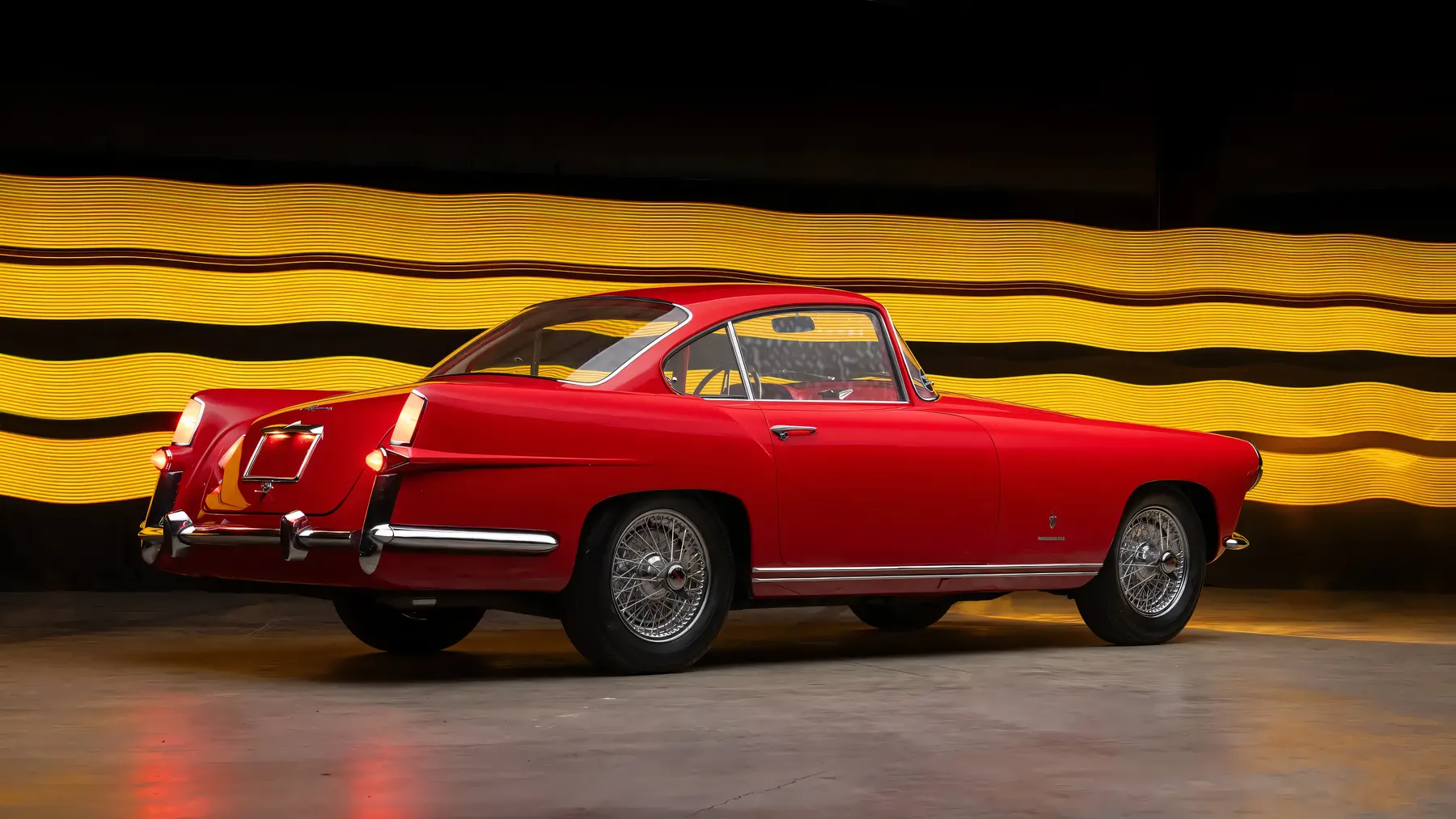
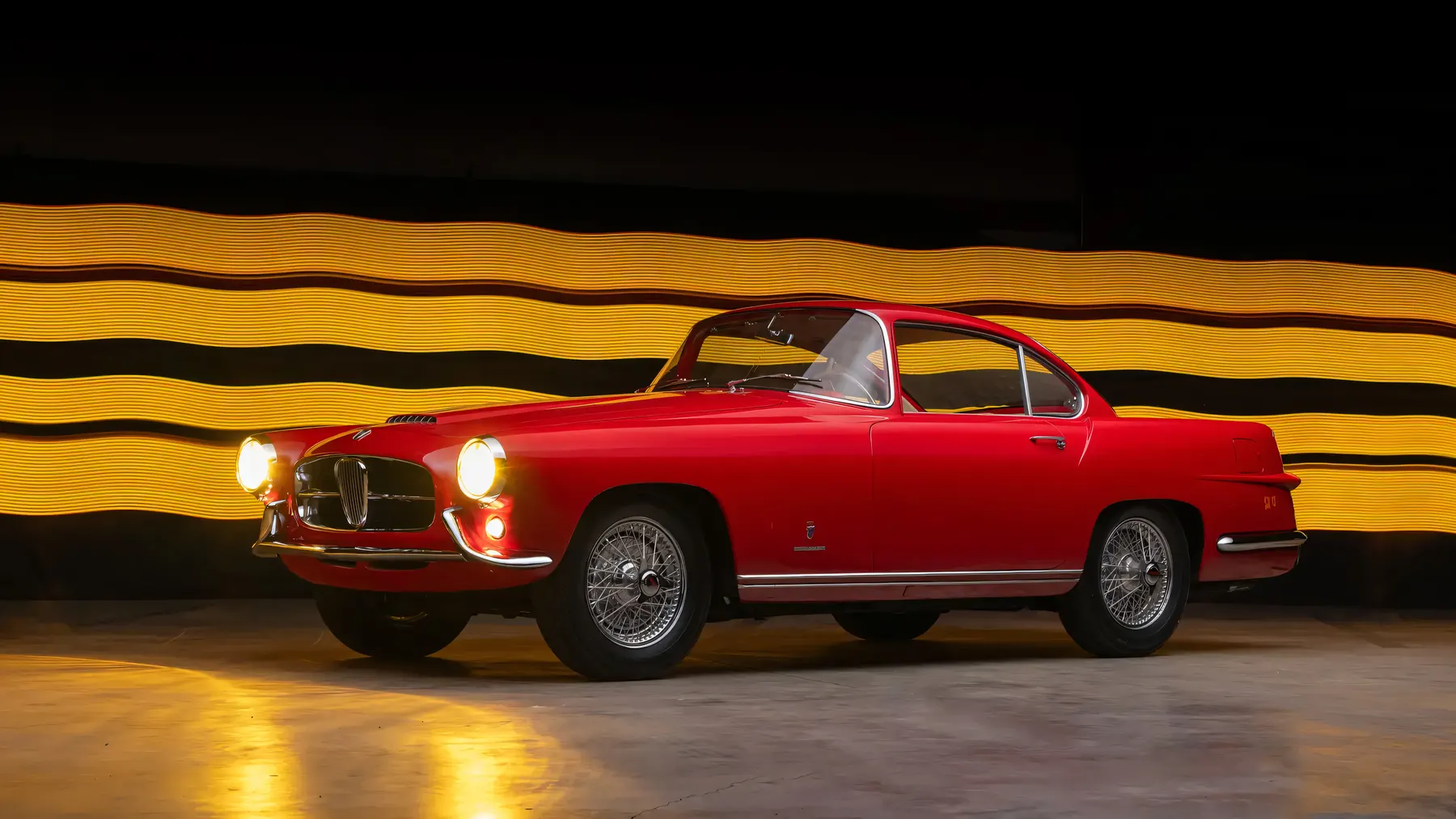
The XK 140 Coupé that followed at Ghia was effectively the Supersonic’s successor, shedding some of the earlier car’s most extreme flourishes while retaining its fundamental architectural ambition. Where the Supersonic had been genuinely provocative - fins that would not have looked out of place on a Lockheed fighter, a wraparound screen that seemed lifted from an aircraft canopy - the XK 140 Coupé adopted a more composed fastback silhouette, the roofline sweeping in a continuous arc from windscreen to tail, the flanks clean and purposefully swept. The design has been attributed to Giovanni Michelotti, whose touch at Ghia and subsequently at his own studio was identifiable in the precision of its proportions and the restraint applied to surface decoration. The entire body was fabricated by hand in aluminium alloy rather than the stamped steel Jaguar used in production - a material choice that served both the practical demands of low-volume coachbuilding and the engineering logic of weight reduction. The result was a car approximately 100 kg lighter than the equivalent factory-bodied XK 140, a figure that transformed an already swift machine into something genuinely exceptional on the road.
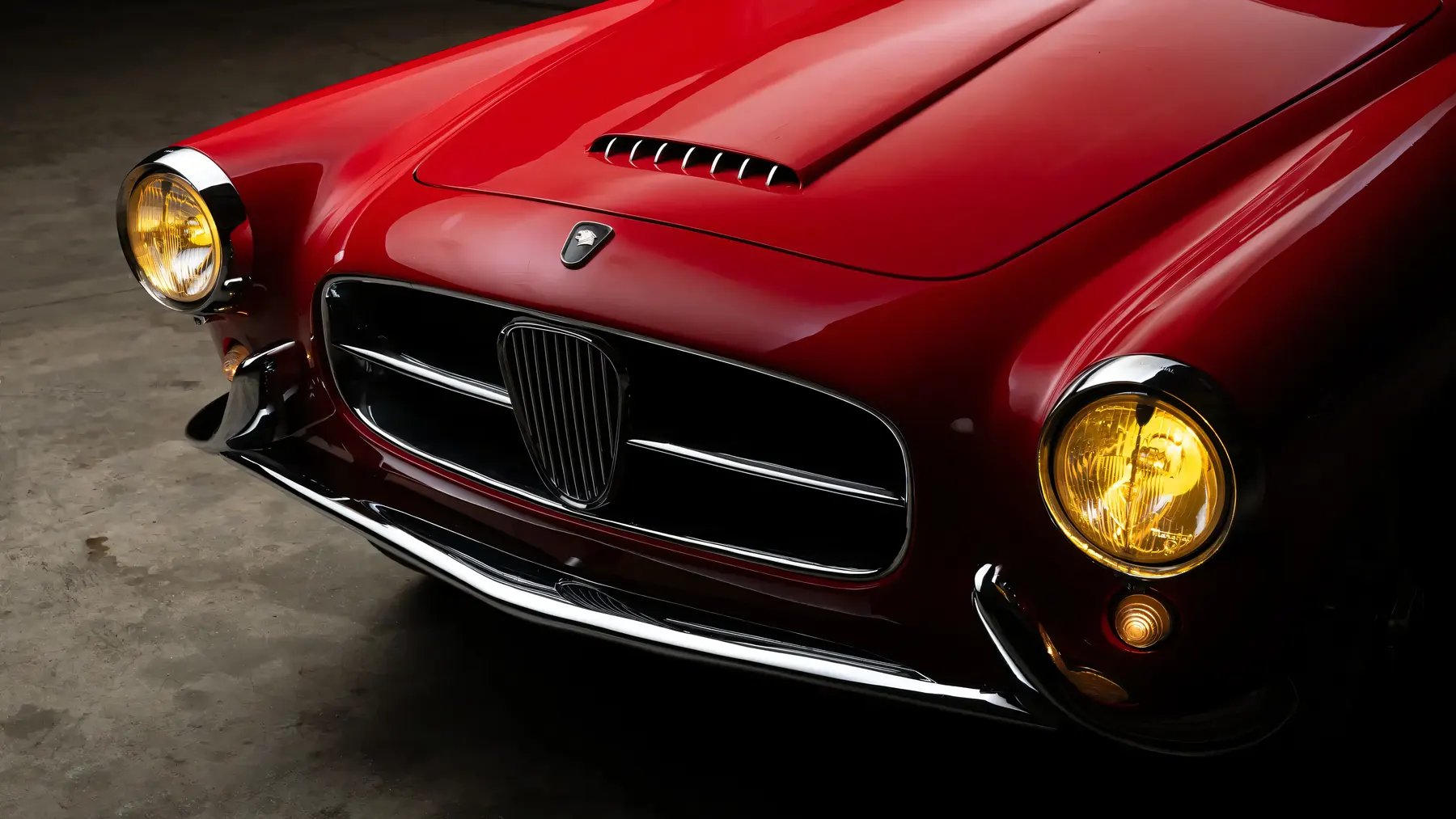
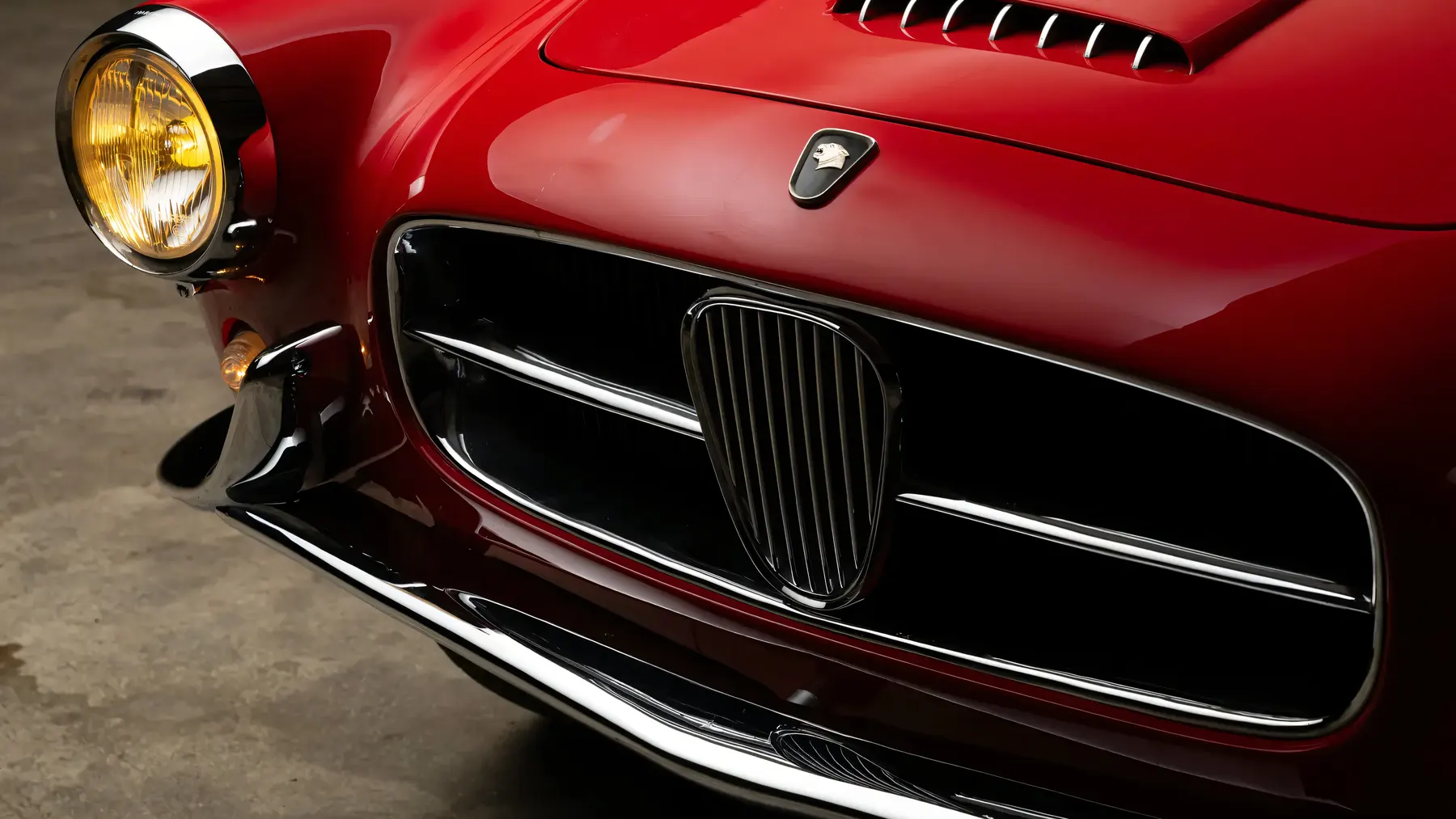
Four XK 140 chassis are known to have received this treatment, and each differed in its specific details - coachbuilding at this level was never a matter of identical replication. Chassis 810827 DN was commissioned by the Parisian dealer Delacroix and exhibited at the 1955 Paris Motor Show, appearing before the public as a declaration of Ghia’s continued ambition with the Jaguar platform. Chassis S 814937 DN was dispatched to Lebanon through the importer Robert M. Trad; chassis 815942 was also sent to Lebanon, though whether it wore an identical body remains uncertain. The fourth, chassis S 815404, was ordered through the Los Angeles dealership Hornburg - Jaguar’s West Coast American representative - by a client named R.W. Martin of La Jolla, California, and would later pass through the hands of actor Ricardo Montalbán and the celebrated Blackhawk Collection before returning to the auction market at RM Sotheby’s Monterey sale in August 2024, where it realised $335,000 USD. Early photographs suggest this car was completed in white, or a similar light colour, with chrome headlamp surrounds and a shield-shaped Jaguar bonnet emblem - subtle departures from the Paris Show car that lend each Ghia XK 140 its distinct identity within an already tiny family.
The driving character of the XK 140 MC, even in its factory-bodied form, was considerably more sophisticated than the XK 120 it superseded. The forward engine position improved weight distribution perceptibly, and Jaguar’s engineers had attended to the torsion bar front suspension with heavier settings on the SE and MC variants, giving the car a planted, communicative quality that rewarded fast driving without punishing those who simply wanted to cover ground quickly. The twin-cam six was one of the finest engines in production anywhere in the world at the time: smooth in a way that few contemporary units achieved, with a willingness to rev that produced a particular, layered noise somewhere between mechanical music and genuine urgency when the throttle was held open. The four-speed Moss gearbox, with its long throws and deliberate action, asked the driver to be methodical rather than hasty - a characteristic some found frustrating, others read as appropriate for a car whose character was always more grand tourer than outright racing machine. In the Ghia-bodied car, 100 kg removed from the equation sharpened all of these qualities: the steering response became more immediate, the performance margins more accessible, and the overall sensation of the car that much more connected.
There are genuine criticisms to make of the XK 140 in any form, and the Ghia body resolves none of them. The Moss gearbox, honest as it is, was already feeling its age in 1955, and rivals were offering synchromesh arrangements that required less careful management. The brakes - Jaguar used drum brakes on the XK 140 throughout its production life, not transitioning to the discs that had appeared on the company’s C-type and D-type racing cars - required confident use and forward planning at sustained high speed, a limitation that would become more apparent as the decade wore on and performance expectations rose. The body itself, while magnificent in its ambition, introduced the structural and weatherproofing complexities that bespoke aluminium coachwork invariably carried; these are cars whose maintenance has always demanded specialist attention rather than ordinary service schedules. And the sheer rarity of the Ghia examples - somewhere between three and four confirmed survivors - means that any serious use of the car requires a willingness to expose something irreplaceable to the ordinary risks of the road.
What the Ghia body provides in exchange for those complications is something that no production XK 140, however carefully prepared, can replicate: the experience of driving what is simultaneously one of the most analytically correct British sports cars of the 1950s and one of the most visually arresting coachbuilt Italians of the same decade. The Anglo-Italian synthesis here was not the pragmatic partnership of Facel Vega - a French body housing American mechanicals - but something more intimate: a British chassis and drivetrain that Jaguar itself was proud of, dressed by Italian craftsmen who understood proportion at an almost molecular level, for clients whose requirements exceeded what any production catalogue could satisfy. The Paris Motor Show debut of the first Ghia XK 140 in 1955 placed it in the company of the era’s most sophisticated automotive thinking, and the critical response confirmed that what Ghia had produced was neither mere novelty nor elaborate ostentation, but a coherent and confident reimagining of a car that was already excellent.
The XK 140 itself was replaced by the XK 150 in 1957, a car that grew somewhat heavier and more luxurious, introducing disc brakes at last and offering a wider range of power outputs. The XK lineage would eventually give way to the E-type in 1961, a car whose status in the history of sports car design has become so thoroughly canonical that it can occasionally overshadow the genuine quality of what preceded it. The XK 140 MC, in particular, suffers from this genealogical overshadowing - regarded by purists as the most satisfying of the three XK production models in terms of the balance it struck between performance, refinement, and honest engineering, yet perpetually second in public consciousness to the car that arrived four years after it. The Ghia Coupé versions occupy an even more particular position: produced in microscopic numbers, distributed across three continents within a few years of their completion, each subtly different from its siblings, and now scattered through collections ranging from California to the Middle East. They are the rarest evidence of a moment when the best of British engineering and the best of Italian coachbuilding operated in productive dialogue - and when a straight-six engine with its roots in an aircraft manufacturer’s ambitions proved, as it would continue to prove for decades, that some propositions are simply too good for any coachbuilder to resist.