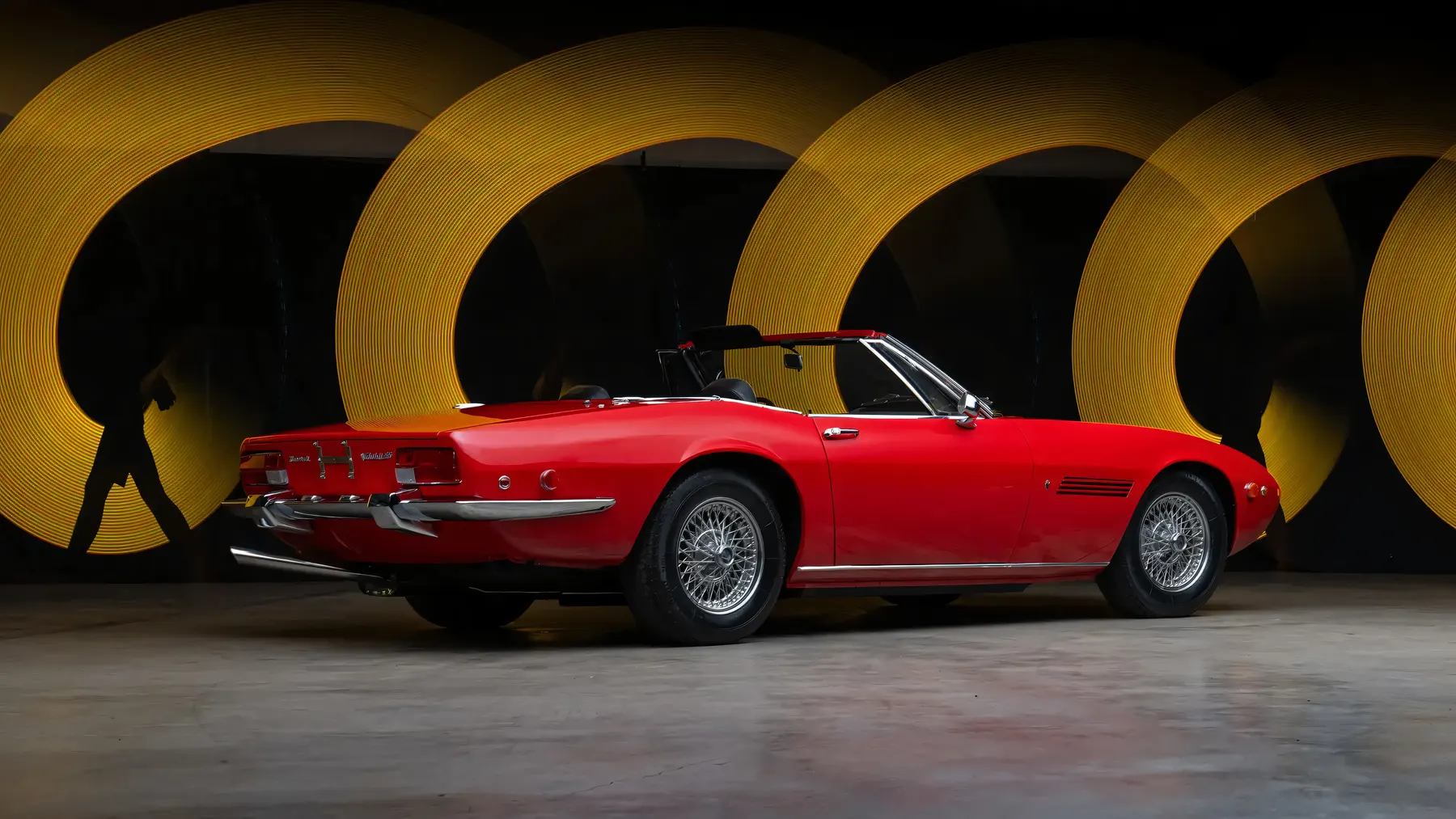
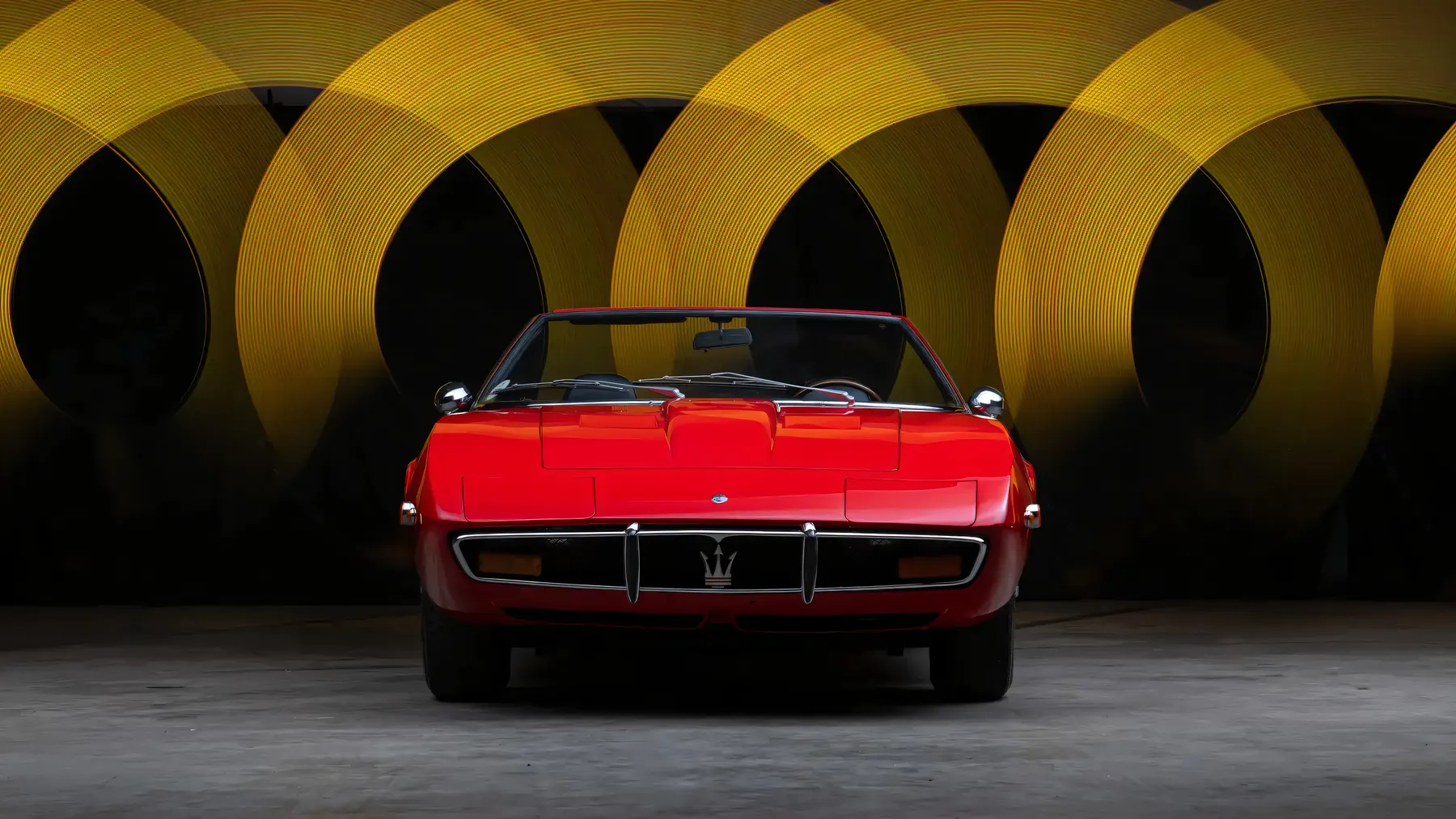
1971 Maserati Ghibli SS 4.9 Spyder by Ghia
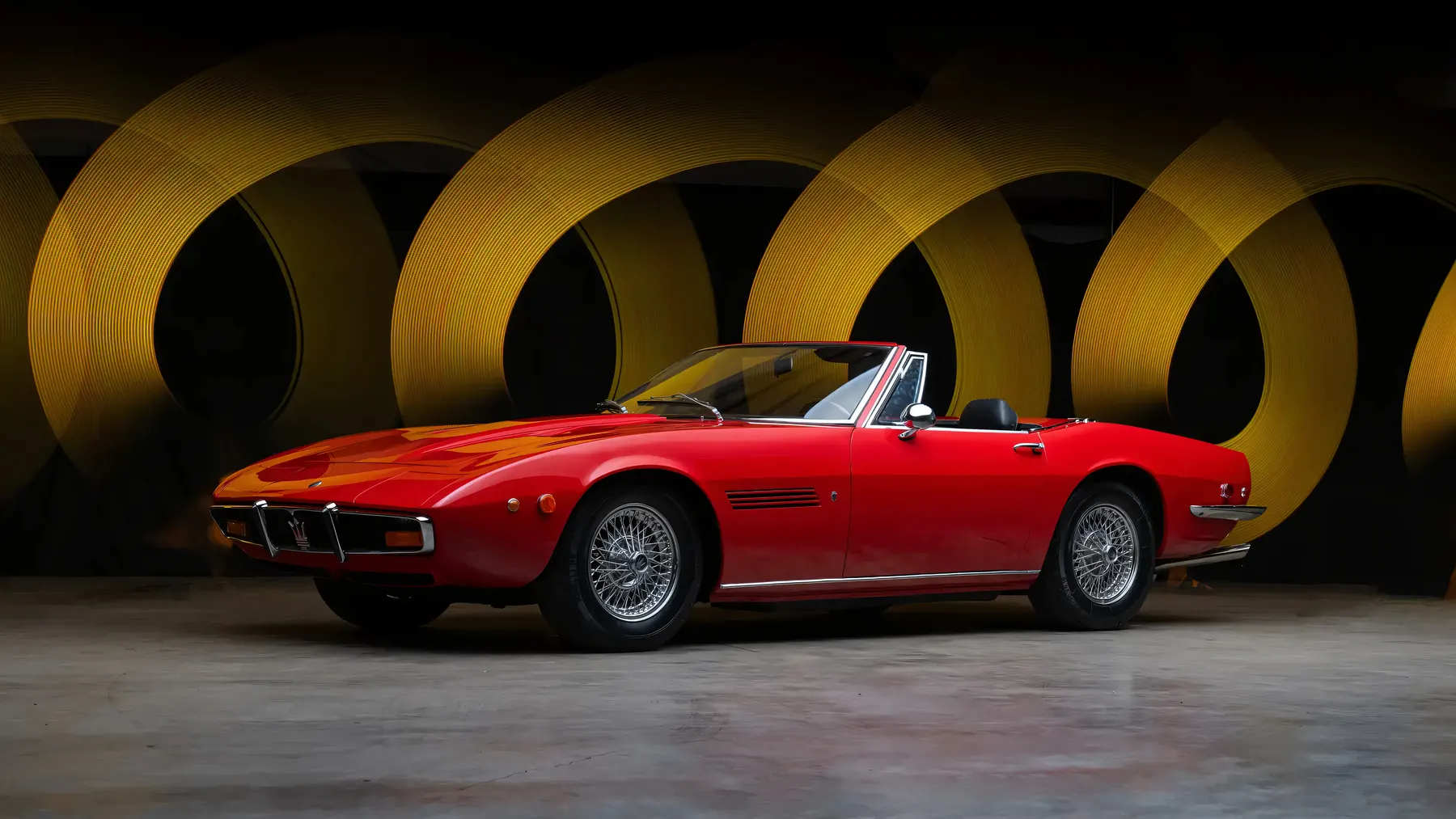
Giorgetto Giugiaro once described the Ghibli’s brief as the most liberating of his career - a blank sheet handed to a twenty-seven-year-old at full creative velocity, with no corporate committee to dull the result. What emerged from that mandate was the Maserati Ghibli SS 4.9 Spyder, and it remains one of the most emotionally devastating open-top grand tourers the Italian industry ever permitted to exist.
The story begins at the 1966 Turin Motor Show, where the coupe form of the Ghibli - project AM115 - detonated among the cognoscenti with the force of something that shouldn’t have worked on paper but clearly did. Ghia had been brought in from the start, and Giugiaro, freshly arrived from Bertone and at a creative peak, produced a design of studied restraint: a long, low shark-nose with a full-width grille, pop-up headlamps, a swept-back windshield, and a fastback roofline that made every rival look slightly fussy by comparison. The public and press responded with a fervour that caused Maserati to immediately overshoot its planned production run of just 100 cars.
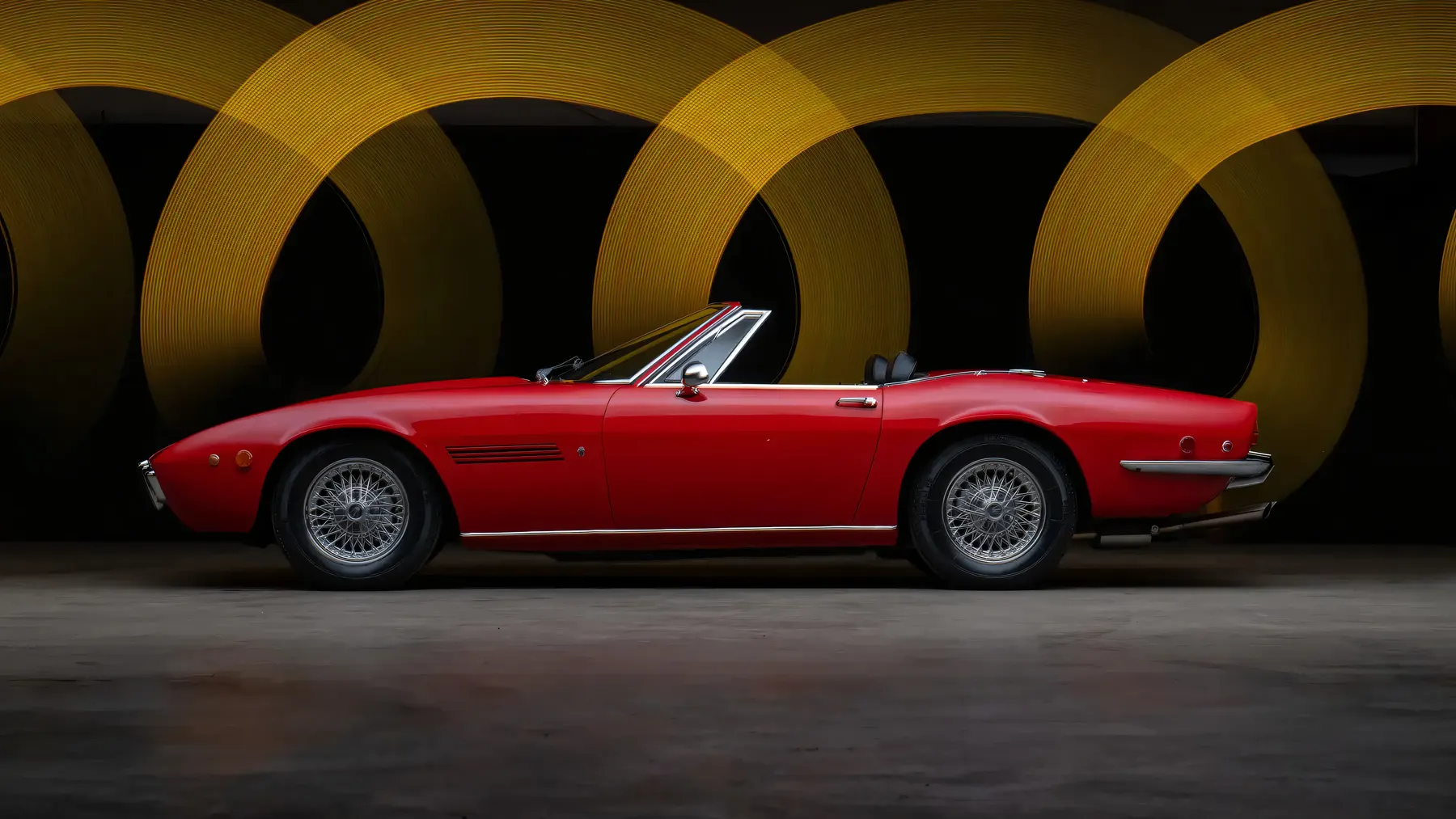
The Spyder arrived in November 1968, expanding the Ghibli family into open-air territory with coachwork that somehow preserved all the proportional elegance of the coupe while removing its roof entirely. Then in 1969 came the SS - Super Sport - designation, attached to a bored-out 4,930cc version of the twin-cam dry-sump V8 that had defined the original car. The 4.9-litre unit, fed through four Weber 42 DCNF carburettors and equipped with solid-state ignition, produced 335 bhp at a characterful 5,500 rpm. Torque was abundant at 354 lb-ft, delivered low enough in the rev range that the engine never felt stressed on long continental runs.
The mechanical architecture was unambiguously old-school in the best sense. The big V8 sat in a separate front subframe, kept low in the chassis by the dry-sump lubrication system - a competition-inspired solution that allowed Giugiaro’s extraordinarily flat bonnet line to work visually. Front suspension was fully independent double wishbones with coil springs; the rear retained a live axle on semi-elliptic leaf springs, a traditional arrangement that prioritised predictability over outright sophistication. Servo-assisted disc brakes at all four corners handled the considerable task of slowing a car that weighed around 1,530 kg. A five-speed ZF manual gearbox was the transmission of choice, though a Borg Warner three-speed automatic was available for markets where it mattered - a concession to the car’s status as a genuine grand tourer rather than a track-day weapon.
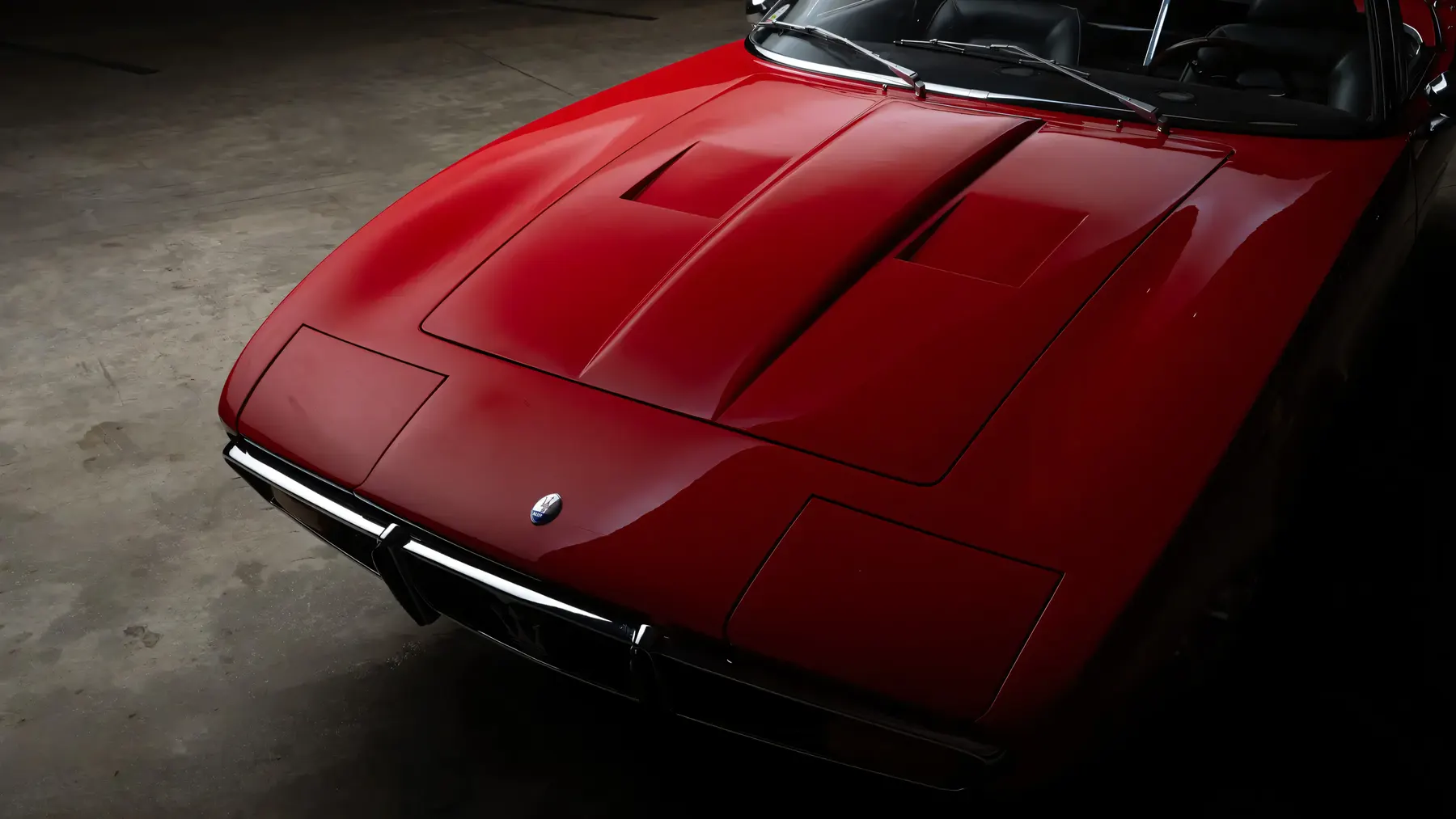
The Spyder SS in 4.9-litre form would pull to 168 mph, making it the fastest Maserati road car the factory had ever produced at the time. The 0–62 mph figure of around 6.4 seconds reads modestly now, but in context - an open car with no aerodynamic aids, weighing over 1,500 kg, built in Modena in the early 1970s - it was a serious number. What the figures don’t capture is the sensory theatre of the 4.9’s top-end pull: the four Webers developing a deep, harmonically complex intake roar that filled the cockpit with a kind of mechanical weather as the revs climbed.
The interior expressed Maserati’s house philosophy of understated luxury: supple leather, a driver-focused cockpit bisected by a tall, narrow transmission tunnel, and a dashboard with a clear hierarchy of instrumentation. The optional steel hardtop transformed the car’s personality entirely - from open-air boulevard cruiser to something almost coupe-serious, with enough structural rigidity to quieten the scuttle shake that inevitably accompanied open-top motoring on rough Italian roads.
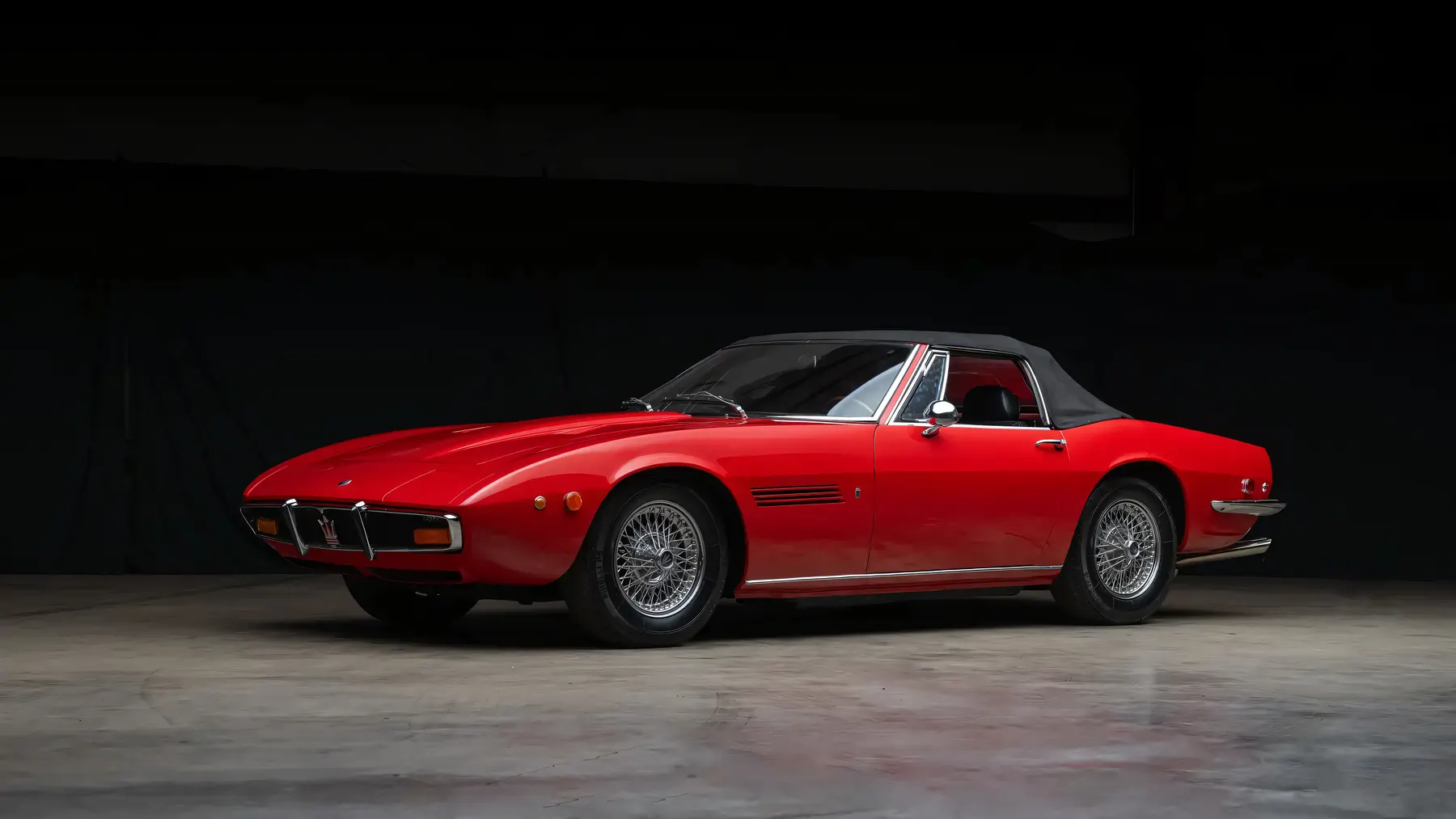
What makes the Ghibli SS 4.9 Spyder genuinely remarkable - and genuinely rare - is the production reality behind it. Of the 1,280 or so Ghiblis built across the entire production run, 125 were Spyders. Of those, only approximately 46 carried the 4.9 SS engine, split between 39 manual and 7 automatic examples. The Spyder SS is not just rare in the collector car sense of being expensive and old - it is rare in the sense that the factory barely made any, and the North American market absorbed a disproportionate share of what was built. The combination of America’s appetite for open-top cars, Maserati’s modest production capacity, and the premium commanded by the SS package meant these cars were scattered globally from new, and survival rates reflect the usual attrition of enthusiast machinery through the 1970s and 1980s.
The honest criticism of the car starts with that rear axle. By 1969, Ferrari’s 365 GTB/4 Daytona and the Lamborghini Miura had established that independent rear suspension was simply the correct engineering choice for a car of this performance and pretension; Maserati’s live axle felt like a legacy decision rather than a considered one. Combined with steering that offered limited feedback in the traditional Italian manner, the Ghibli SS Spyder rewarded smooth, committed drivers who worked with the car’s momentum rather than against it. It was not forgiving of the kind of mid-corner corrections that a more sophisticated chassis would absorb quietly.
Build quality was another perennial Italian concern. Maserati in the early 1970s was a factory in financial difficulty - the company would fall into receivership by 1975 - and the build precision of individual cars varied considerably. The electrical systems drew on a period Fiat/Magneti Marelli parts bin that aged poorly, and early SS models required careful attention to the carburettor balance to maintain the smooth power delivery the engine promised on paper.
None of which matters much to how the Ghibli SS 4.9 Spyder is viewed today. When Maserati replaced it with the Khamsin in 1974 - a technically superior car in almost every measurable respect - the public largely failed to care, because the Khamsin did not look like the Ghibli. That observation captures something important about what Giugiaro had achieved in 1966: a design so precisely calibrated to a cultural moment that no amount of technical progress could replicate its emotional authority.
The collector market has registered this understanding. Values for documented SS Spyder examples have tracked steadily toward parity with the contemporary Ferrari 365 GTB/4 Daytona - a car with far greater production numbers and an arguably more famous competition pedigree. That the Ghibli can sustain that comparison on the open market, decades after production ended, is perhaps the most honest assessment of its genuine standing. The rarest of all the Ghiblis, the SS 4.9 Spyder occupies a precise intersection of design, mechanical theatre, and scarcity that the marque has never quite managed to find again.