1954 Alfa Romeo 1900L Coupe by Ghia
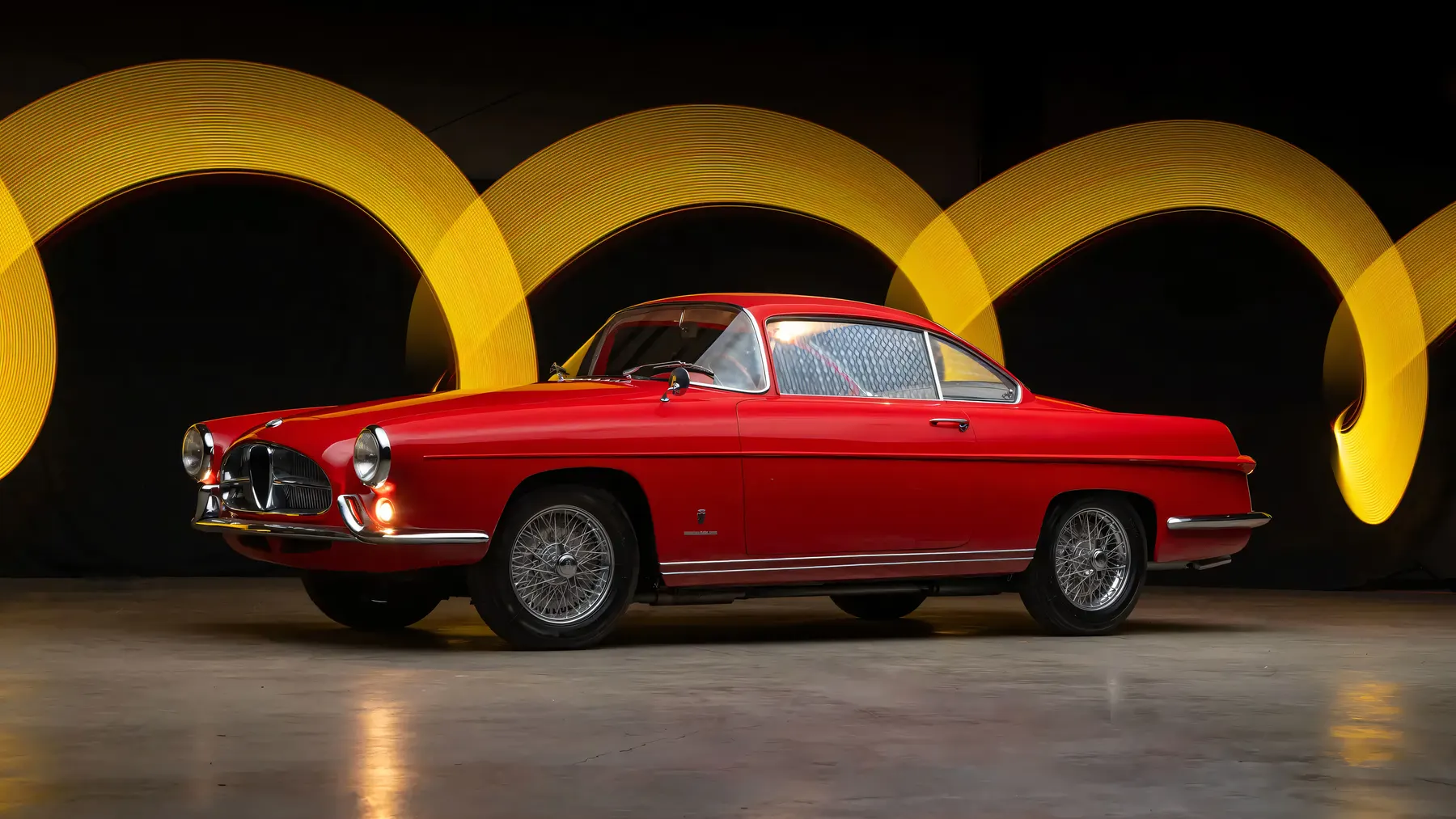
The Alfa Romeo 1900L Coupe by Ghia is quite simply one of the most beguiling footnotes in postwar Italian coachbuilding - and the single example built on the lungo chassis might just be its finest expression.
When Alfa Romeo unveiled the 1900 at the 1950 Paris Motor Show, it marked a quiet revolution for the marque: designed by Orazio Satta, it was Alfa’s first car built entirely on a production line and the first to abandon a separate chassis entirely. That monocoque platform - paradoxically, a mass-production body-in-white - was nonetheless offered in variant forms specifically intended to invite coachbuilders back through the door. Among the specialist platforms was the 1900L, the lungo, a long-wheelbase derivative that stretched the standard car’s proportions to provide a more accommodating canvas for bespoke coachwork. It was a curious duality: factory-built bones, artisan skin.
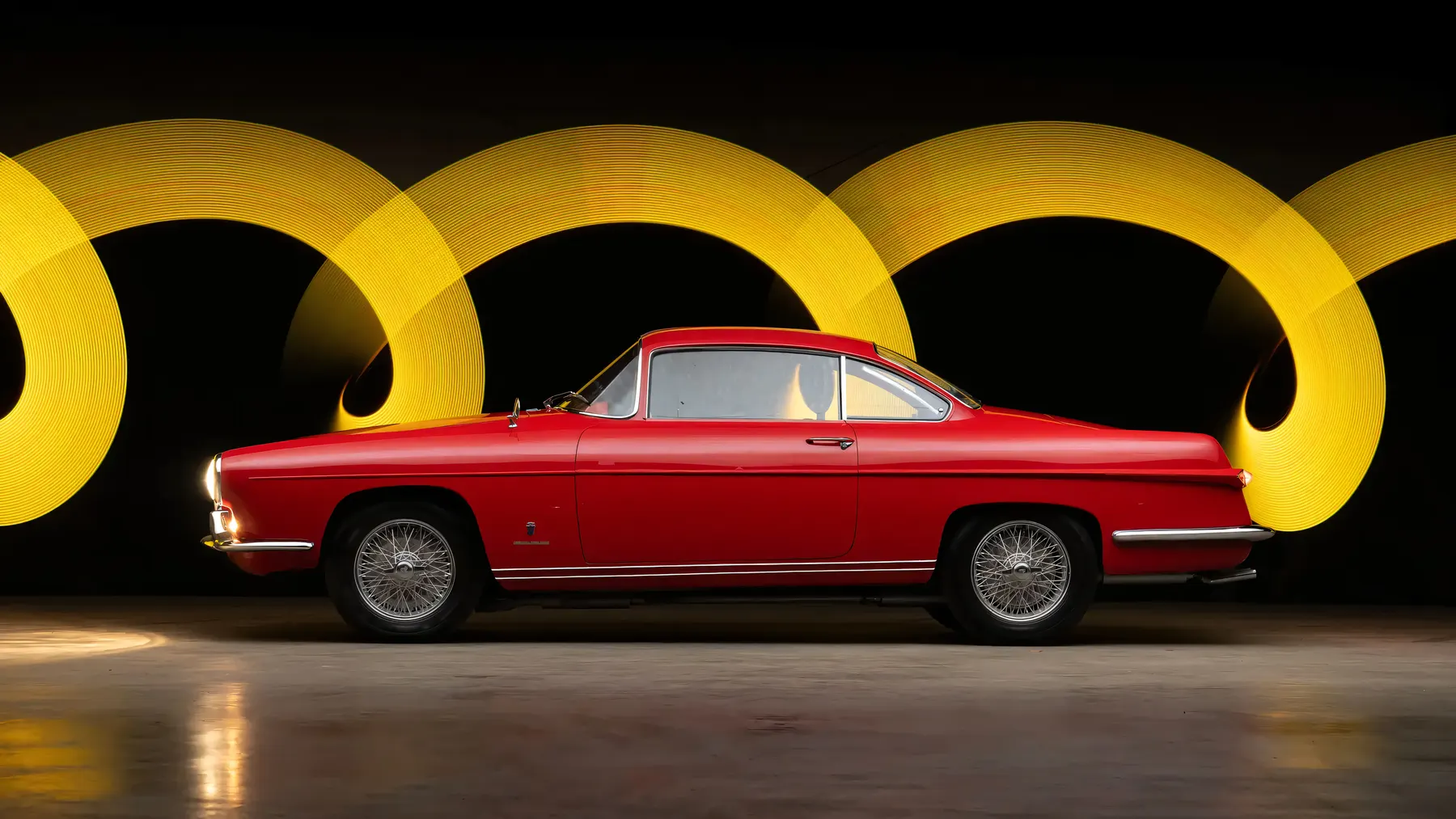
It was into this creative climate that Carrozzeria Ghia, operating from Turin under the direction of Luigi Segre, accepted roughly two dozen 1900 chassis for bespoke clothing during 1954 and 1955. The overwhelming majority were based on the short-wheelbase 1900C, the performance-oriented corto platform, but the car that would emerge as arguably the most interesting of the lot was dispatched to Ghia in April 1954 riding on the rarer lungo underpinnings. This is the 1900L Coupe - not merely a variant of the Ghia-bodied series, but an outlier within an already exclusive group.
The man responsible for its shape was Giovanni Savonuzzi, Ghia’s technical director from 1953 to 1957 and one of the most intellectually restless figures in Italian automotive design. Born in Ferrara in 1911, Savonuzzi trained as a mechanical engineer before joining Fiat’s aero division, and his aeronautical sensibility permeated everything he subsequently touched at Ghia. More than a stylist, he was an engineer who designed - his knowledge of airflow and structural behaviour giving his bodywork a coherence that purely aesthetic designers struggled to match. The Supersonic series he developed at Ghia, inspired by gas turbines, brought international attention and demonstrated that Savonuzzi could think simultaneously in metal, air, and theatre.
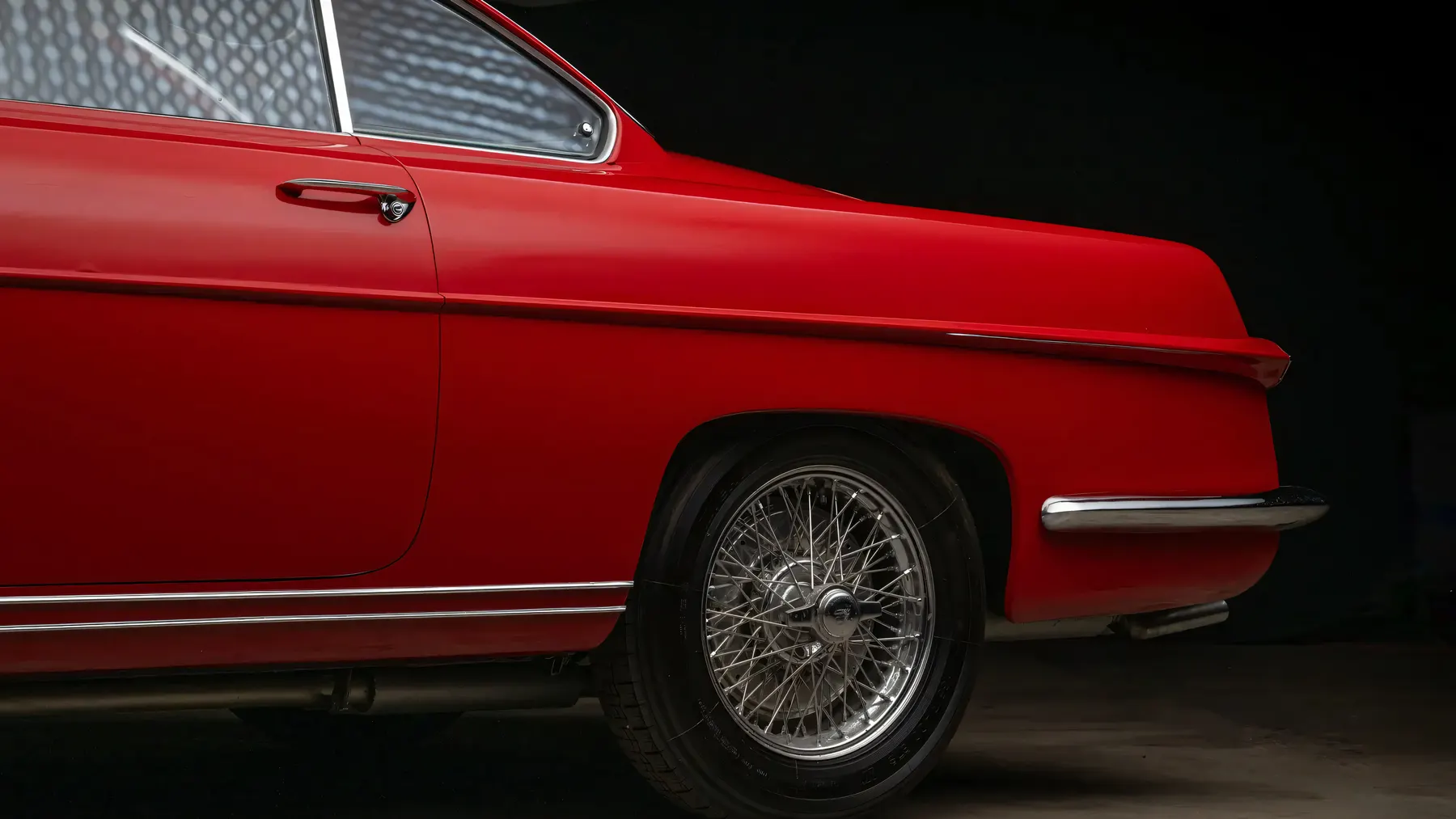
The 1900L coupe reflects all of that thinking, though in a more restrained register. The aluminum alloy coachwork features curved front bumperettes, bulbous fenders with protruding headlamps, squared wheel-well openings, and delicate rear fender fins. A wraparound front windscreen feeds into an airy glasshouse canopy that gives the cabin an almost architectural lightness. The design, it should be noted, fits somewhat awkwardly on the short-wheelbase chassis that underpins the other examples in the series - those cars suffer from exaggerated front and rear overhangs that compromise the visual balance. On the lungo platform, the same body language simply resolves itself: the proportions breathe, the fender-to-door relationship finds its equilibrium, and what reads as slightly strained on the 1900C reads as intentional on the 1900L. No two of the hand-built Ghia-bodied examples are wholly identical, either - each carries subtle detail variations, and the 1900L gains a striking body-length side spear that terminates in an arrow-shaped lamp serving as the turn signal.
Mechanically, the 1900L retains its matching-numbers Type 1306 engine, a twin-cam inline-four of 1975cc producing 115 bhp at 5,500 rpm. The 1900 Super engine was a genuinely advanced unit for 1954 - its dual overhead camshafts, running on a chain-driven tower at the front of the block, placed Alfa in rare company among production car manufacturers of the period. The compression ratio sits at 8.0:1, and the bore and stroke measure 84mm and 86mm respectively, producing the kind of rev-happy, slightly taut character that defined the Milan firm’s postwar engineering philosophy. Torque of 103 lb-ft arrives at 5,500 rpm, which means this is an engine that asks to be worked rather than lugged - entirely consistent with the sporting spirit of the 1900 family even in the grander lungo configuration.
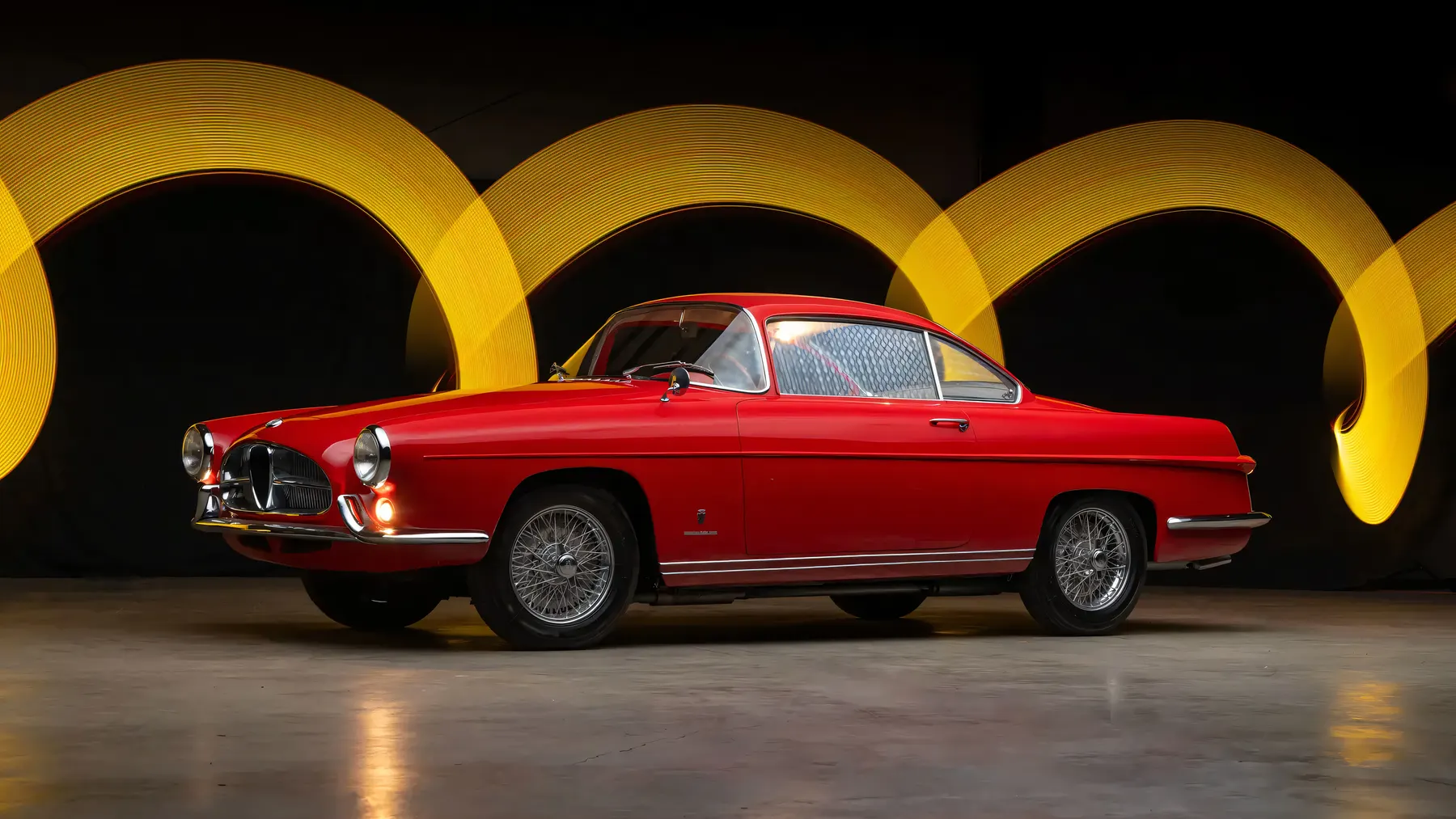
What makes the 1900L especially intriguing as a driver’s proposition, beyond the engine, is the factory-fitted column-mounted five-speed gearbox - a genuinely rare specification on the 1900 series. The standard car left the factory with a four-speed unit, and the addition of a fifth ratio transforms the usability of the car on longer runs, softening the engine’s demeanor at touring speeds without blunting its ability to respond when called upon. Paired with the lungo chassis’s inherently smoother ride quality over the shorter car - a product of its extended wheelbase distributing road inputs across a greater distance - the 1900L presents itself as a refined grand tourer that the short-wheelbase Ghia-bodied cars, for all their verve, simply cannot replicate.
The critical and collector reception of these Ghia-bodied 1900s has been consistently warm, though the 1900L specifically commands a premium over its short-wheelbase siblings precisely because of its proportional superiority and unique chassis specification. When RM Sotheby’s offered the car at their Monterey 2024 sale, it achieved $184,800 - a figure that reflects genuine rarity rather than speculative fever. A second appearance at the Miami 2025 sale brought $173,600, suggesting a stable, well-understood market rather than volatile enthusiasm.
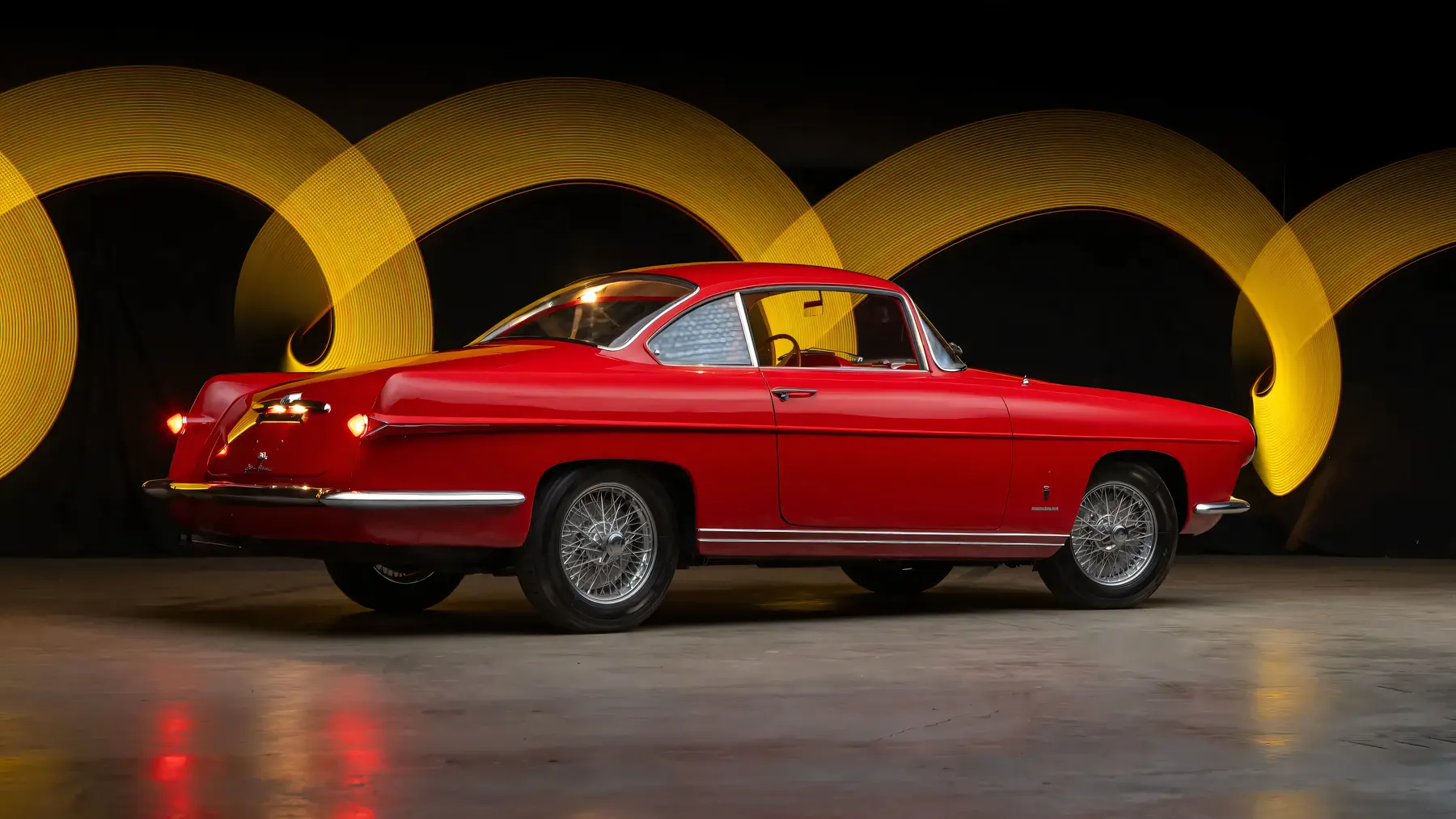
Savonuzzi’s broader legacy adds a further dimension to ownership. The man who penned this car would go on to work with Chrysler on turbine propulsion research before joining Fiat, dying in Turin in 1987. His Ghia years represent perhaps the most visually expressive period of a career built primarily on engineering rigour, and the 1900L Coupe - the one example that gave his design the wheelbase it actually needed - stands as a quiet validation of that instinct. The design was not flawed; it was simply waiting for the right platform, and the lungo chassis delivered it. That is the kind of detail that enthusiasts notice, and that concours judges reward.