1952 Chrysler Styling Special by Ghia
Virgil Exner had a problem, and the solution arrived in Turin. By the early 1950s, Chrysler was losing to eleven other American manufacturers in domestic sales, saddled with cars so conservative that the automotive press had begun to treat the brand as an afterthought. Exner, newly installed as Chrysler’s chief stylist, understood that the way back required a shock - something that would reframe what a Chrysler could be in the minds of buyers who had simply stopped noticing. He found his collaborator not in Detroit but in a bomb-damaged workshop on the outskirts of Turin, where Luigi Segre had taken the helm of a struggling Carrozzeria Ghia and was looking urgently for exactly the sort of transatlantic commission that could save it.
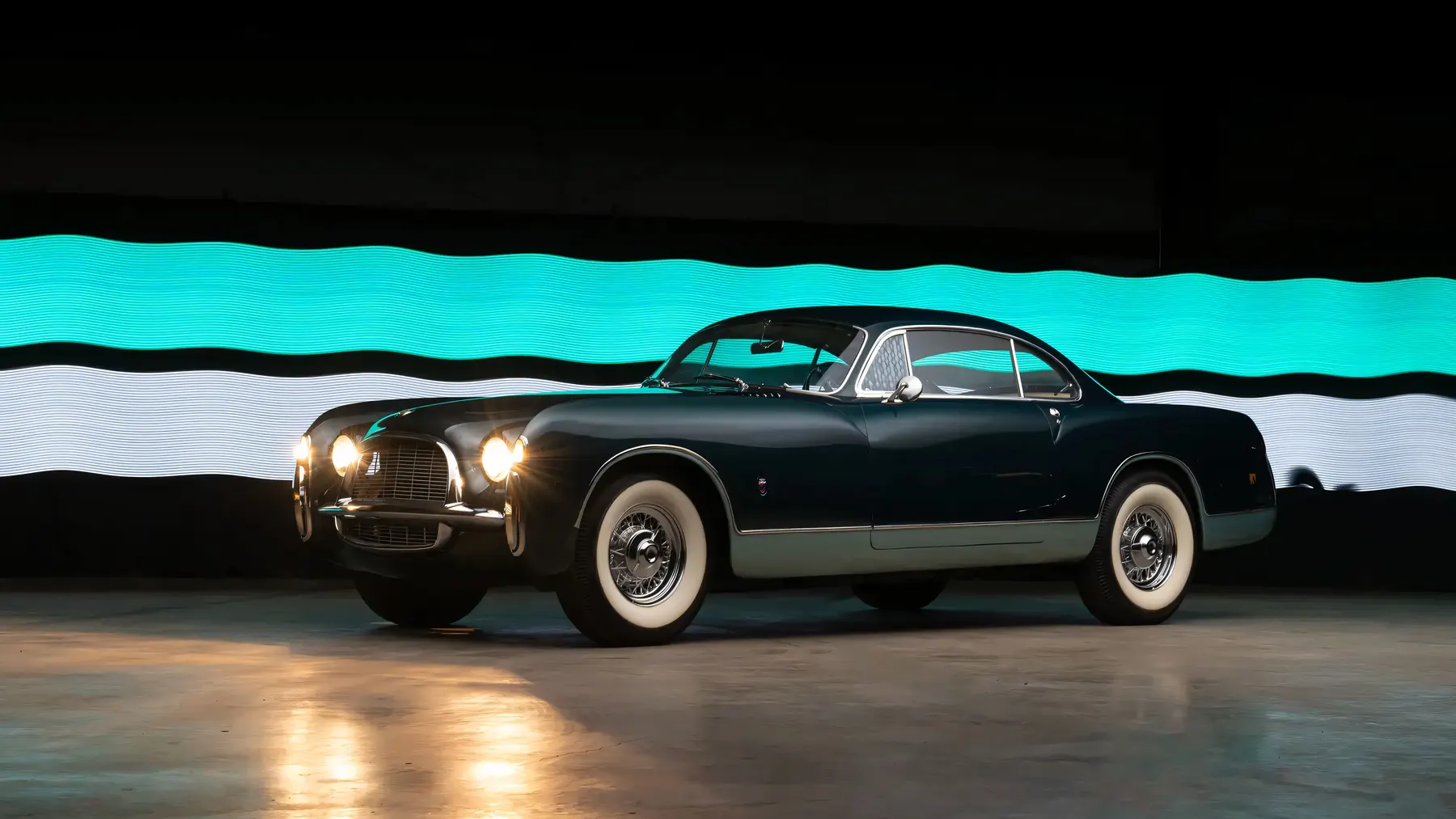
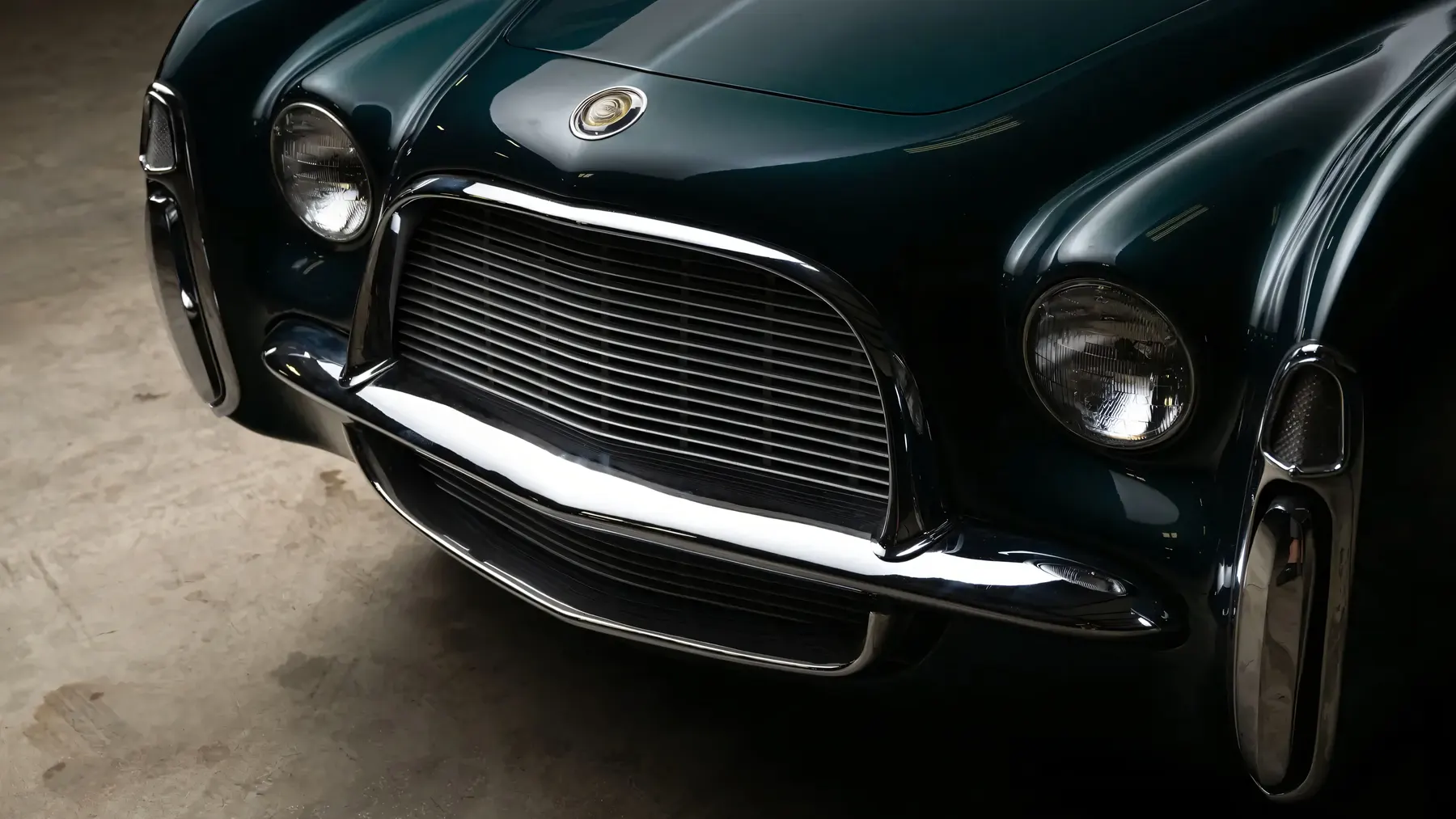
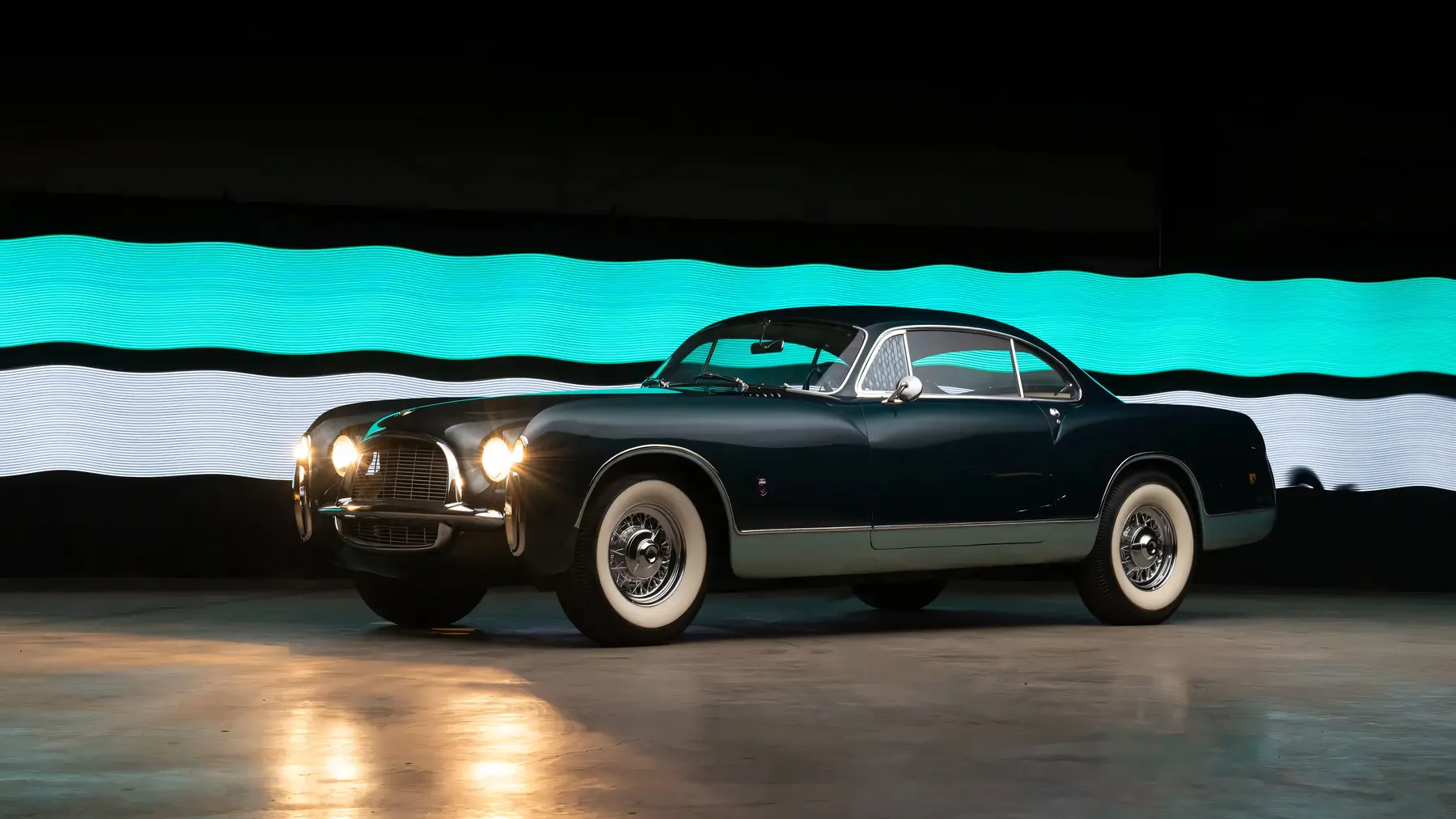
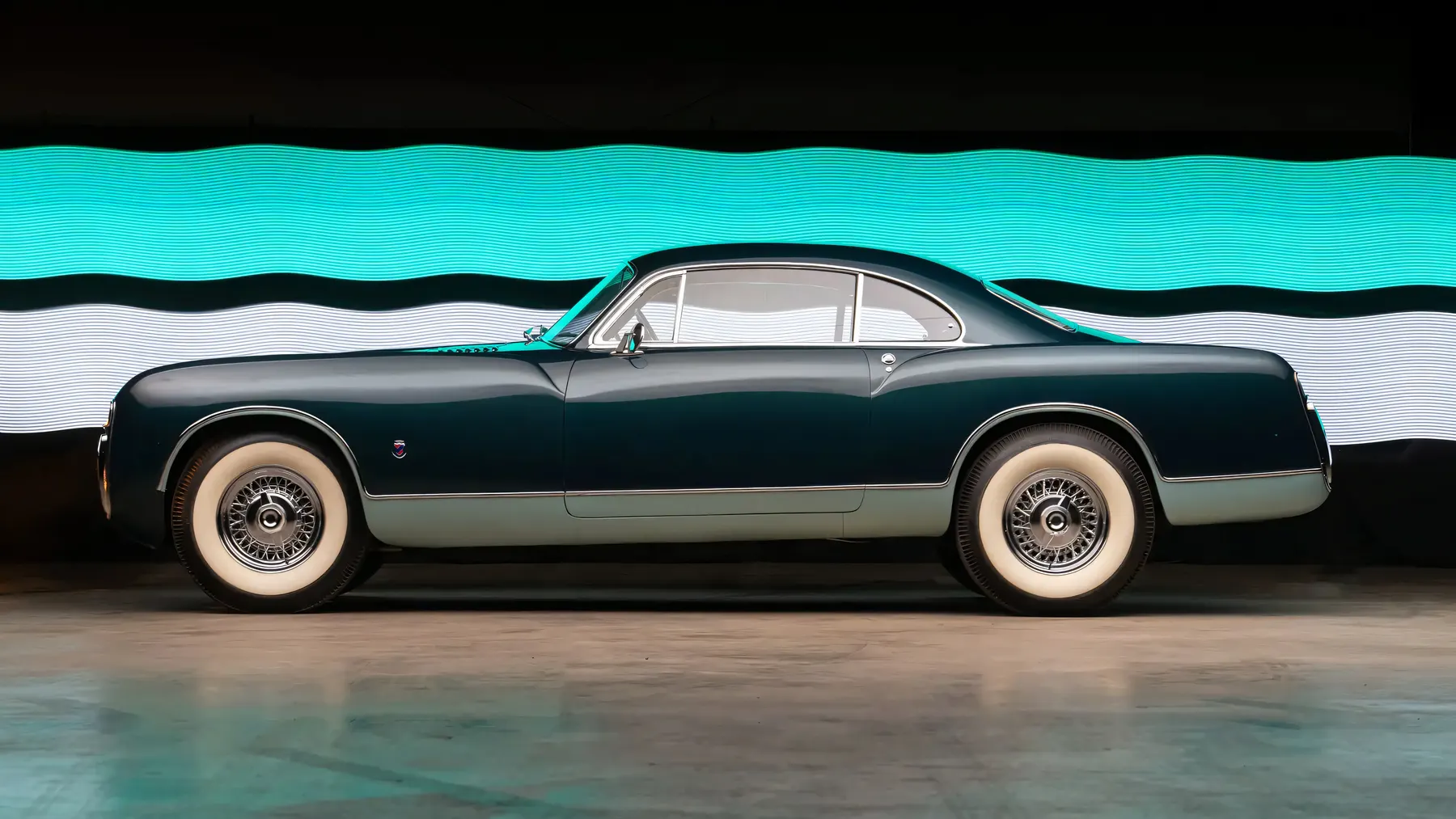
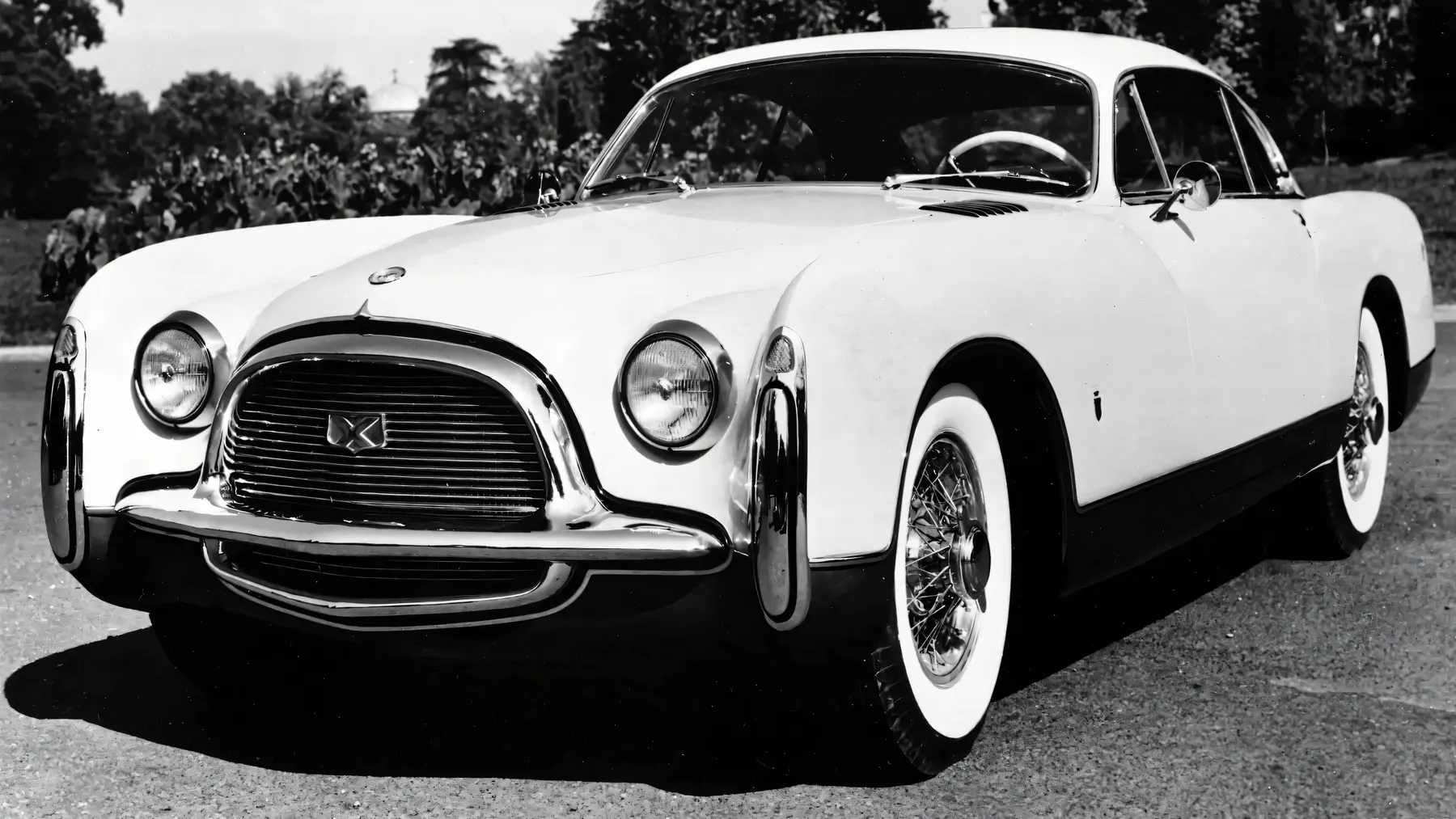
The Chrysler Styling Special that resulted from their collaboration arrived at the 1952 Paris Motor Show as a genuinely disorienting object. It looked, according to RM Sotheby’s, less like anything in the Chrysler catalogue and more like an oversized Fiat 8V - slab-sided, low, purposeful, with a glassy greenhouse pressed down between swelling rear fenders and a chrome trapezoidal grille that functioned simultaneously as grille and bumper. A rear-mounted spare tire was hidden in a pull-out drawer beneath the cargo floor, a detail so composed it suggested the designer had thought about everything, including what a parked car looks like from behind. Chrome wire wheels and wide whitewall tyres completed a stance that was far more European in its confidence than anything rolling out of Highland Park.
The car was unique in a precise sense: built on a shortened 119-inch wheelbase chassis - trimmed from the standard Chrysler New Yorker platform - it was the only Styling Special constructed this way, and the only one to wear a fastback roofline. Every other car in the subsequent family used a standard-length chassis and a notchback body. That shortened wheelbase gave the prototype a lean, crouching proportion that photographs from the Paris stand capture well: it sat low to the ground, visually weighted toward the rear, with a close-coupled cockpit that read as sporting without being cramped.
Under the bodywork lay Chrysler’s FirePower Hemi V8, the 331-cubic-inch unit that would become one of the defining American engines of the decade. In the Styling Special it produced approximately 180 bhp - enough, given the car’s reduced dimensions and the sensible weight management that Ghia’s hand-built aluminium panels permitted, to give it genuine performance credentials alongside its visual drama. The transmission was either a Fluid Torque Drive four-speed semi-automatic or the later PowerFlite fully automatic unit, both sourced from Chrysler’s production catalogue.
Ghia’s construction process at this period was essentially artisanal: bodies were shaped over wooden bucks by metalworkers who had trained in the coachbuilding tradition that had sustained Italian carrozzerie since before the war. What this meant in practice was that the Styling Special’s body, for all its apparent modernity of line, was fabricated the way a bespoke suit is made - by hand, to fit, with no two panels stamped identically. The slab sides that looked so revolutionary to Paris showgoers in 1952 were actually the product of exceptionally skilled panel-beating rather than any industrial press technology, which added a further layer of quiet artistry to what was already a provocative exterior.
The interior, finished in leather with a padded dashboard and a full instrument panel, maintained the same sporting-luxury character as the exterior - the kind of cabin that positioned the car not as an American luxury barge but as something closer in spirit to a continental grand tourer. Exner’s influence here was deliberate: he had been studying European cars closely since joining Chrysler, and the Styling Special’s cockpit was an argument, made in hide and chrome and gauge glass, that American cars could sit at the same table as the best of Turin and Maranello.
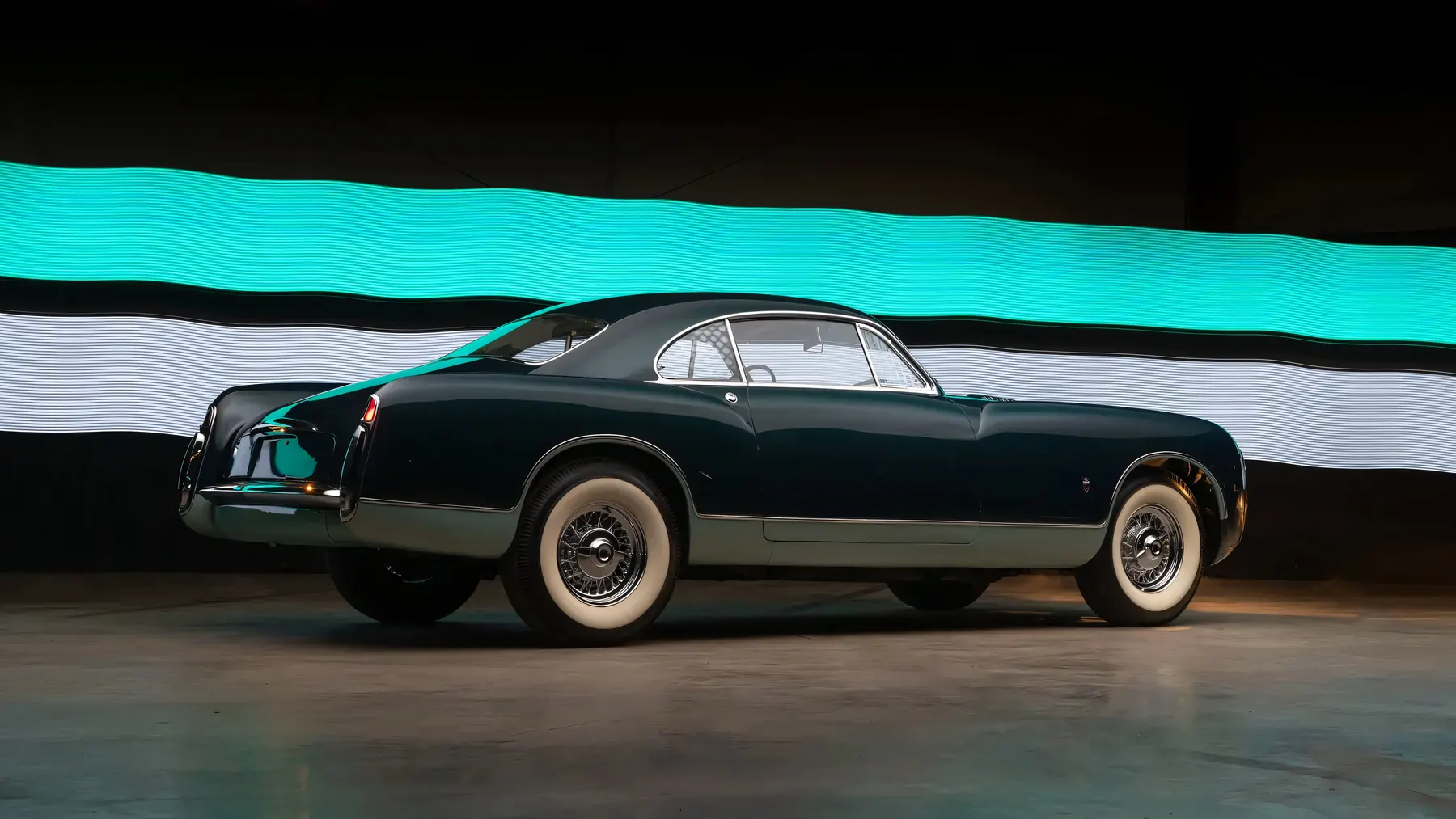
The Paris reception was significant enough that CB Thomas, Chrysler’s export manager, commissioned a near-duplicate for himself - the car that became known as the Thomas Special - on a standard-length chassis and with the notchback roofline that would characterise all subsequent cars in the series. That decision created a small production run: six cars commissioned directly by Chrysler, twelve additional examples authorised for Ghia’s own customers, for a total of approximately eighteen notchback Specials sold through Chrysler’s French distributor and Ghia’s own network. The original fastback prototype remained, and remains, alone in its configuration.
The subsequent history of the Styling Special is a study in the kind of benign neglect that occasionally preserves rather than destroys significant cars. It passed through several American collections, including the well-known Blackhawk Collection, receiving along the way a drivetrain update to a 1955 Hemi V8 that almost certainly happened in the period before the car acquired serious collector status. It was eventually sold at RM Sotheby’s Monterey in August 2024, where it realised $373,500 - a figure that reflects the car’s genuine historical importance while also acknowledging that it is, ultimately, a slightly worn and occasionally repainted survivor rather than a concours-restored centrepiece.
The Chrysler Specials that followed the original into customer hands found their way predominantly to wealthy European buyers - French industrialists, British collectors, the sort of clientele who attended concours d’élégance and expected their cars to win prizes rather than simply provide transport. One well-documented example was delivered through Société France Motors to Léon Coulibeuf, a Normandy industrialist who had made his fortune in post-war reconstruction and kept his Chrysler alongside a Mercedes-Benz 300 SL Gullwing, a 1959 Porsche 356 A 1600 Coupe by Reutter, and an Alfa Romeo 1900. Madame Coulibeuf showed the car at the Concours d’Élégance of Enghien-les-Bains in 1953; it was subsequently featured in the French magazine L’Action Automobile the same year. That a Chrysler should be shown and celebrated at a French concours in 1953 - a year when French automotive taste was still dominated by Delahaye, Talbot-Lago, and the coachbuilt Parisian tradition - speaks to how completely the Ghia collaboration had repositioned Chrysler’s image in European markets.
The car’s broader legacy is not difficult to trace. RM Sotheby’s noted at auction that the Styling Special served as “a source for the last generation of the Chrysler 300,” a claim that is less reach than it might sound. Exner’s vocabulary - the bold trapezoidal grille, the slab sides, the assertion that an American car could carry European design discipline without losing American scale - ran through Chrysler’s production design for the rest of the decade and periodically reasserted itself whenever the company’s designers reached back into their heritage for inspiration. The Forward Look that characterised Chrysler’s mid-1950s production range, with its clean flanks, prominent grilles, and low rooflines, drew directly from the confidence that the Ghia collaborations had established.
The weakness of the model, if one wants to be honest about it, was structural rather than aesthetic: the Ghia partnership was built on the personal relationships of Exner, Segre, and Thomas, and those relationships were always vulnerable to the institutional inertia of a large American manufacturer that had been burned once before by design ambition. The Airflow disaster of the 1930s - a genuinely advanced car that the American market had rejected - had left Chrysler’s management cautious about committing to anything too far ahead of public taste. The Ghia specials were therefore always kept at arm’s length from mainstream production: too valuable as prestige objects to abandon, too risky commercially to scale. When the personal relationships that sustained the collaboration shifted in the mid-1950s, the programme gradually wound down, and Chrysler’s design language, deprived of the Italian discipline that had sharpened it, eventually returned to excess.
The eighteen production Ghia Specials are among the most collectible of all American cars of the 1950s, appearing at Pebble Beach, Villa d’Este, and Concorso della Villa d’Este, where the surviving example restored by Jacques Pelve won the “Most Exciting Design” prize at the Zoute Concours d’Élégance in Belgium in 2014. The original Styling Special, the fastback prototype that started it all, remains the most significant and the rarest of the group - the car that demonstrated, in a Paris exhibition hall in October 1952, that Chrysler had found a way to make the world look at it again.