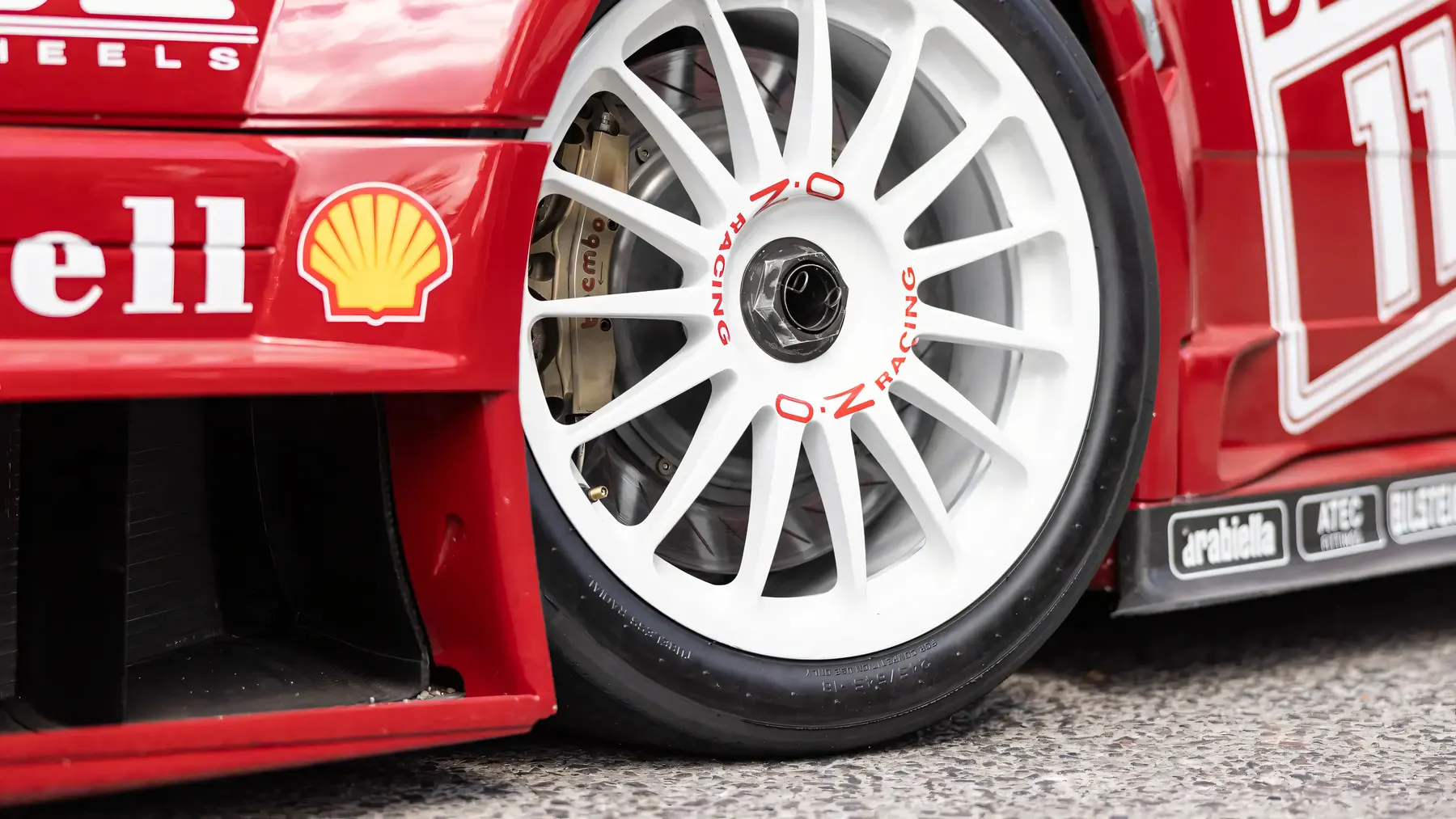
1994 Alfa Romeo 155 V6 TI DTM
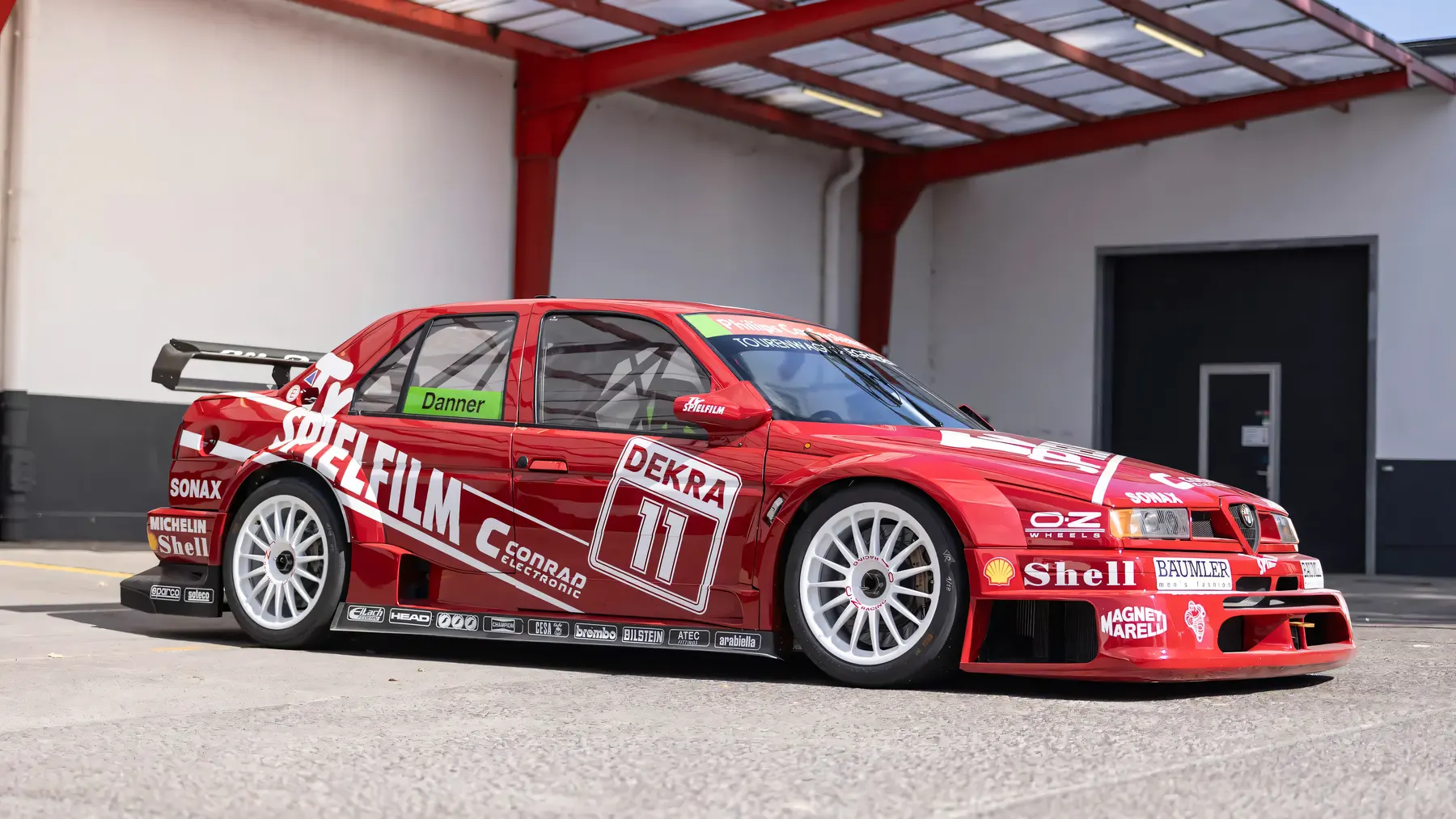
When the Class 1 rulebook landed on the desks of Alfa Corse engineers in the early 1990s, it must have read less like a technical regulation and more like a dare. Build a car that wears the bodywork of a production saloon, they were told - but underneath, feel free. The result, after years of development and the kind of inter-departmental intensity that seems to follow every serious Italian motorsport project, was the 155 V6 TI DTM: a machine so far removed from the road-going 155 it shared a name with that the two cars’ only genuine kinship was a vague silhouette and a badge on the nose.
The Deutsche Tourenwagen Meisterschaft of the early 1990s was, by almost any measure, the most technically extravagant touring car championship the world had ever seen. The adoption of the FIA’s Class 1 regulations in 1993 unleashed a arms race of startling ambition. Multi-cylinder, high-revving engines. Active suspension systems borrowed from Formula 1 thinking. Four-wheel drive in a touring car body, with all the packaging nightmares that entailed. And over all of it, the “silhouette” philosophy - aerodynamic bodywork sculpted to look vaguely like a production car from a distance while serving an entirely different set of aerodynamic masters up close. The manufacturers who entered this environment weren’t dabbling in motorsport for image reasons alone. AMG-Mercedes, Joest-Opel, and Alfa Corse were engaged in something closer to an engineering arms race dressed in crowd-pleasing tin.
Alfa Romeo’s decision to enter the DTM with the 155 V6 TI was, in retrospect, one of the more audacious gambles in the marque’s long and theatrical motorsport history. The road-going 155 was a perfectly competent front-wheel-drive executive saloon, the kind of car that was sensible enough to satisfy Fiat Group accountants and Italian enough to satisfy the faithful. What Alfa Corse built in its name was something else entirely. The competition car retained the barest architectural suggestion of its donor: the roof line, the glass area, the vaguest impression of a three-box saloon. Everything else was purpose-built.
At the heart of the 155 V6 TI sat a 2.5-litre, 60-degree V6 producing figures that varied across the development cycle but consistently exceeded 420 horsepower - some estimates in race trim pushed closer to 490bhp - at a screaming 11,500rpm. This was not the smooth, torquey engine note of a road car; it was a high-strung, race-prepared unit that needed to be worked hard and kept in a narrow power band to deliver its best. The engine was mated to a sequential gearbox, and the whole driveline fed power to all four wheels through a system developed in collaboration with Ferguson Formula, whose Viscous Coupling AWD technology had proven itself in other applications. Getting four-wheel drive to work coherently in a touring car of this aggression and weight was not trivial, and the packaging compromises involved were significant - the 155 V6 TI was not a particularly light car by the standards of what it was trying to achieve, and weight distribution required constant engineering attention.
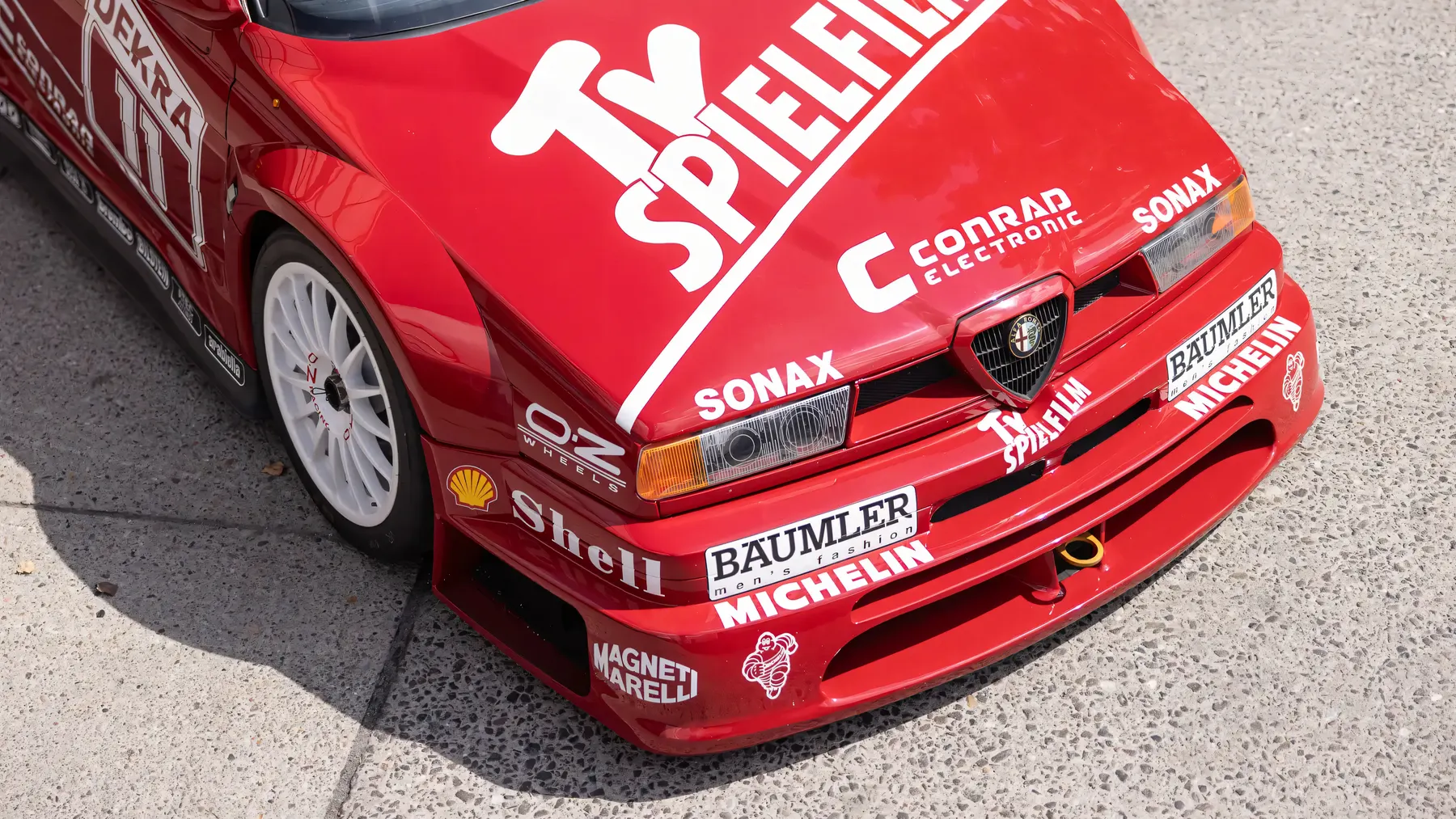
The aerodynamic package was where the silhouette concept came into its own. Wide arch extensions, a pronounced front splitter, and a rear wing that bore only a philosophical relationship to anything a customer could order combined to generate meaningful downforce at DTM speeds. The body panels were composite, the stance dramatic. In motion, particularly in the vivid rosso red and white of the Alfa Corse works livery or the various sponsor-backed iterations run by the semi-works teams, the 155 V6 TI was a genuinely arresting sight - Italian drama expressed at 180mph.
What made the car’s debut season so extraordinary was not just the engineering, but the immediacy of its success. In 1993, the 155 V6 TI’s first year of competition, Nicola Larini drove it to the DTM championship. Fourteen victories across the season, against established opposition from Mercedes-AMG and Opel-backed machinery that had years of Class 1 development behind them. Italian exuberance defeating German methodical efficiency on German soil, in a German championship - the narrative practically wrote itself, and the press obliged enthusiastically. Larini was quick and committed, but credit belongs equally to Alfa Corse’s engineering staff, who had produced a competitive package remarkably quickly and tuned it effectively across the season.
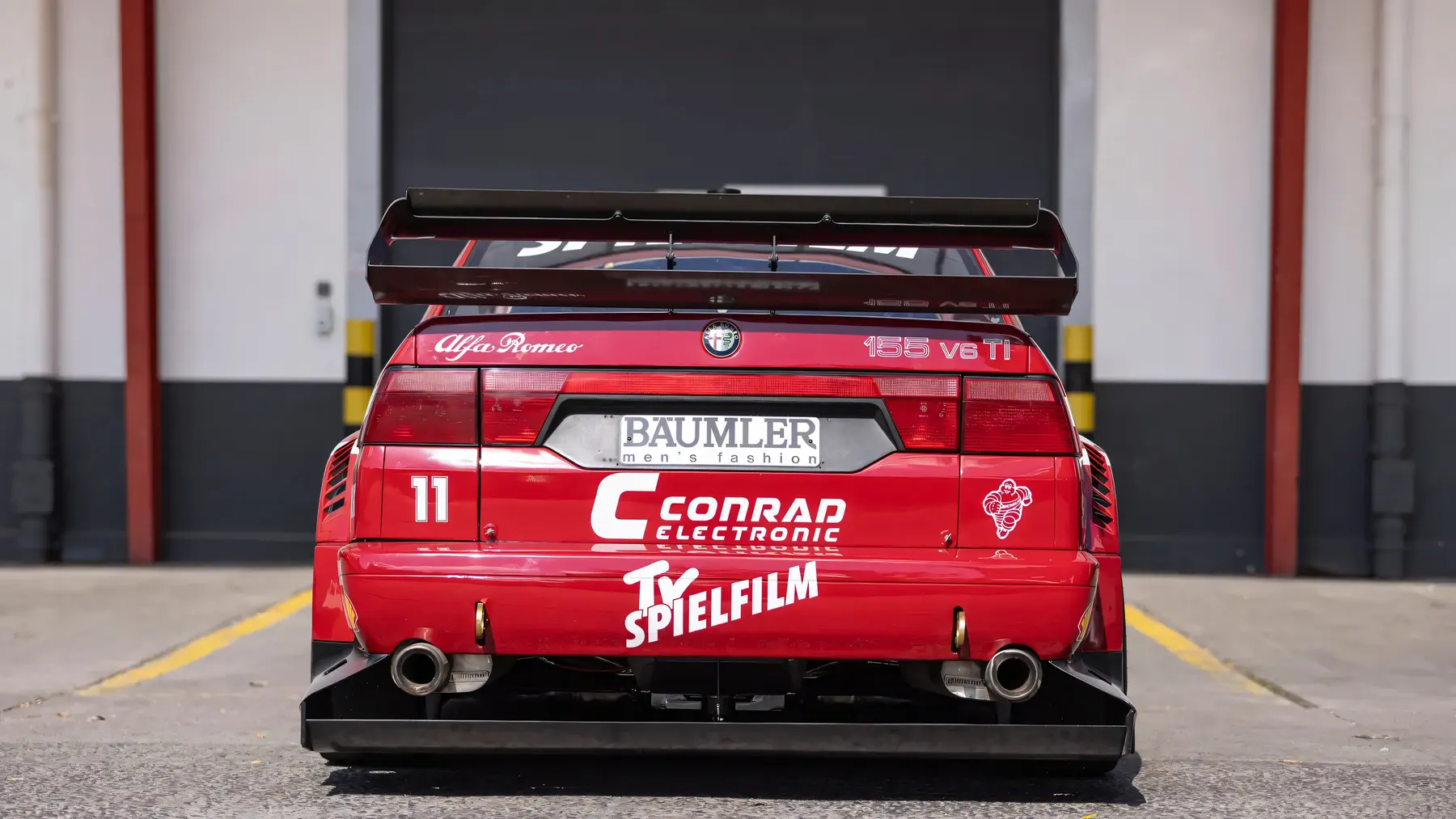
The 1994 campaign told a more complicated story. Alfa Corse arrived with meaningful upgrades - a new Kelsey-Hayes ABS system and an active suspension package were among the headline additions - and the expectation was that an improved car, now with a full season of learning behind it, would consolidate and extend the previous year’s dominance. What actually unfolded was a season blighted by reliability problems that the active systems, for all their sophistication, seemed to compound rather than cure. Active suspension in early-1990s racing was not a mature technology in touring car applications; the additional mechanical complexity introduced failure modes that a simpler, passive setup might have avoided. Mercedes-Benz, methodical and well-funded as ever, took the 1994 title courtesy of Klaus Ludwig, with Larini managing only third in the final standings. The improvement in raw speed was real. The improvement in finishing races was not.
This points to one of the genuine tensions in the 155 V6 TI’s story: it was a car of spectacular capability and equally spectacular fragility. The technical ambition that made it a landmark machine - the AWD system, the high-revving V6, the active suspension experiment - also made it an engineering challenge that was never entirely tamed. Race teams dealing with the 155 V6 TI needed comprehensive spares support and strong mechanical knowledge; attrition was a constant companion. For the semi-works Schübel Engineering squad running alongside the factory Alfa Corse effort, the 1994 season involved a constant negotiation between what the car was capable of in qualifying and what it could reliably deliver over race distance.
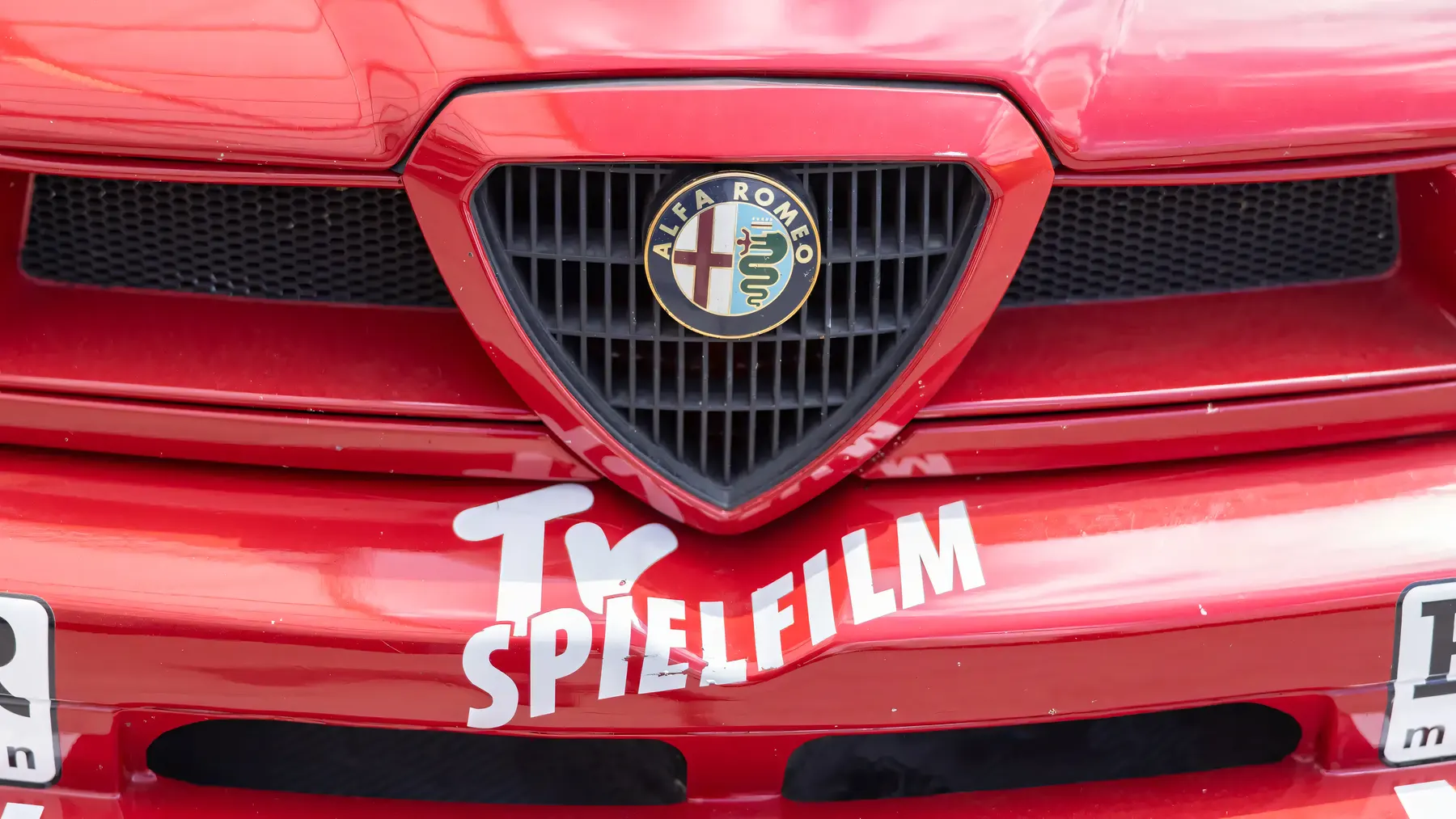
Christian Danner, the experienced German Grand Prix veteran who campaigned one of the Schübel cars through 1994, was exactly the kind of measured, intelligent driver the 155 V6 TI rewarded. The car at the limit - managing the AWD balance through high-speed corners, exploiting the aerodynamic package without overwhelming the tyres, nursing brakes across a full race stint - demanded nuance as well as outright speed. It was not a forgiving machine. The power delivery from a 2.5-litre V6 singing toward 11,500rpm required precise throttle management, and the four-wheel drive system, while enormously effective at channelling power in the dry, introduced its own dynamic complexities at the edge. Drivers who got on with the 155 V6 TI tended to be those who could find a rhythm with its specific demands rather than trying to impose a different driving style upon it.
The cultural significance of the 155 V6 TI in the DTM exists on several levels simultaneously. In purely sporting terms, it represented Alfa Romeo’s most serious and sustained assault on top-level European motorsport since the glory days of the Alfa Romeo 158 and 159 in the late 1940s and early 1950s - a lineage the marketing department was happy to invoke, and one that, given the 1993 championship, was not entirely without justification. In broader cultural terms, the car arrived at the precise moment when DTM was achieving genuine mass appeal: television coverage, star drivers, manufacturer warfare, and genuinely spectacular racing made the series a fixture of early-1990s European motorsport culture. The 155 V6 TI was the most visually arresting car in that environment, and images of it in combat with the silver AMG-Mercedes and white Opel Calibras became shorthand for an era.
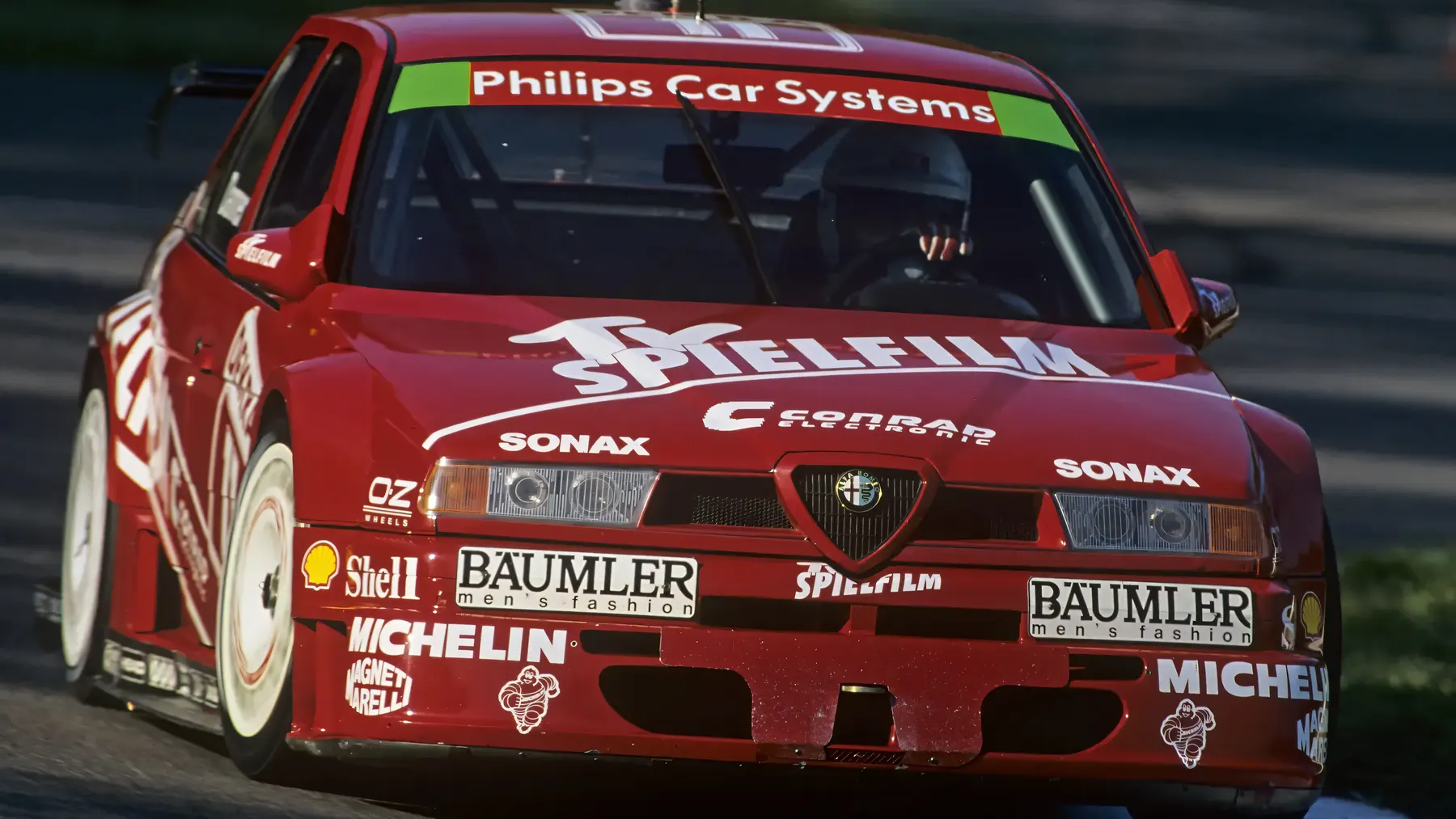
For enthusiasts, the 155 V6 TI occupies a specific emotional register - the kind reserved for machines that achieved something remarkable for a brief, intense period before circumstances moved on. Alfa Romeo’s DTM involvement was relatively short, the number of cars built genuinely small, and the Class 1 era itself ended when the participating manufacturers lost appetite for the escalating costs. The 155 V6 TI exists now as a preserved artefact of a particular moment when technical ambition in touring car racing was given almost total freedom, and one manufacturer responded by building something that won a championship at the first attempt and spent the following year proving that the margin between brilliance and fragility is, in racing, vanishingly thin.
Its reception among historians and enthusiasts has only grown warmer with distance. Contemporary coverage of the 1994 season was often critical of the reliability issues and the degree to which Mercedes-Benz’s superior operational discipline had neutralised Alfa’s raw performance advantage - a fair verdict at the time. With thirty years of perspective, what survives is the image of the car itself: the sound of that V6 at full chat, the spectacle of a proper silhouette touring car at maximum attack, and the memory of what it felt like when Alfa Romeo briefly persuaded the world that Italian engineering could beat German engineering at the Germans’ own game, on their own turf, in their own championship. That it did so only once before the reliability gremlins reasserted themselves is somehow entirely appropriate for a manufacturer whose entire identity is built on the tension between extraordinary potential and imperfect execution.