1960 Facel Vega HK500
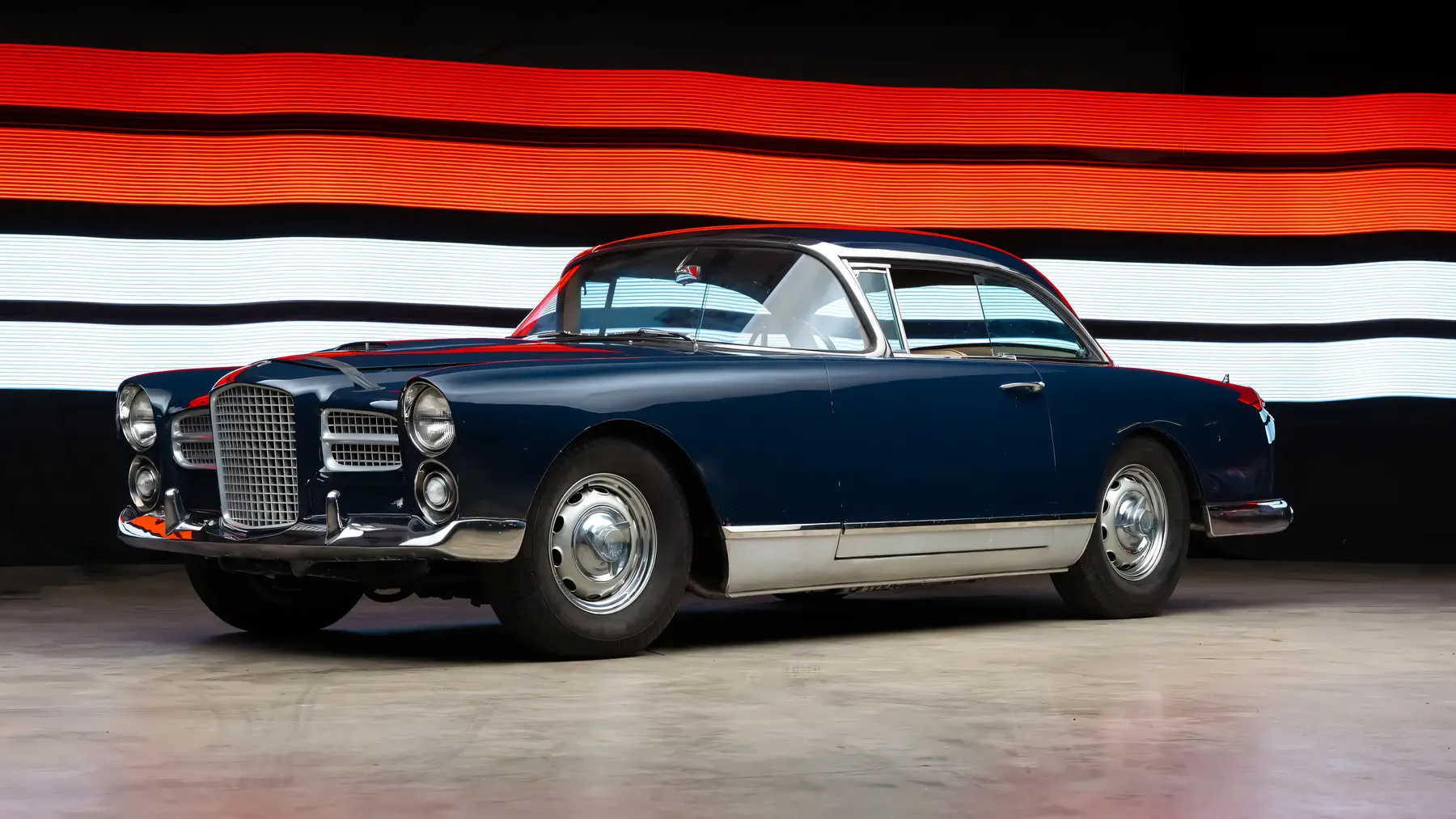
Ask yourself what kind of car a French aerospace industrialist builds when he decides his country has been too long without a proper grand tourer - and you arrive at something philosophically peculiar: a machine draped in Gallic elegance, hewn from metal by craftsmen in Colombes, yet powered at its heart by a thumping American V8 from Chrysler’s catalogue. That is exactly what Jean Daninos conceived, and the HK500 is the most complete expression of that vision he ever produced.
Daninos had not come to car manufacturing by the usual route. FACEL - Forges et Ateliers de Construction d’Eure-et-Loir - began in 1939 as a metal-stamping and aerospace subcontracting firm, before expanding into pressing car bodies for Panhard, Simca, and Ford’s elegant Comète. Having worked earlier with Citroën on the Traction Avant, Daninos understood both the engineering discipline of aircraft manufacture and the commercial realities of volume car production. What he craved, however, was something altogether different: a grande routière capable of restoring France to the pinnacle of automotive prestige, in the tradition of Bugatti, Delahaye, and Talbot-Lago - all of which, by the mid-1950s, were either dead or dying. His first Vega appeared at the 1954 Paris Motor Show to considerable interest, powered by a DeSoto Hemi V8. The HK500, unveiled at the same show four years later in October 1958, was the logical refinement of everything he had learned - arguably the most accomplished Facel Vega ever built with a V8 engine.
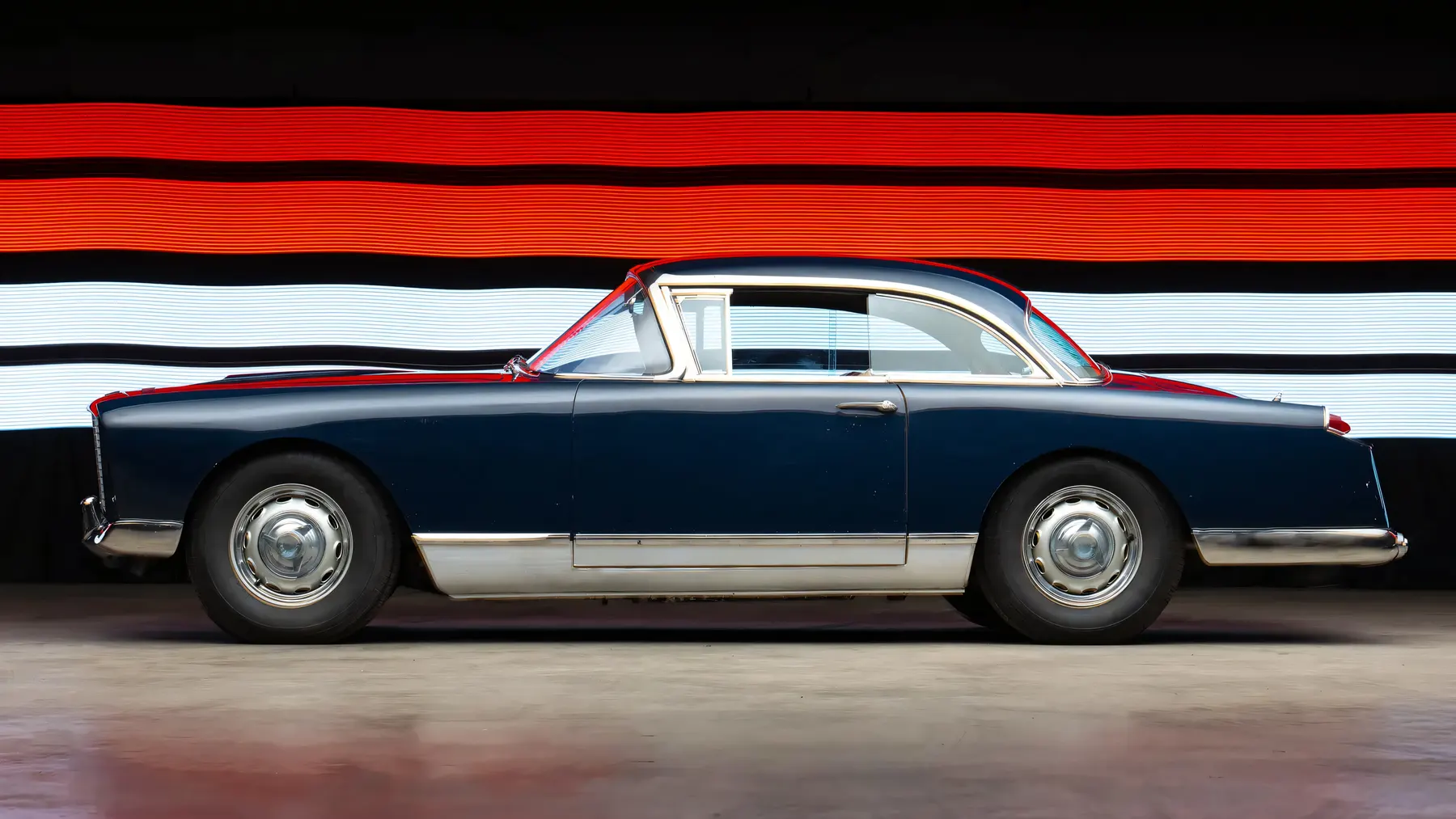
The HK500 occupied a market position that was essentially without parallel. Priced at around £4,739 in 1960 Britain - comparable to contemporary Rolls-Royces and well beyond what Ferrari or Aston Martin demanded - it promised something none of those rivals could: a four-seat hardtop coupe with a genuine, effortlessly accessible turn of speed drawn from proven American running gear. Buyers came from the very top of postwar society, and confirmed enthusiasts ranged from the Shah of Iran and King Hassan II of Morocco to Ava Gardner, Frank Sinatra, Ringo Starr, Pablo Picasso, and Christian Dior. Stirling Moss owned one. In just under three years of production, 489 examples were built before the HK500 gave way to the Facel II in 1962, making each car an object of genuine rarity even by the standards of the era.
The mechanical formula was bold in its pragmatism. Early HK500s used the 5,907cc Chrysler V8 producing 360 bhp at 5,400 rpm and a generous 400 lb-ft of torque - figures that made any conversation about European horsepower almost irrelevant. Later cars received the enlarged 6,276cc unit, with some configurations quoted at up to 390 bhp in manual form; with the pushbutton three-speed Torqueflite automatic, output settled at around 330–335 bhp but the transformation in refinement was remarkable. The Torqueflite’s column-mounted selector buttons - a feature lifted directly from Chrysler’s American showroom offerings - became one of the HK500’s more eccentric talking points, and one of its most charming. The chassis, designed by Jacques Brasseur with independent front suspension and a live rear axle, was robust and conventional, with disc brakes initially optional before becoming standard in April 1960 - a concession to the speeds the car was capable of reaching. Top speed was a genuine 142 mph, with 0–60 mph dispatched in around 8.4 seconds - figures that put it among the fastest production cars on sale anywhere in the world.
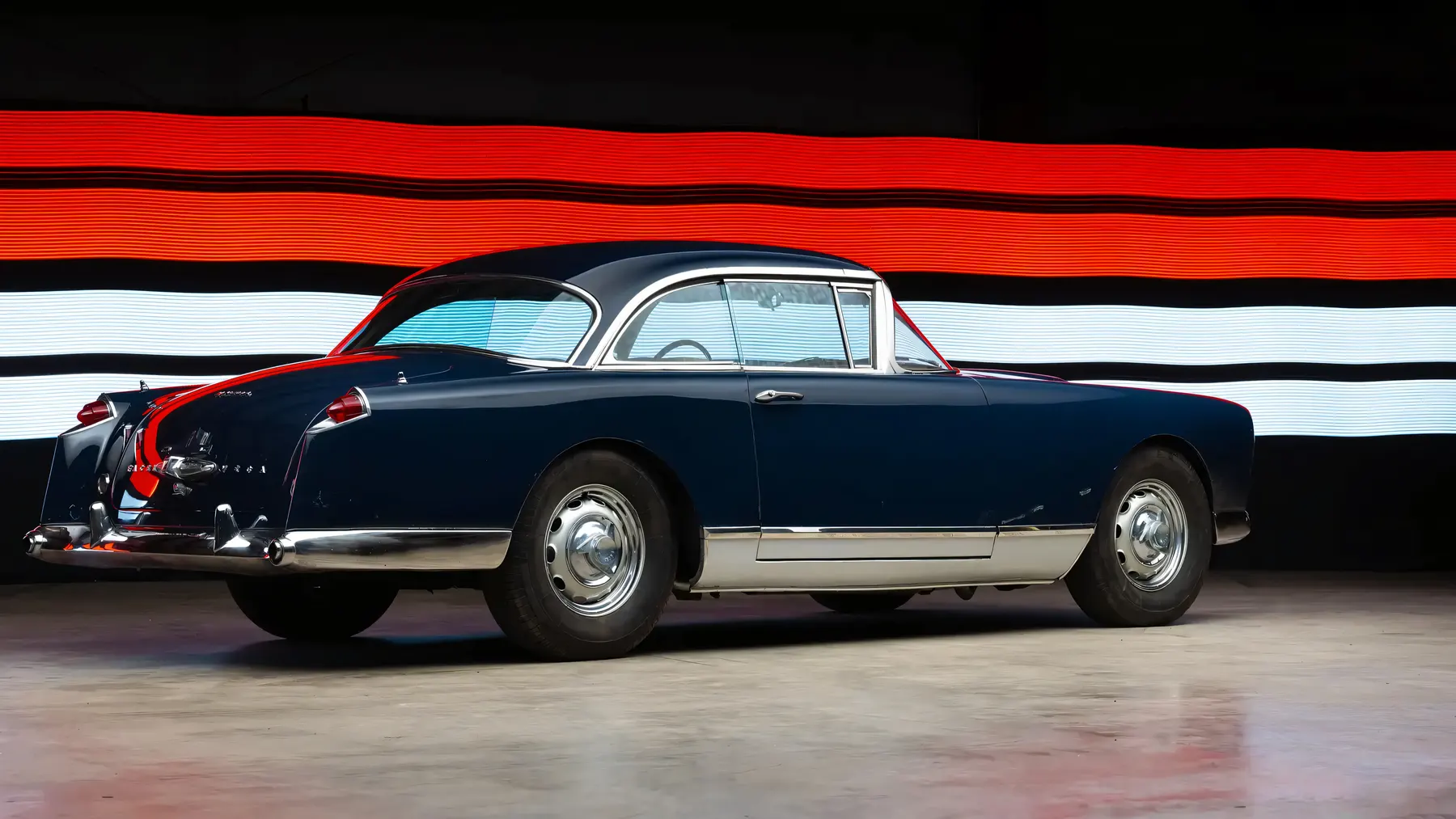
Brasseur’s body design, described by historian Michael Sedgwick as a “pavilion,” was the work of an engineer who understood that authority and beauty are not opposites. The HK500’s flanks are remarkably clean - smooth, low-slung, free of the baroque chrome excess that American cars of the same period wallowed in - yet unmistakably influenced by the transatlantic aesthetic that made Detroit’s studios so compelling in the late 1950s. Those rear fins are handled with particular precision: the taillights are partially recessed, “Frenched” into the metalwork in a technique borrowed from American custom car culture, while the exhaust outlets are integrated into the rear bumper with similar architectural intent. The result is a car that reads as muscular without being grotesque, and stylish without being fragile. The glasshouse - thin-pillared and generously glazed - gives the HK500 an almost American sense of visibility that was unusual among European GT cars of the era.
Inside, the HK500 delivered a level of appointed comfort that few European rivals could match. The burled wood dashboard stretched across the full width of the cabin in a sweep of genuine craftsmanship, gauges clustered with purposeful legibility. Leather upholstery was standard, complemented by quilted cloth headliners that gave the roof an intimacy unusual in a car of this size. Power windows, a luxury fitment for 1959, were part of the standard equipment. The knock-off steel wheels - road-going in intent but racing in flavour - completed a stance that balanced elegance with purpose.
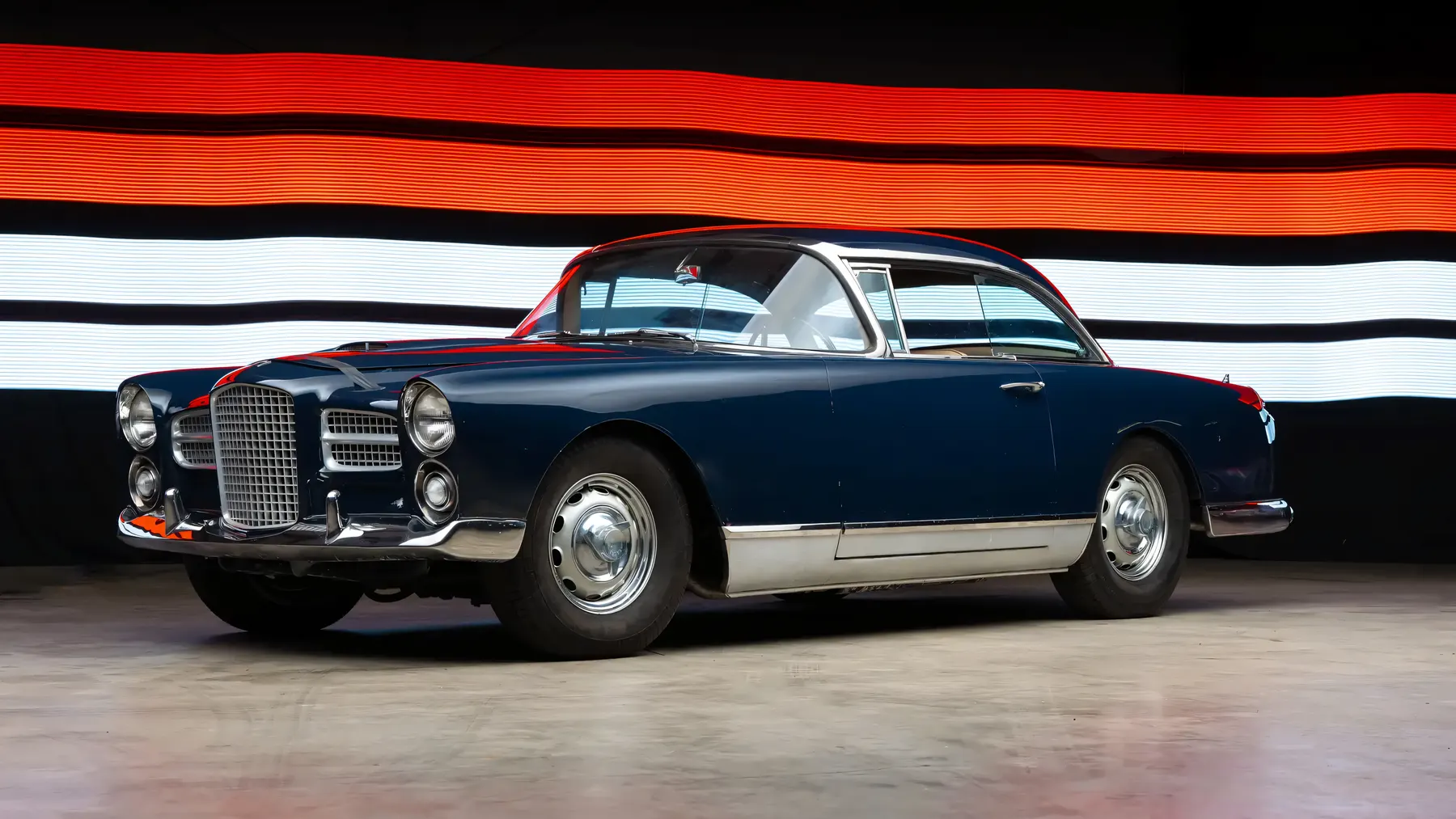
On the road, the HK500 operated by its own set of rules. That Chrysler V8 produced its torque so low in the rev range - peak twist arriving well before 3,000 rpm - that the car rarely needed to be hurried. Highway cruising at sustained speeds well above 100 mph was relaxed rather than dramatic, the Torqueflite shuffling through its ratios with a smoothness that American engineers had refined over millions of miles of domestic use. The combination of live rear axle, considerable mass (a kerb weight approaching 1,700 kg in road trim), and drum brakes on early examples meant that spirited driving demanded respect and forward planning - this was never a car for the overconfident. The steering was accurate without being communicative in the European tradition, and the ride, though firm enough to feel purposeful, erred on the side of comfort over engagement.
The car was not without genuine compromises. The live rear axle, acceptable in 1959, was already behind the engineering curve by the time production ended in 1961, and the handling at the limit reflected this - the mass was difficult to manage quickly once disturbed. The sheer weight of the car, combined with those early drum brakes, created a machine that required confident, experienced hands to drive quickly; it was a touring instrument of the first order, but not a sports car in the continental sense. Inside, the cabin’s design prioritised luxury over ergonomics - the driving position was not universally praised - and despite the broad expanse of glass, the thick A-pillars of the pillarless hardtop created structural complications that manifested in body flex over rough surfaces.
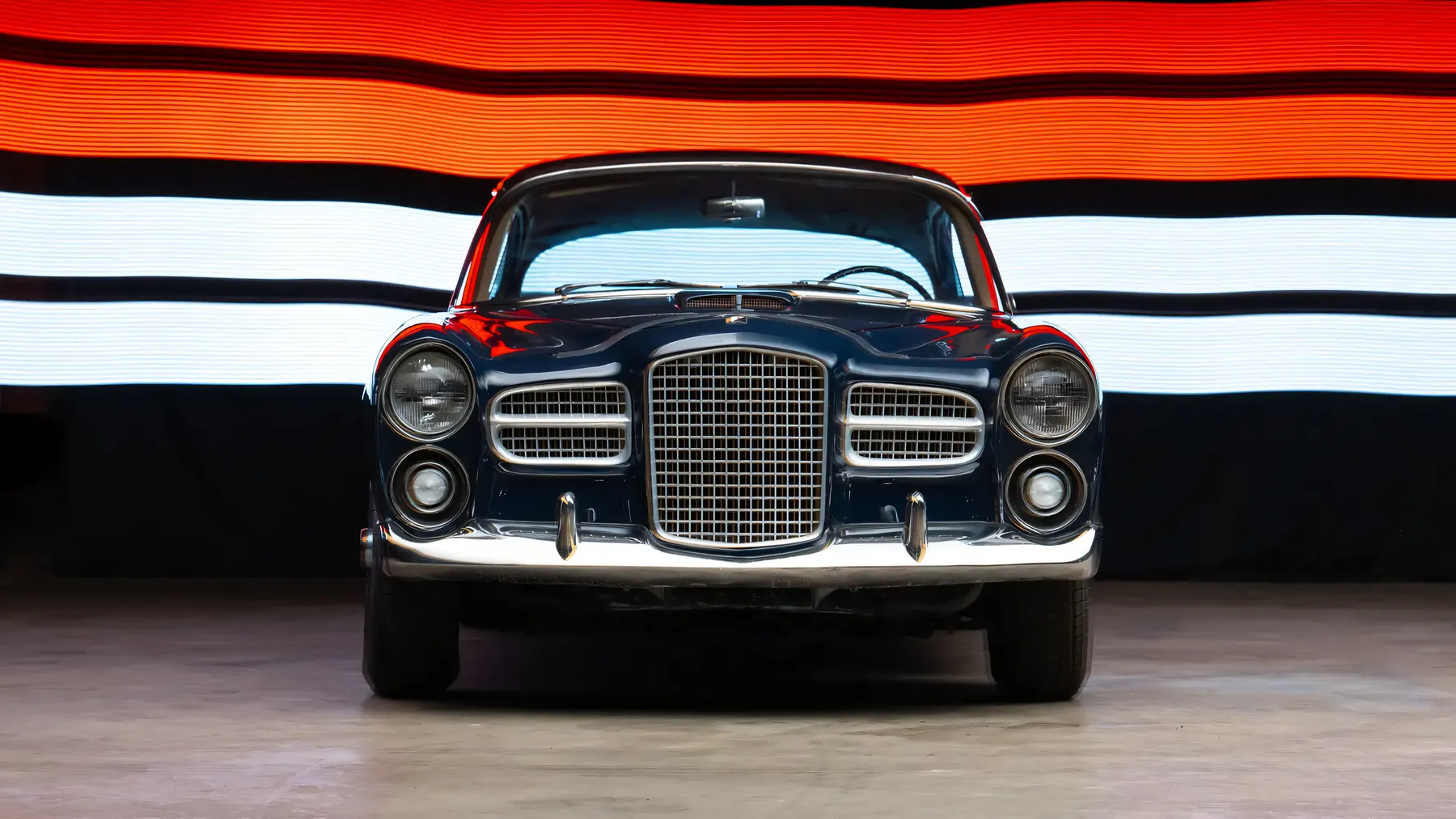
The cultural shadow the HK500 casts is partly shaped by tragedy. On 4 January 1960, Albert Camus - Nobel laureate, author of L’Étranger and La Peste - died in the passenger seat of a Facel Vega on a long straight stretch near Sens, when his friend and publisher Michel Gallimard lost control and struck a plane tree. Gallimard died days later. The car involved was an earlier FV model rather than the HK500 specifically, but the marque’s association with Camus has coloured its mythology ever since - the most French of literary deaths, in the most Franco-American of cars, on a straight road without apparent cause. The poetic irony was not lost on anyone.
Critical reception during the HK500’s production life was largely enthusiastic. Road testers who drove it found the combination of straight-line performance and grand touring refinement remarkable for a four-seat car of any nationality. The Chrysler engine drew occasional notes of snobbery from European purists, but most serious evaluators conceded that it was the right choice for what the car intended to be. Modern assessments, informed by the perspective of six decades, have been kinder still - the HK500 is now consistently cited as one of the most desirable GT cars of its era, and values at auction reflect a renewed appreciation for what Daninos achieved in Colombes.
What makes the HK500 poignant, in retrospect, is the knowledge of what came next. Daninos’s attempt to build a small all-French sports car - the Facellia - with an in-house engine proved catastrophic. The unit was chronically unreliable, the financial losses from warranty claims and rebuilds were devastating, and despite emergency surgery involving third-party rebuilds and eventual replacement with an Austin-Healey unit, the damage could not be undone. Jean Daninos resigned in 1961, production ceased in 1963, and the company folded entirely in 1964. The HK500, which had been the financial spine of the entire enterprise, was gone by then - succeeded briefly by the Facel II but never truly replaced.
The Facel Vega HK500 endures as a reminder that the most interesting cars are often born from contradictions - French hands and American iron, aerospace precision and Detroit displacement, European aesthetic sensibility and transatlantic pragmatism. Daninos never fully resolved those tensions; he simply harnessed them long enough to build something that still turns heads sixty-five years on, and that still feels, in its own particular way, entirely unlike anything else on four wheels.