1968 Shelby GT350 Convertible
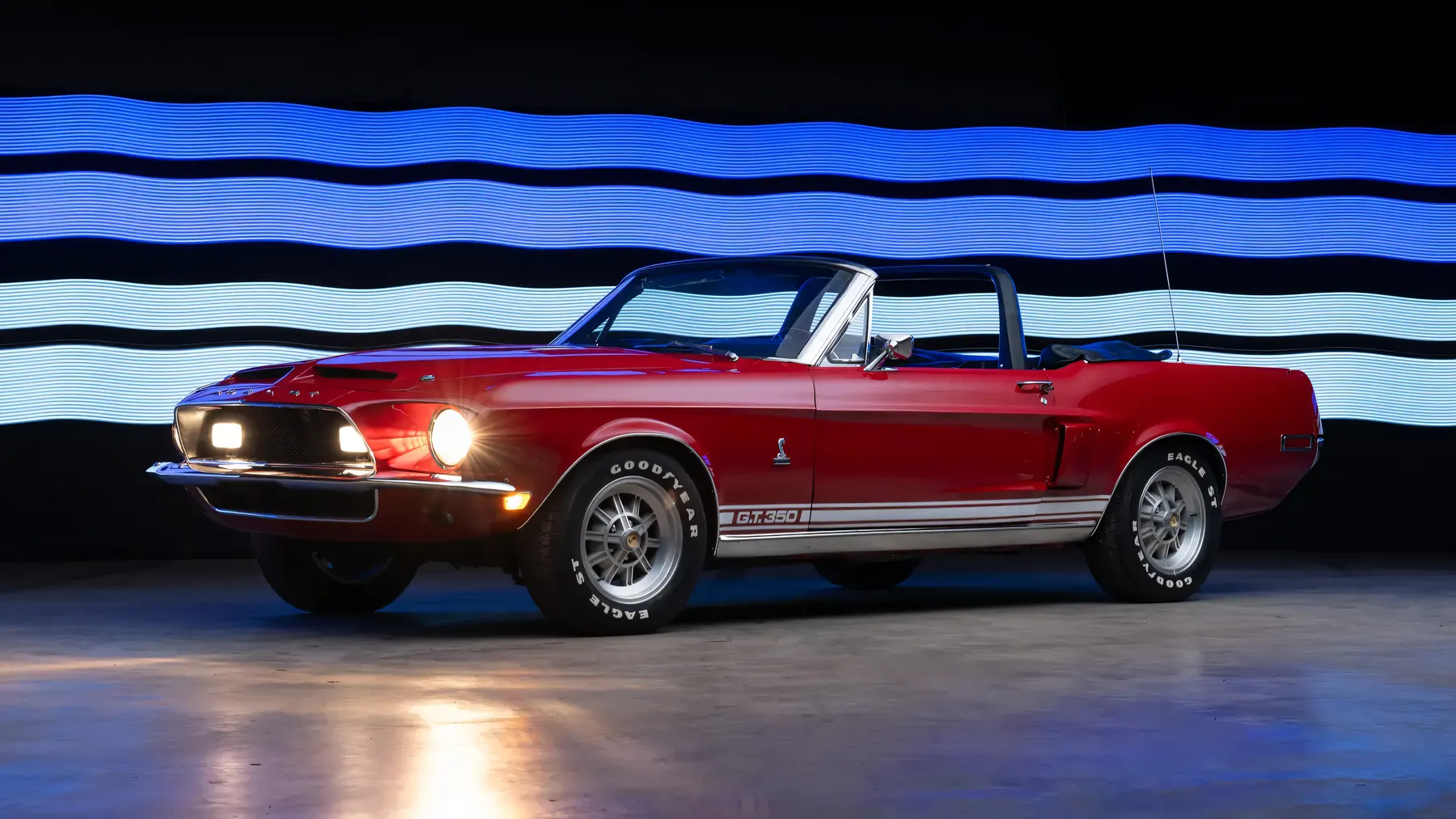
Carroll Shelby had a habit of making things difficult for himself just to prove they could be done. Strip the roof off a performance car - already a compromise in structural rigidity - and you invite a cascade of problems: scuttle shake, cowl flex, a body that breathes when it shouldn’t. That Shelby not only solved those problems for 1968 but produced what remains one of the most romantically charged American convertibles of the muscle car era says everything about what the GT350 Convertible actually was: not a concession to softer tastes, but a calculated answer to a question the market had been asking for three years.
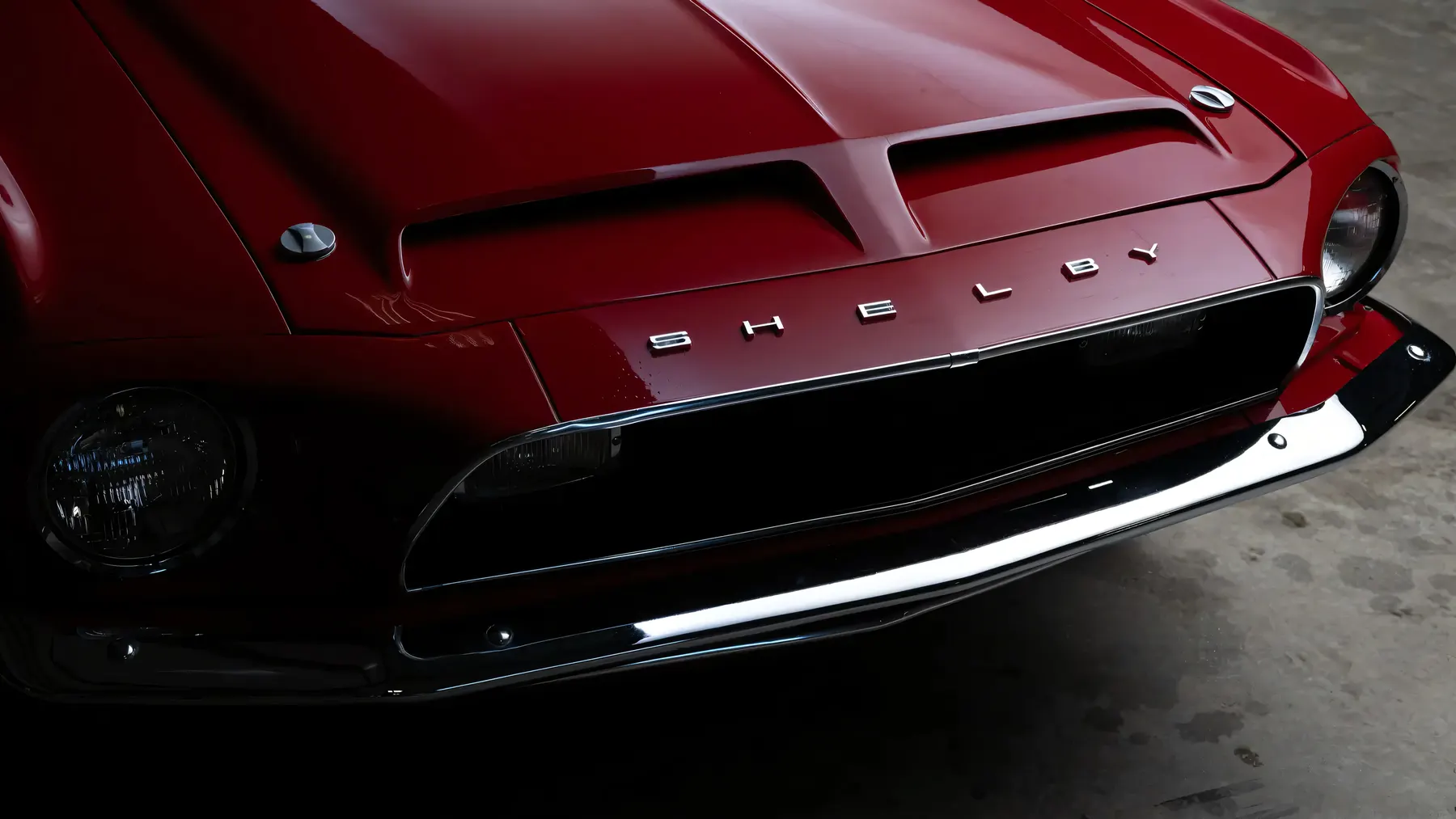
The GT350 story begins earlier, in the raw, uncompromising fastback of 1965. Carroll Shelby took Ford’s new pony car - charming, capable of more - and transformed it with the kind of aggression that only someone who had already beaten Ferrari at Le Mans would dare apply to a showroom product. High-revving V8, stripped cabin, race-derived suspension: the early GT350 was difficult, loud, and brilliant. Ford wanted something broader in appeal, and by 1967 the model had grown with the Mustang’s own evolution, gaining a longer bonnet, a wider body, and fiberglass front bodywork to trim back some of the added mass. Shelby specified a revised scooped and louvered hood with square driving lamps integrated into the grille - details that gave the '67 and '68 cars a purposeful, slightly sinister face that the standard Mustang’s more innocent styling couldn’t replicate.
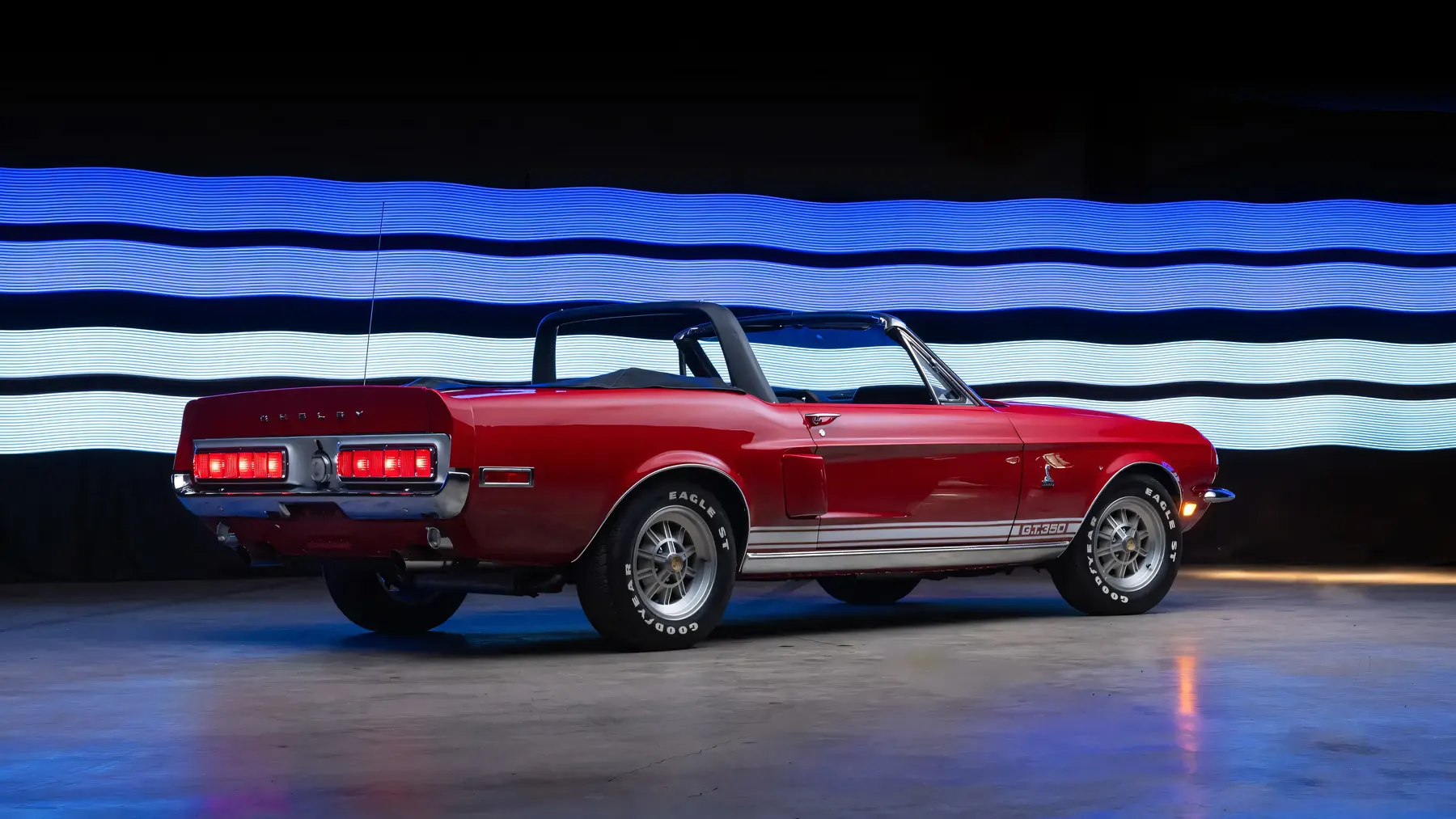
The convertible arrived for 1968, a model year in which the entire Shelby Mustang line was rebranded as the Shelby Cobra GT350 and GT500. Ford’s discontinuation of the solid-lifter K-code engine forced Shelby’s hand on the powerplant: the GT350 moved to the hydraulic-lifter 302 cubic-inch Windsor V8, producing 250 bhp at 4,800 rpm and 310 lb-ft of torque at 2,800 rpm. Cynics noted the drop from the '67’s 306 bhp 289, and they weren’t entirely wrong - but the 302’s hydraulic lifters bought smoothness and usability, and the high-rise aluminium intake helped recover some of the top-end character the solid-lifter unit had owned. A Paxton supercharger, dealer-installed by Shelby American, could lift output to approximately 335 bhp for customers who felt 250 wasn’t sufficient. Transmission choices ran to a four-speed manual or a three-speed automatic - the latter increasingly popular among buyers who wanted the Shelby name without the workout.
Of the 1,175 GT350s sold in 1968, only 404 were convertibles. The open-body cars presented genuine engineering challenges. With the Mustang’s unitary steel monocoque already under stress from the performance modifications, removing the roof demanded structural reinforcement - Shelby’s team integrated a roll bar behind the seats, an element that became one of the convertible’s most distinctive visual signatures. Far from being a safety afterthought, that roll hoop gave the open car its own aesthetic language: a visual reminder, framed by the lowered hood, that this wasn’t a softened boulevard cruiser but something with a lineage reaching back to competition.
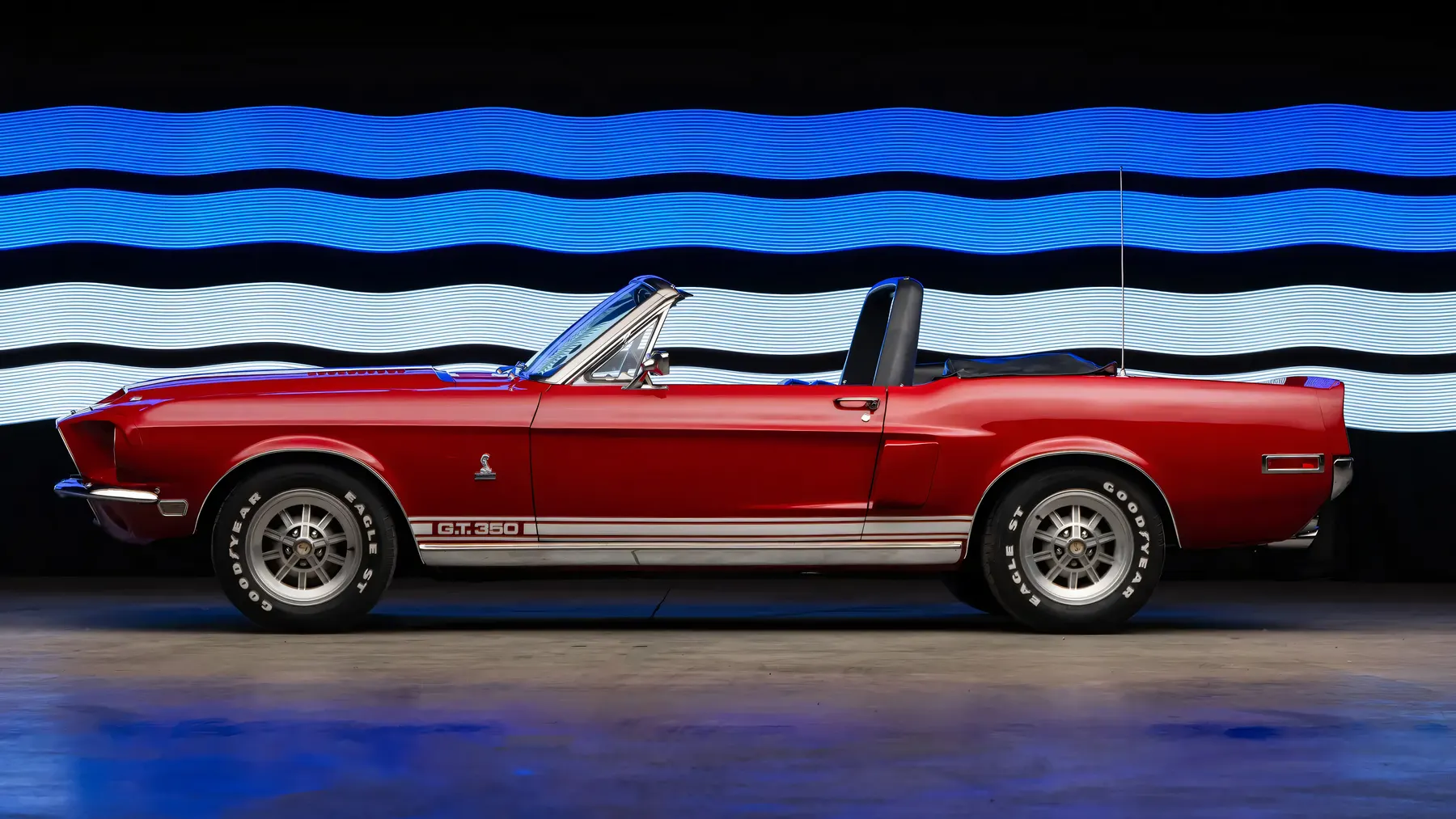
The 302’s bore measured 102mm against a stroke of 76mm - a short-stroke, high-revving configuration that favoured the top end of the rev range and rewarded drivers willing to work the engine. At 1,427 kg in base form, the GT350 wasn’t especially light by sports car standards, though the fiberglass front panels helped manage the mass penalty of the convertible bodyshell. Front suspension used upper and lower A-arms with coil springs, while the rear ran a live axle on leaf springs - conventional, but tuned with stiffer rates and thicker anti-roll bars that gave the car genuinely taut responses compared to stock Mustang fare. Braking was front disc and rear drum, a setup considered entirely appropriate for the period.
Visually, the '68 GT350 Convertible achieved something the fastback could only hint at. The integration of the roll bar, the long fiberglass hood pressing forward, the driving lamps peering through the grille - all of it composed more dramatically with the roof absent. Colours like Highland Green, paired with black vinyl interiors, created a combination that reads as simultaneously aggressive and luxurious. The wood-rimmed steering wheel, 140-mph speedometer, and an 8,000-rpm tachometer anchored the cockpit in performance intent; that these instruments lived inside a car you could spec with a power top and air conditioning speaks to the broader market the 1968 Shelby was chasing.
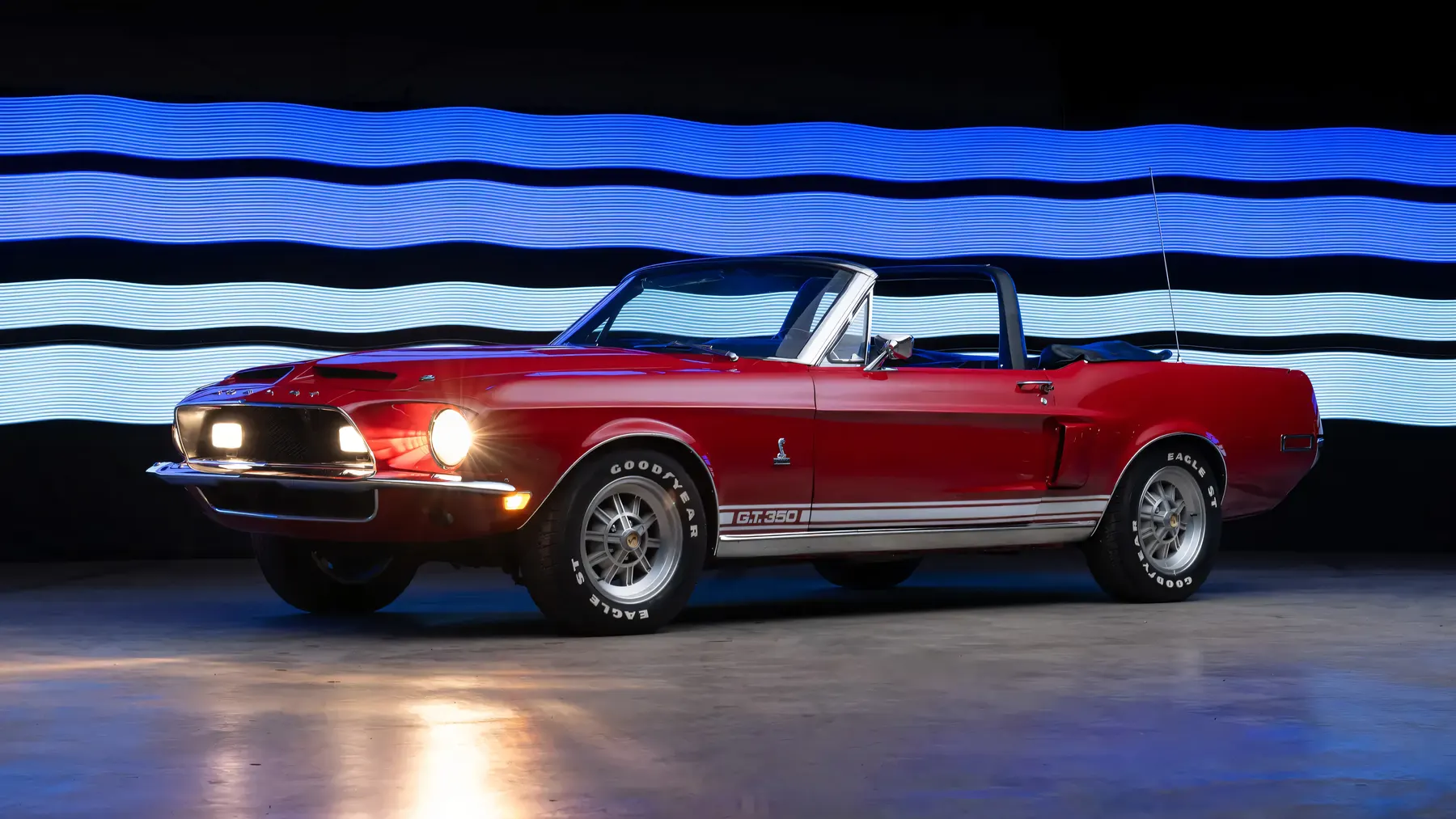
That repositioning is both the GT350 Convertible’s greatest strength and its most honest compromise. The '65 and '66 cars had been tools - instruments of track-derived purpose sold to the public at a price. The 1968 convertible was a grand tourer in the American idiom: fast enough, refined enough, open enough to let the theatre of the 302’s exhaust note do most of the performance storytelling. From behind the wheel with the top lowered, the experience leaned heavily on sensory immersion - wind buffeting over the integrated roll bar, the V8 working its mid-range torque - rather than the clinical sharpness of the earlier racier cars.
The criticisms are real and worth naming. The 302’s 250 bhp figure was conservative-to-a-fault, and contemporary testers clocked 0–60 mph runs of around 6.9 seconds with a quarter-mile time of 15.5 seconds - quick, but not the sort of numbers that embarrassed the big-block competition of the era. Scuttle shake, the bane of convertible performance cars, was present and noted. The automatic transmission option, while commercially logical, blunted the directness that the earlier GT350s had made their calling card. And the wholesale adoption of comfort and convenience options - power steering, tilt steering wheel, air conditioning, visibility group - drew accusations that Shelby and Ford had traded the model’s edge for volume.
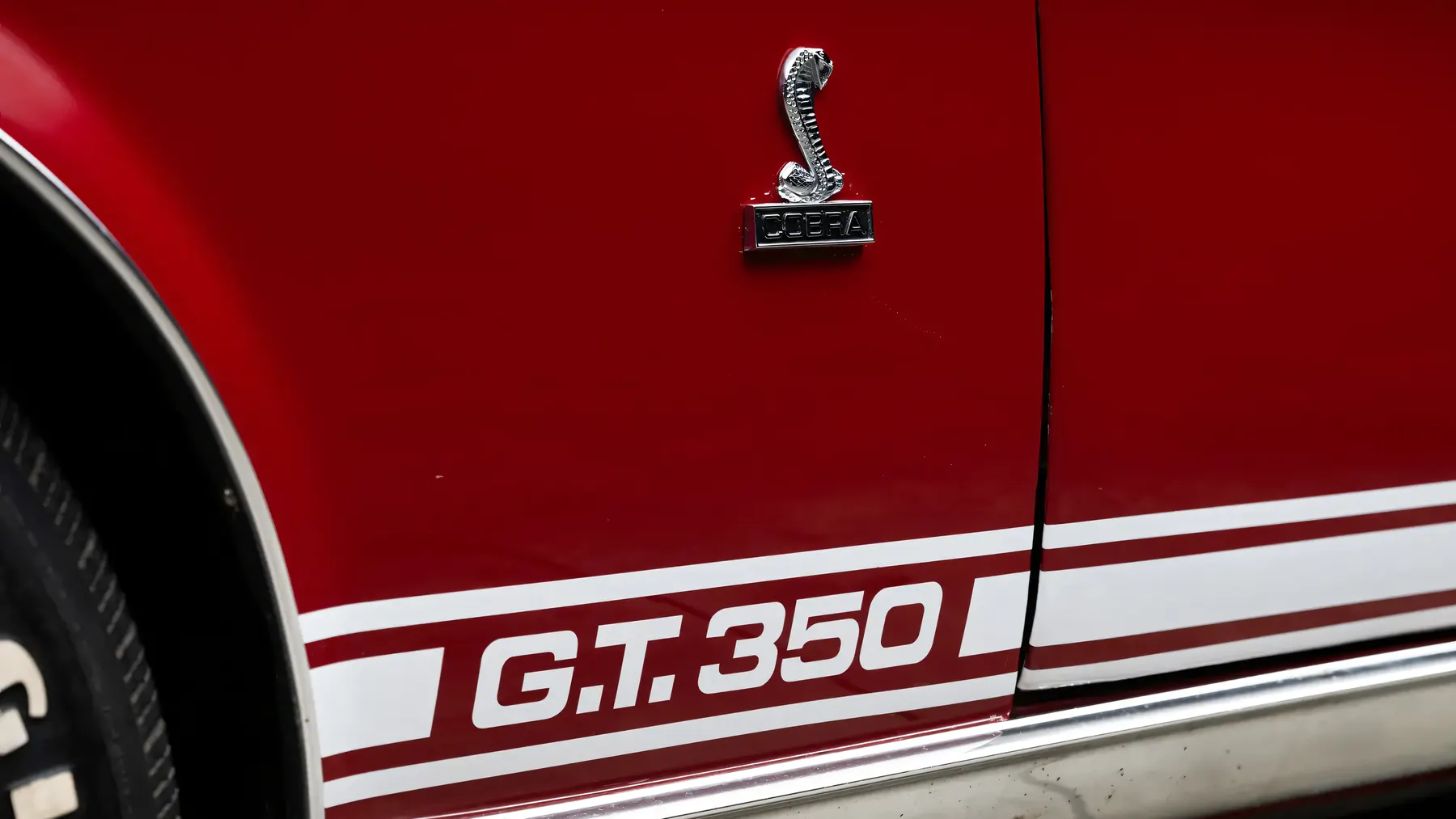
There is no clean resolution to that tension, because both things were true simultaneously. The 1968 GT350 Convertible was a diluted race car and a magnificent open-air sporting machine, and these are not mutually exclusive conditions. Its cultural significance derives precisely from the friction between them. When Bullitt arrived in cinemas in late 1968, the Highland Green Mustang fastback - a standard model, not a Shelby - absorbed the entire mythology of performance into a single colour. That coincidence of timing meant the GT350 Convertible wore its own Highland Green variants against a backdrop of maximum cultural saturation, becoming collateral beneficiaries of cinema’s most celebrated car chase without having fired a single scene.
Collectors have long understood what the GT350 Convertible represents. With production of just 404 units for 1968, documented examples carry a provenance premium that increases with every attribute that can be confirmed - factory colour, original drivetrain, Shelby American Automobile Club Registry listing, Marti Report documentation. The Highland Green cars have attracted particular attention given the Bullitt adjacency, and rightly so: a colour does not need to be on screen to carry its cultural weight. Values on documented examples have remained robust, with Hagerty placing condition-4 cars above $83,000 and concours examples substantially higher.
What the GT350 Convertible ultimately delivered was something neither the pure racing fraternity nor the boulevard-cruiser crowd had quite anticipated: a car that managed genuine mechanical seriousness and open-air indulgence with enough conviction that you could forgive the compromises made in pursuit of both. Carroll Shelby understood, even when critics didn’t, that the best machines are rarely pure. The GT350 Convertible was impure in exactly the right ways - a car built at the precise moment when American performance was learning, perhaps for the last time before emissions and insurance rates changed everything, that it could afford to be beautiful.