1965 Rolls-Royce Phantom V Limousine by James Young
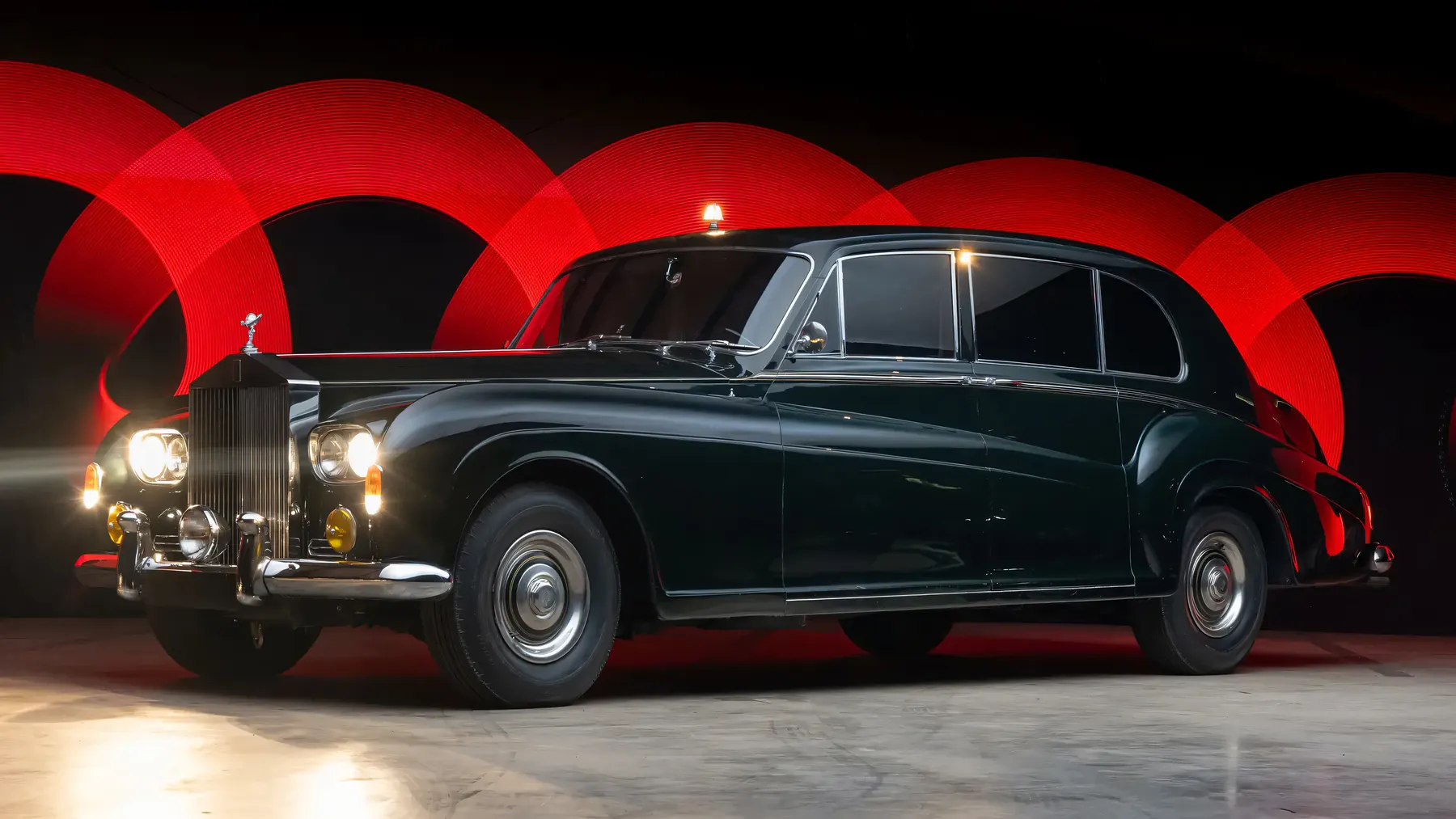
When the chairman of a New York brokerage firm ordered a new motorcar in 1965, he didn’t simply visit a showroom. He went to J.S. Inskip - Rolls-Royce’s prestige Manhattan dealership - and commissioned something that announced his arrival before a word was spoken. What George J. Stewart of Stewart Smith & Company received was a James Young–bodied Phantom V to design PV15: the most stately, most unapologetically grand automobile that money in the Western world could then buy.
The Phantom V occupied a particular stratum of Edwardian-inflected ambition that Rolls-Royce maintained with enormous deliberateness through its 1959–1968 production run. It was based on the mechanically modern Silver Cloud II but stretched onto a 3,683 mm wheelbase that made no pretence at sportiness - this was a vehicle for the transported, not the driver. In total, only 518 were built across the entire nine-year run, and of those, the Bromley coachbuilder James Young was responsible for 197 bodies - more than any other carrozzeria, including Rolls-Royce’s own house coachbuilder Park Ward. That dominance speaks to something: James Young understood the Phantom V’s clientele intuitively.
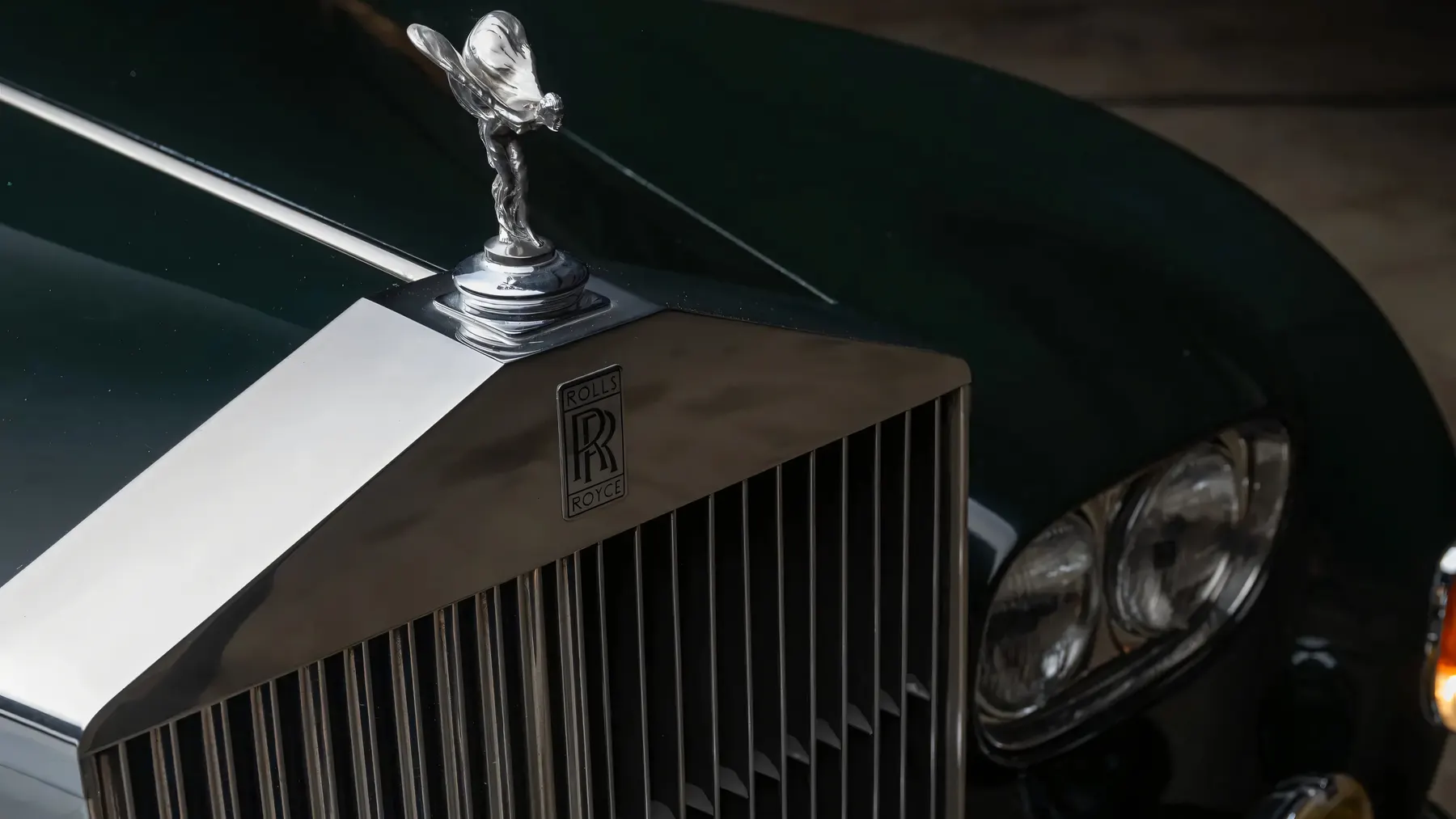
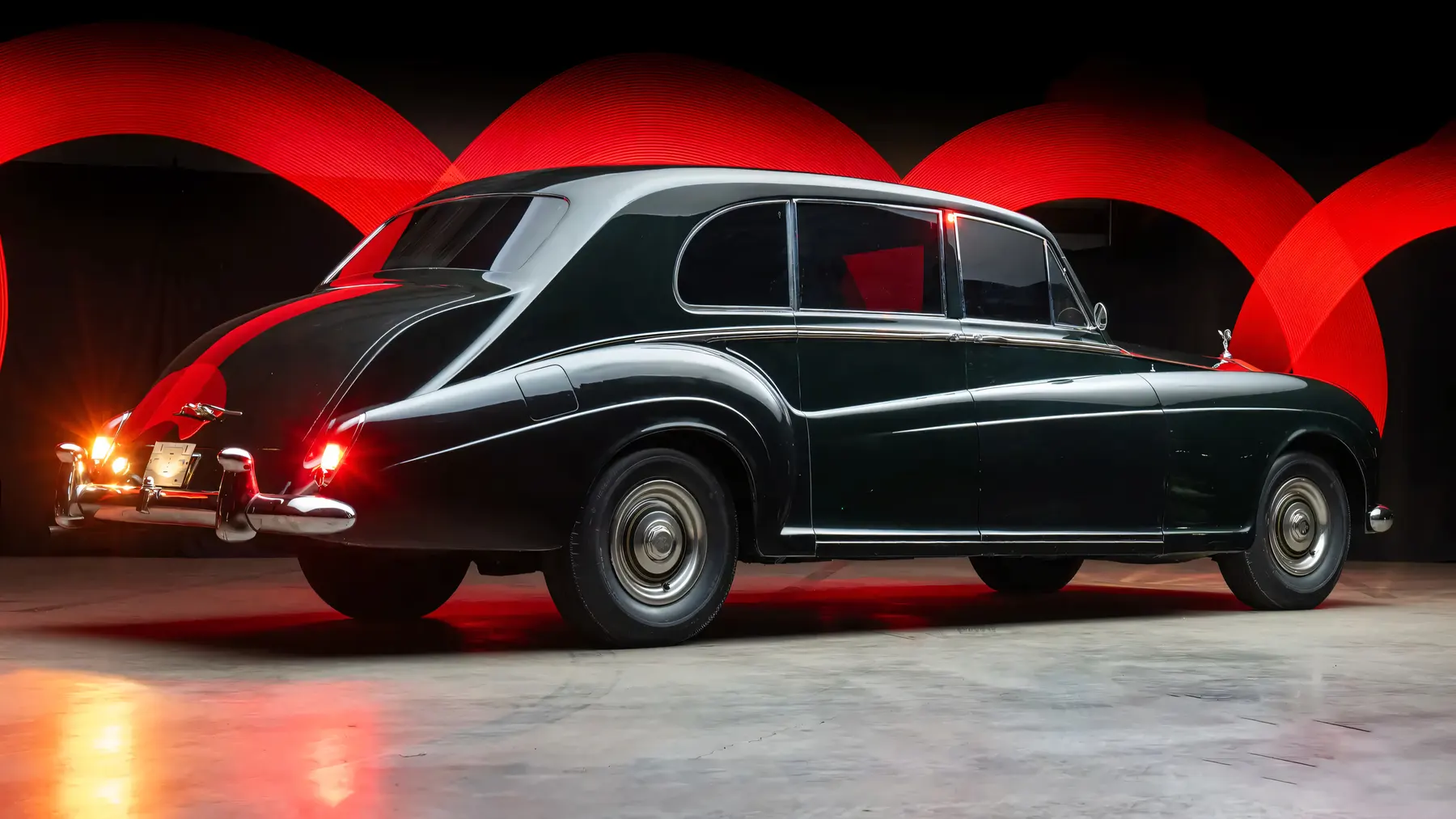
The PV15 design was James Young’s traditional touring limousine interpretation - a body that brought flowing front fender lines and that characteristic “turtledeck” rear to a form language that felt at once timeless and quietly modern. Unlike the more upright, formal interpretations from Park Ward, the PV15 carried a certain elegance of line, a lightness of pen that prevented the car from becoming a mere box on wheels. It was, for many observers, the definitive visual expression of a classic Rolls-Royce - identifiable at a glance and impossible to mistake for anything else.
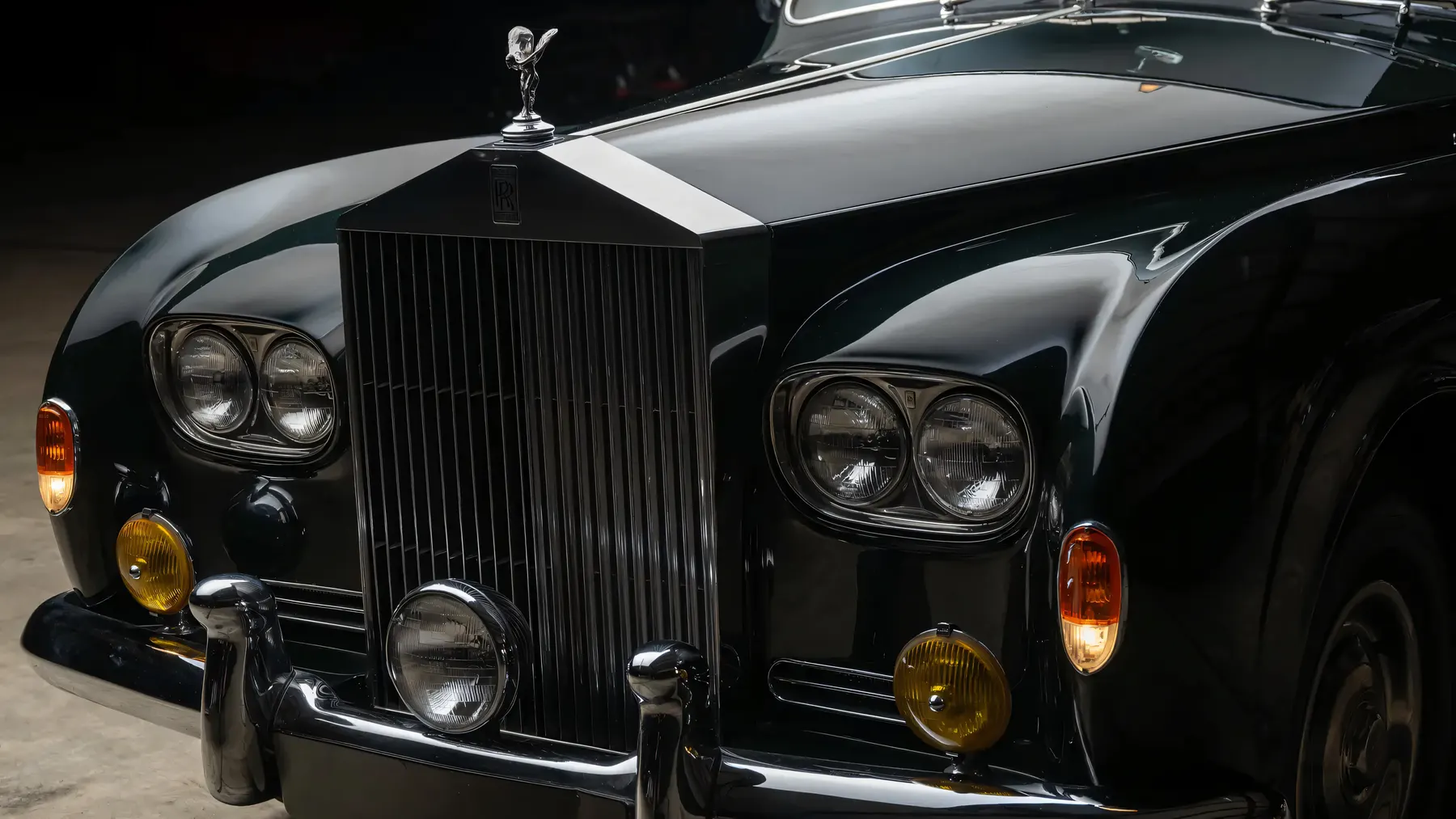
Under the long, louvred bonnet sat the 6,230 cc all-alloy, 90-degree overhead-valve V8, fed by twin SU HD8 carburettors and producing approximately 220 bhp at 4,000 rpm. Torque stood at a useful 340 lb-ft at 2,200 rpm, channelled through the four-speed Hydra-Matic automatic transmission licensed from General Motors - a pragmatic choice that delivered the smooth, unhurried power delivery the rear-compartment occupants expected. Power steering was standard; kerb weight pushed past 2,120 kg, and yet the Phantom V was quietly capable of exceeding 100 mph, a fact that probably surprised more than a few lorry drivers on the M1. From 1963 onward, all Phantom Vs benefited from the Silver Cloud III’s revised engine with approximately 7% more power and the distinctive quad-headlamp front wings, which gave the car a more purposeful face.
Stewart’s particular example - finished in dark green over a beige interior - was specified to a thoughtfully appointed but essentially standard brief. Windtone horns, an electric radio aerial, and a miles-per-hour speedometer all confirmed its transatlantic destiny. The rear compartment, the entire raison d’être of the exercise, was equipped with ducted air conditioning, footrests, and pencil-beam reading lights - the tools of someone conducting business or taking well-deserved rest at sixty miles per hour. The one idiosyncratic footnote: the windshield wiper blades required were of an unusually long specification, sourced from the Aeromic brand - a small but delightful clue to how bespoke the entire enterprise truly was.
Driving a Phantom V is an exercise in managing a large and somewhat indifferent machine from behind the wheel. The drum brakes - massive in absolute terms but undersized relative to the car’s momentum - demand planning and respect. The steering, while power-assisted, relays little of the road’s texture through its large wheel. The experience of being in the rear compartment, however, is an entirely different proposition: the car irons out the road with the confidence of something that cost more than a terraced house, and the silence at speed remains remarkable for an engineering concept conceived in the late 1950s.
The Phantom V’s legacy is inseparable from the company’s subsequent retreat from the traditional coachbuilt model. After the Phantom V came the Phantom VI, then eventually the post-Vickers, post-BMW era of in-house bodied vehicles - and the days of Bromley coachbuilders collaborating independently with Crewe’s chassis department were gone forever. James Young itself closed in 1967, just one year before Phantom V production ended, bookending an era with quiet finality. Stewart’s green limousine thus represents not merely the taste of one Manhattan businessman, but a precise moment in automotive history when the great coachbuilding tradition of Britain was drawing its last, unhurried breath.
After Stewart Smith & Company, the car passed through executive use with O’Donnel-Usen Fisheries of Boston before finding its way to Ed Jurist at The Vintage Car Store in Nyack, New York - one of the most important early figures in the American vintage car trade. A restoration by Carriage House Motorcars in the late 1980s returned the car to its original dark green livery, with a correct replacement engine and transmission installed at that time. The interior, which has held up considerably better than the exterior finishes in recent years of static display, retains its push-button radio in the armrest - a period detail that speaks more eloquently of 1965 New York than any restoration could manufacture.
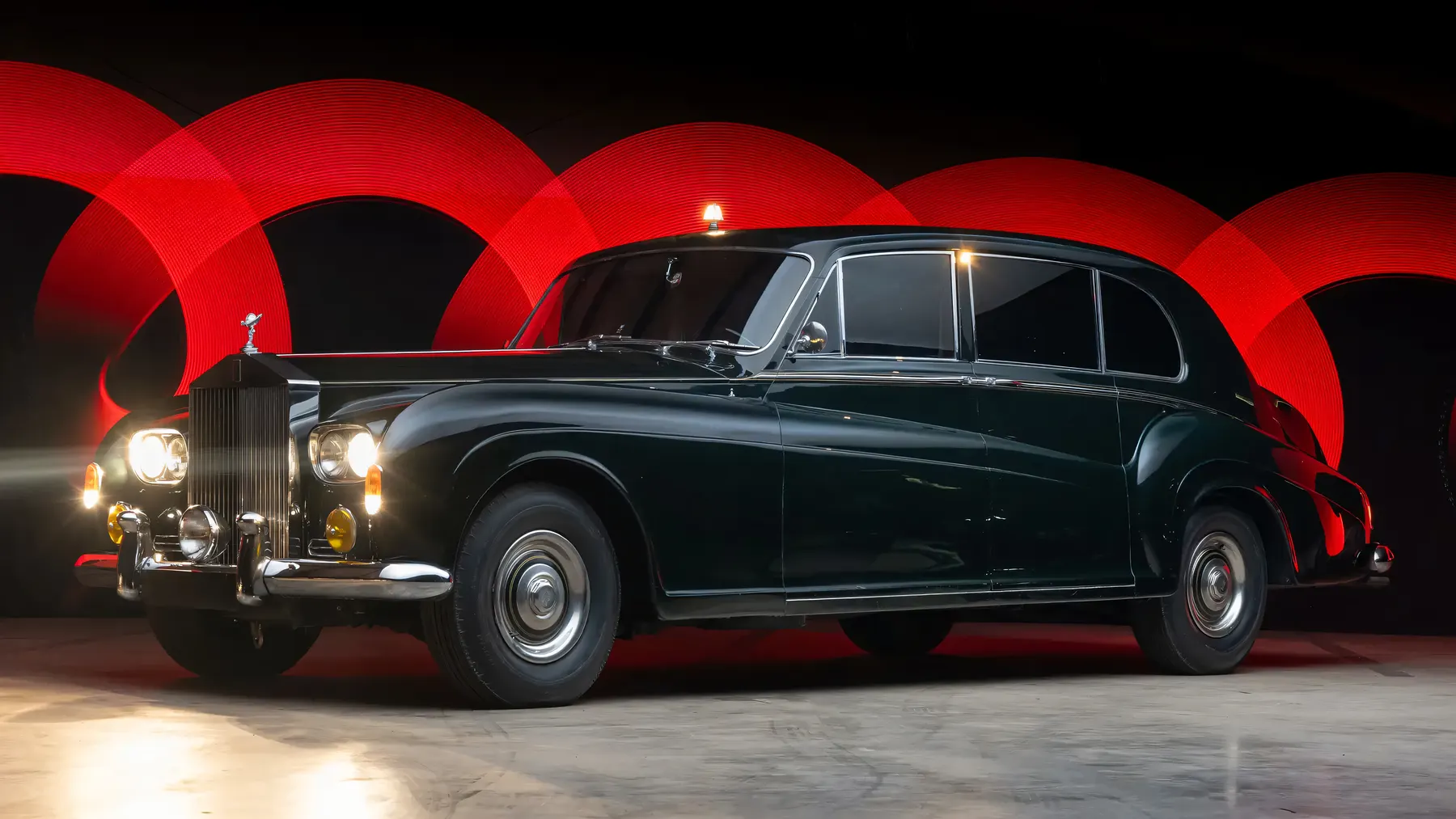
The Phantom V was never an easy car to own or justify, but it was always an impossible one to ignore. In dark green against a Manhattan kerb, with a beige interior glowing behind the glass, chassis 5LVD21 must have made John Street feel, for a moment, like Mayfair.