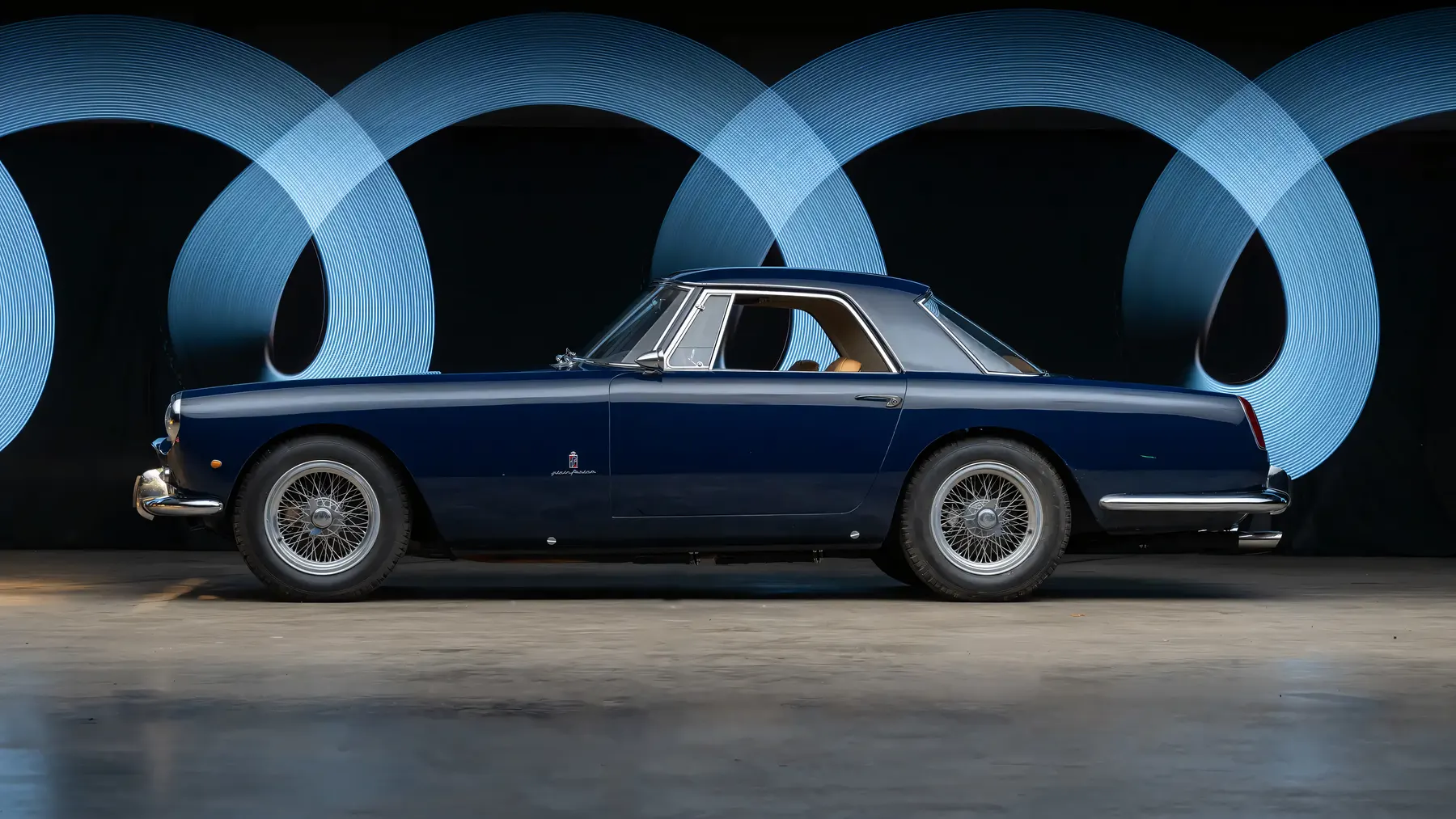
1960 Ferrari 250 GT Coupe by Pinin Farina
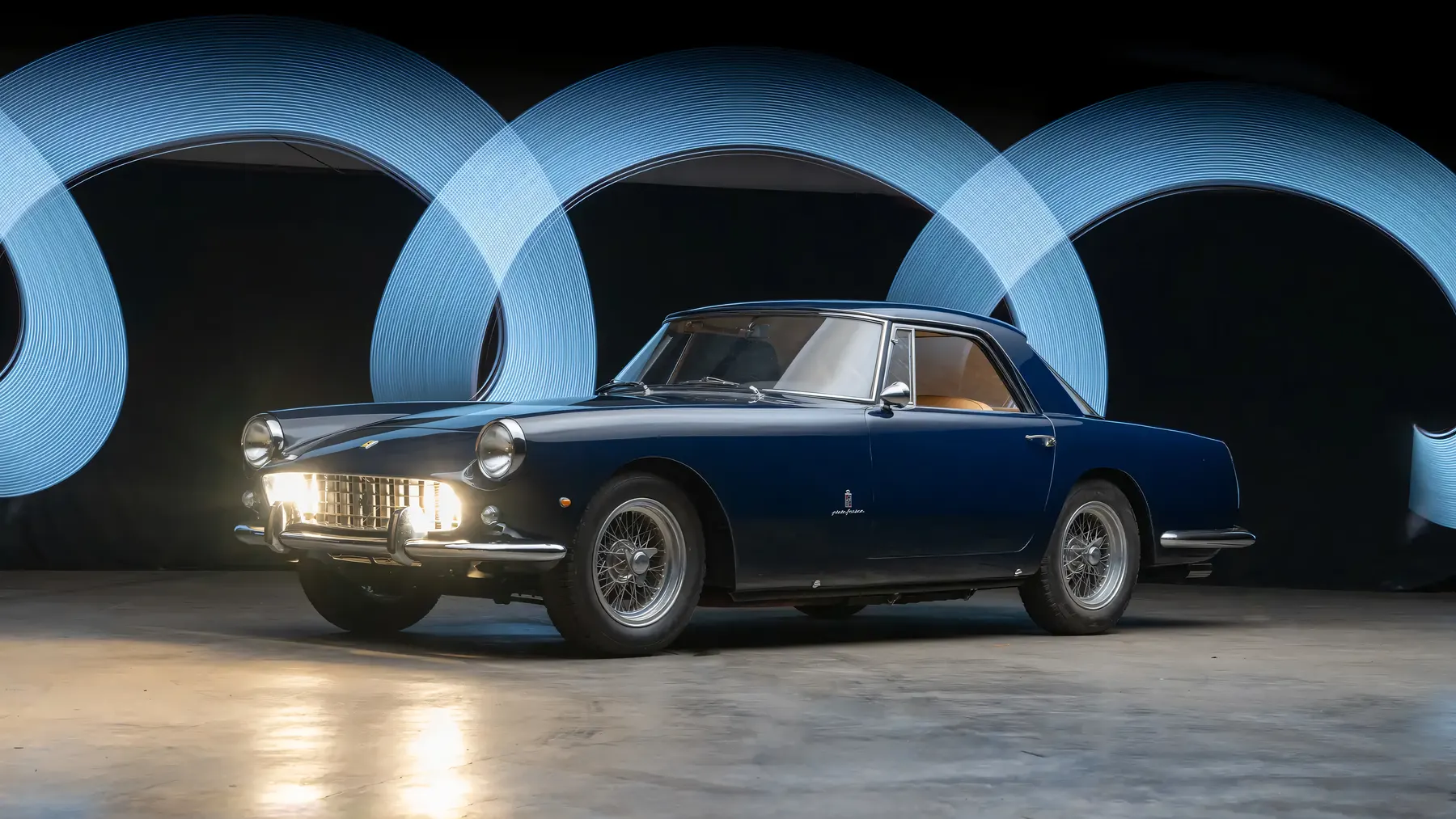
Enzo Ferrari was not, at heart, a manufacturer. He was a racing man who sold road cars to fund his motorsport obsession - and for most of the 1950s, that arrangement suited everyone. But by 1957, the books told a different story. The hand-crafted, coachbuilt approach to building Ferraris was elegant, painstaking, and financially ruinous at scale. Enzo needed volume. What he got, in response to that industrial necessity, was one of the most quietly beautiful grand tourers ever to wear the prancing horse: the 250 GT Coupé Pinin Farina Series I.
The road to this car is inseparable from the lineage it completed. The 250 Europa GT, shown at the 1954 Paris Motor Show, had established the GT template - a more civilised proposition than the racing Berlinettas, aimed at wealthy clients who wanted daily usability without sacrificing the essential Ferrari character. After the Europa GT came the Boano and Ellena coupés, bodied by subcontracted coachbuilders while Pinin Farina expanded its new Grugliasco plant. These were gradual refinements, not reinventions, and they served their purpose. But they were still essentially artisan products, each bearing the slight variations and imperfections of hand work. The Series I Pinin Farina Coupé, unveiled at the 1958 Paris Motor Show, was meant to change all of that - and it did.
Pinin Farina’s design brief was almost counterintuitive for a firm that had made its name in sculptural excess: simplify. The new body needed to be reproducible on a semi-industrial scale at the Grugliasco facility, which meant eliminating the complex compound curves and laborious hand-finishing that characterised earlier Ferraris. The result was a notchback coupé of understated, almost architectural restraint. Gone was the fastback roofline of its Boano predecessors; in its place came a horizontal roofline and dramatically increased glass area enabled by a lowered waistline, which gave the car a lighter, more airy greenhouse. Paradoxically, despite being some 60mm shorter overall than the Boano/Ellena cars, the new Pinin Farina design read as longer - a visual sleight of hand achieved through proportion rather than dimension.
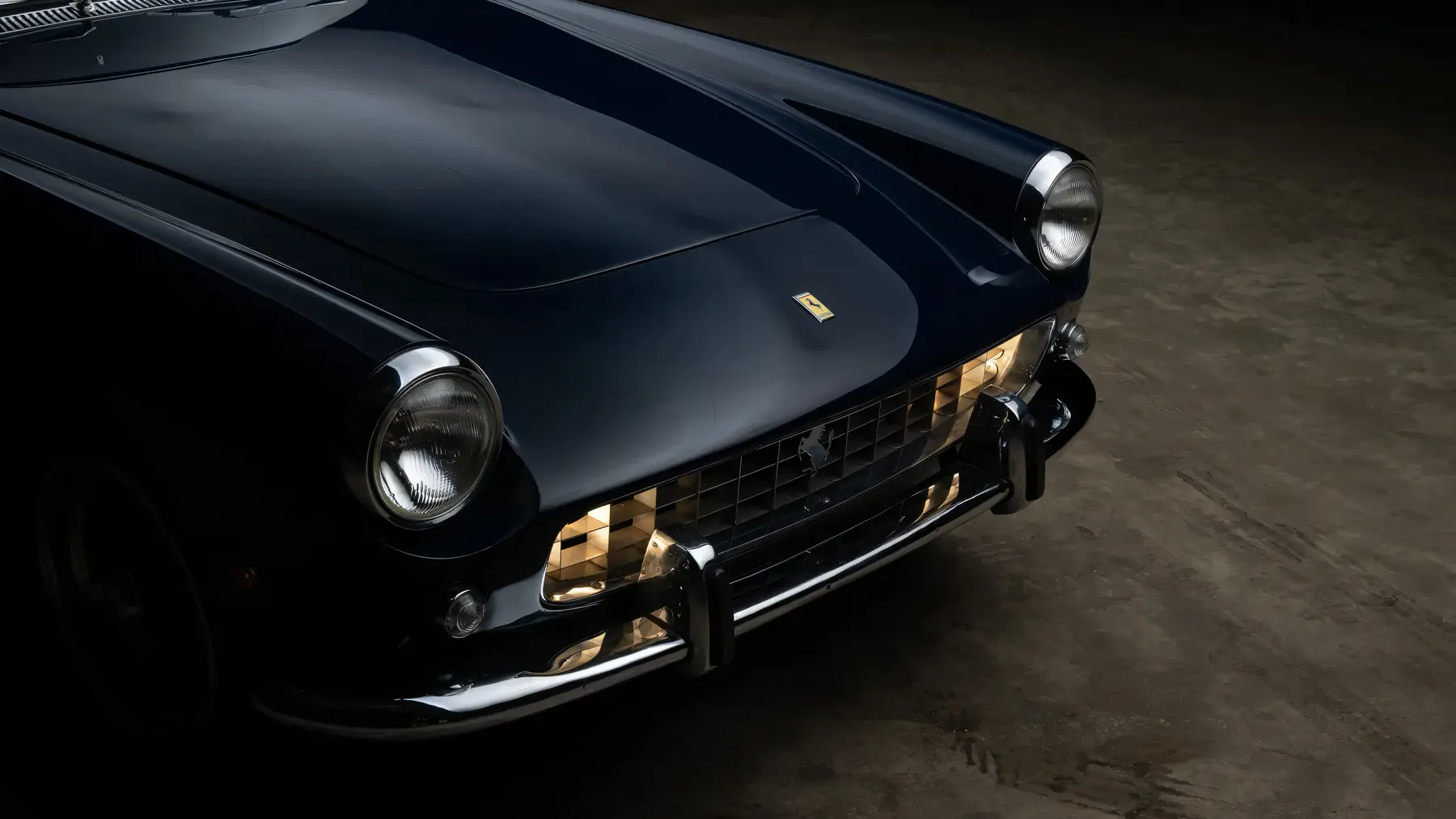
The flanks were clean to the point of severity: no unnecessary chrome, no gratuitous vents, no decorative flourishes to distract from the long bonnet and the elegant fall of the roof into the tail. A modest full-width grille, circular headlights, and restrained chrome bumpers front and rear completed a face that was confident without being theatrical. It was, as one contemporary observer put it, a roadster with a fixed-head roof - the architecture of a sports car rendered in grand touring clothes. Inside, occupants found generous leather seating, a two-tone dashboard carrying the body colour on its upper face, a Nardi wood-rimmed steering wheel, and sound insulation that made the interior more tranquil than any previous Ferrari road car.
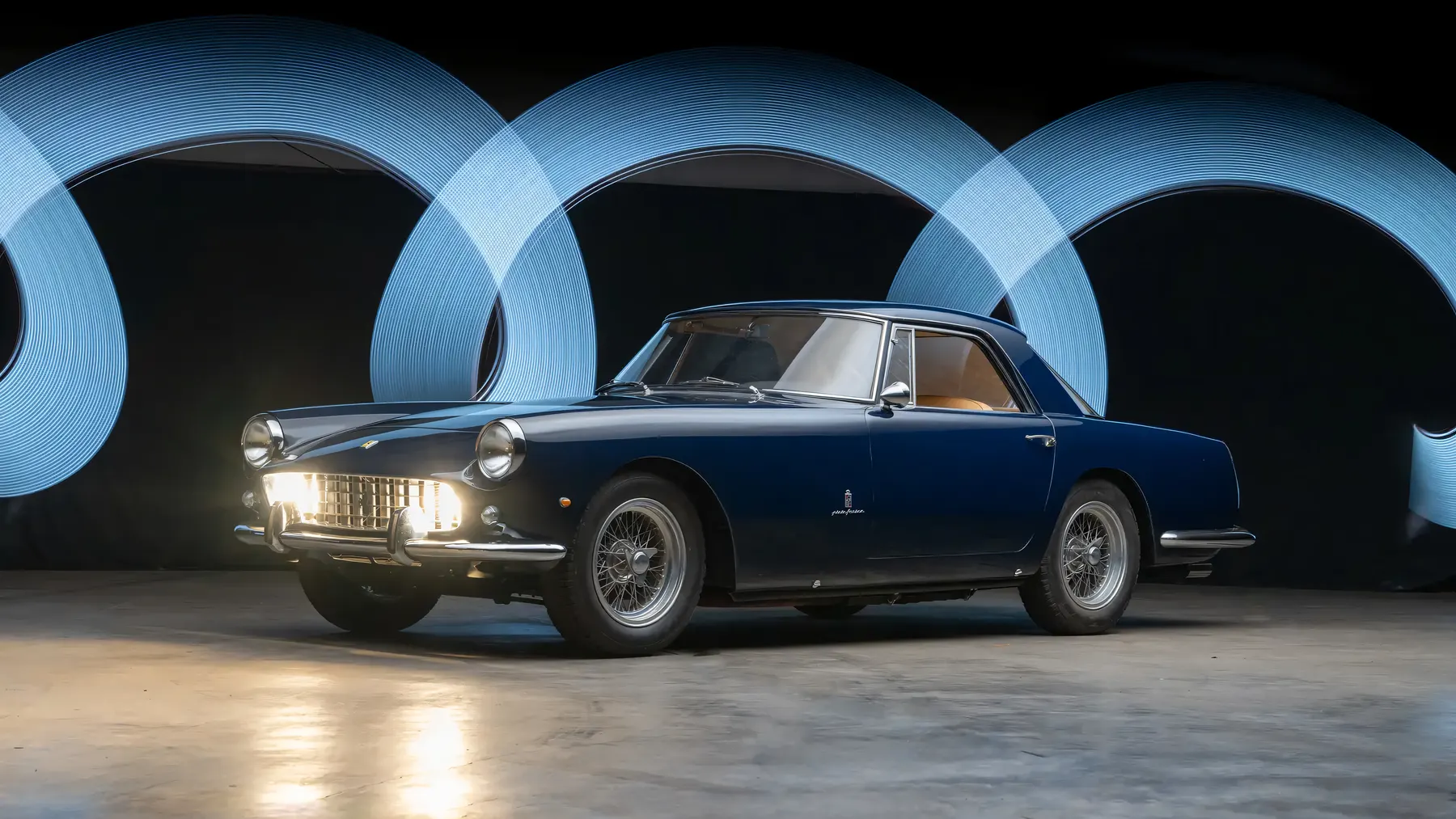
Mechanically, the Series I was a direct continuation of established 250 GT practice, and that was entirely the point. The 2,953cc Colombo-derived V12 - a short-block unit with a 73mm bore and 58.8mm stroke, twin overhead camshafts (one per bank), and a trio of twin-choke Weber carburettors - produced 240 bhp at 7,000 rpm and 195 lb-ft of torque. Drive went through a multi-plate clutch to a four-speed manual gearbox, with power delivered to the rear wheels via a conventional differential on a 2,600mm wheelbase chassis. The Series I is distinguished from its successor by one critical technical detail: it retained drum brakes on all four corners, an arrangement that was already being questioned as cars grew quicker. Four-wheel disc brakes would arrive only with the Series II in late 1959.
On the road, the 250 GT PF Coupe offered a driving experience that period reviewers consistently praised for its balance and tractability. The V12, with its wide powerband and characterful intake howl through the Webers, pulled strongly from low revs before delivering its best work in the upper registers - a combination that suited both cross-country touring and more spirited driving with equal competence. A top speed in the region of 149 mph and a 0–100 km/h sprint of around 7 seconds placed it firmly among the quickest road cars of its era. The chassis communicated faithfully with the driver without demanding heroic inputs, making it a genuinely accessible car for its class - especially on European roads where the 250 GT’s 2,600mm wheelbase proved adept at managing varied surfaces.
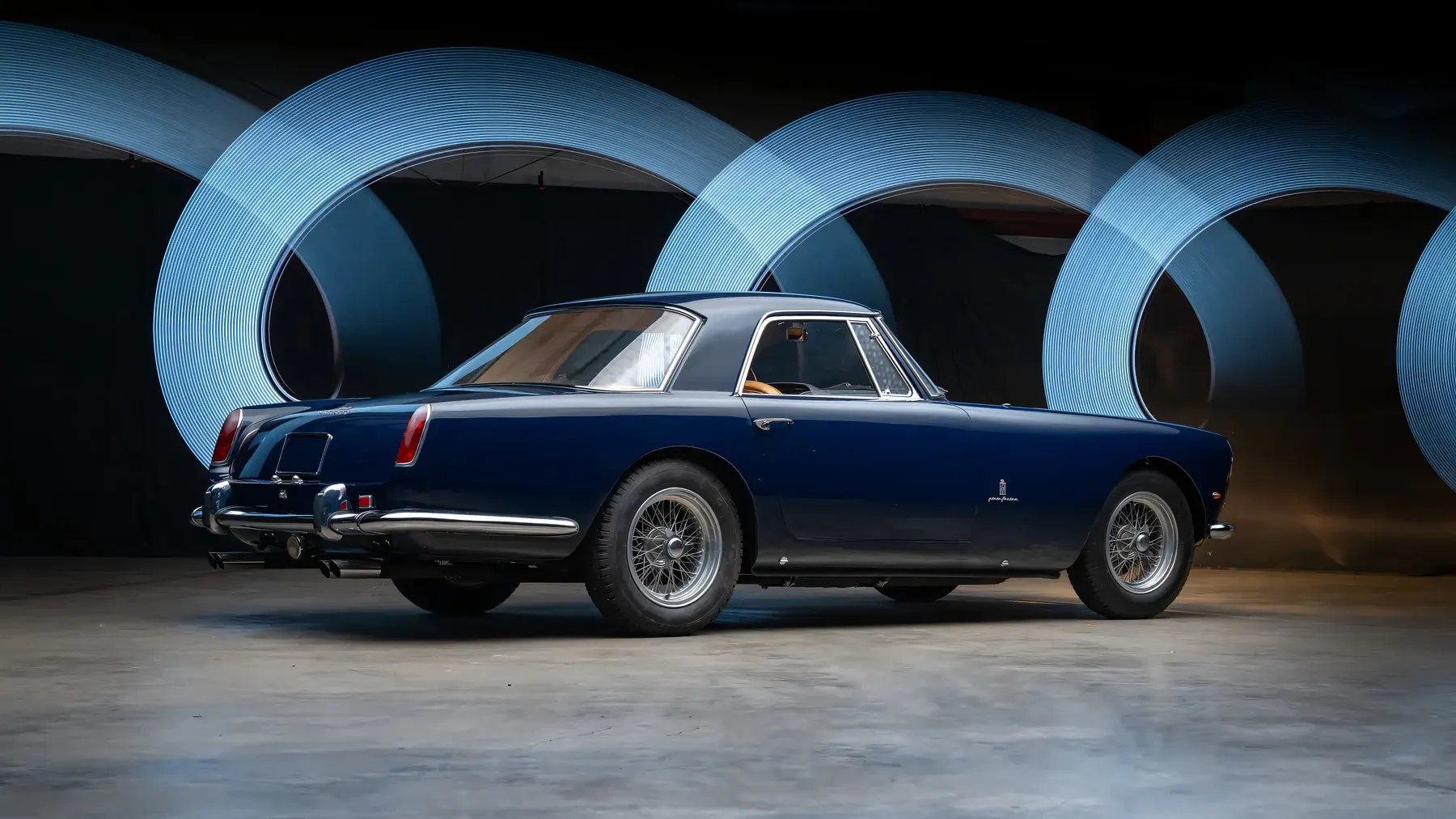
The strengths are not hard to identify. The V12’s combination of refinement, flexibility, and sonority is exceptional even by modern standards, and the Colombo engine’s fundamental architecture was so right that Ferrari built a decade of production cars around variants of it. The Pinin Farina body, for all its design-for-production pragmatism, aged beautifully; what read as simplification in 1958 reads now as timelessness. The decision to transfer full body production to Grugliasco also established Pinin Farina - later Pininfarina - as the near-exclusive designer of Ferrari road cars, a relationship that shaped automotive design for generations.
But the Series I had genuine compromises. The drum brakes were a serious limitation - adequate for the speeds of 1958, but stretched thin by spirited driving on long descents, and definitively inferior to the disc arrangement adopted by contemporary rivals. The interior, while improved over its predecessors, was still a mix of leather and vinyl that reflected the cost-pressures inherent in moving toward series production; the craftsmanship was good rather than exceptional, and certain details betrayed the new industrial discipline. The notchback profile, while elegant in profile, robbed the design of some of the drama that Pinin Farina’s more bespoke commissions had achieved in the same period.
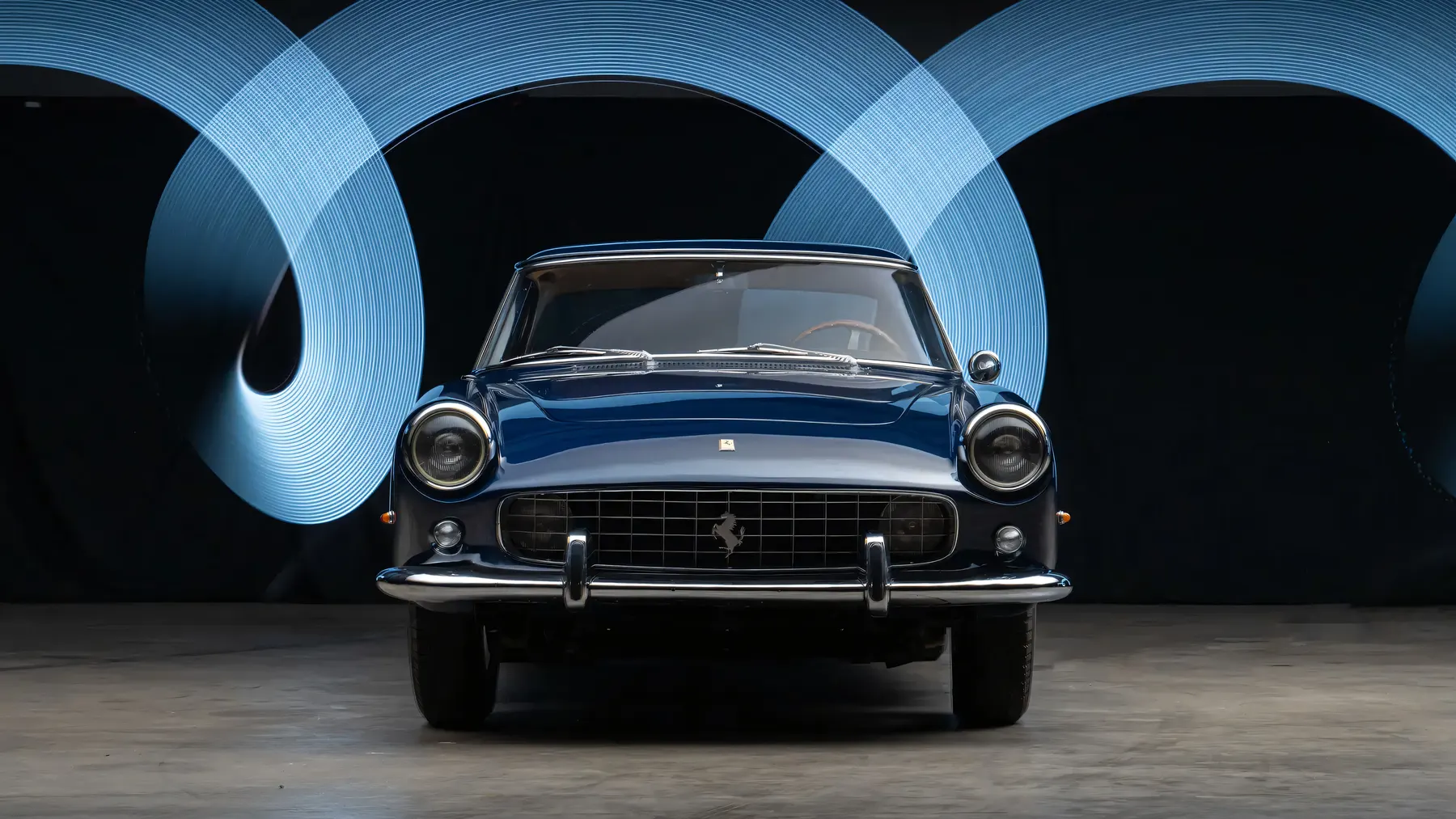
Historically, the 250 GT Coupé Pinin Farina Series I occupies a pivotal position in Ferrari’s story. It was the marque’s first semi-series production model - 353 examples built across Series I and II between 1958 and 1960, a number that sounds modest today but represented a genuine industrial achievement for Maranello at the time. Classic Driver described it precisely: the car that introduced the merely very wealthy to the world of Ferrari, while reserving the 410 Superamerica and its ilk for kings, industrialists and film stars. That democratisation - relative, of course - was a deliberate commercial strategy, and it worked. The Coupé’s success stabilised Ferrari’s finances sufficiently to fund the racing programmes that produced the cars enthusiasts still worship.
The reception in period was largely positive. Press testers appreciated the car’s composure, its effortless long-distance pace, and the way it wore its performance lightly - traits that made it feel less intimidating than its racing-derived siblings. For years afterward, however, the 250 GT PF Coupé sat in the shadow of the more glamorous 250 GT Berlinetta and the later 250 GTO, dismissed by collectors who preferred drama over discipline. Many examples were stripped or modified - some, infamously, butchered to create replicas of more valuable models. The market has long since corrected that injustice. The Series I, with its inside-plug V12 and drum brakes marking it as the purest expression of the original design intent, is now recognised as precisely what it always was: the car that turned Ferrari from a racing shop with a sideline into a real manufacturer, wrapped in some of the most restrained, assured coachwork of the postwar era.