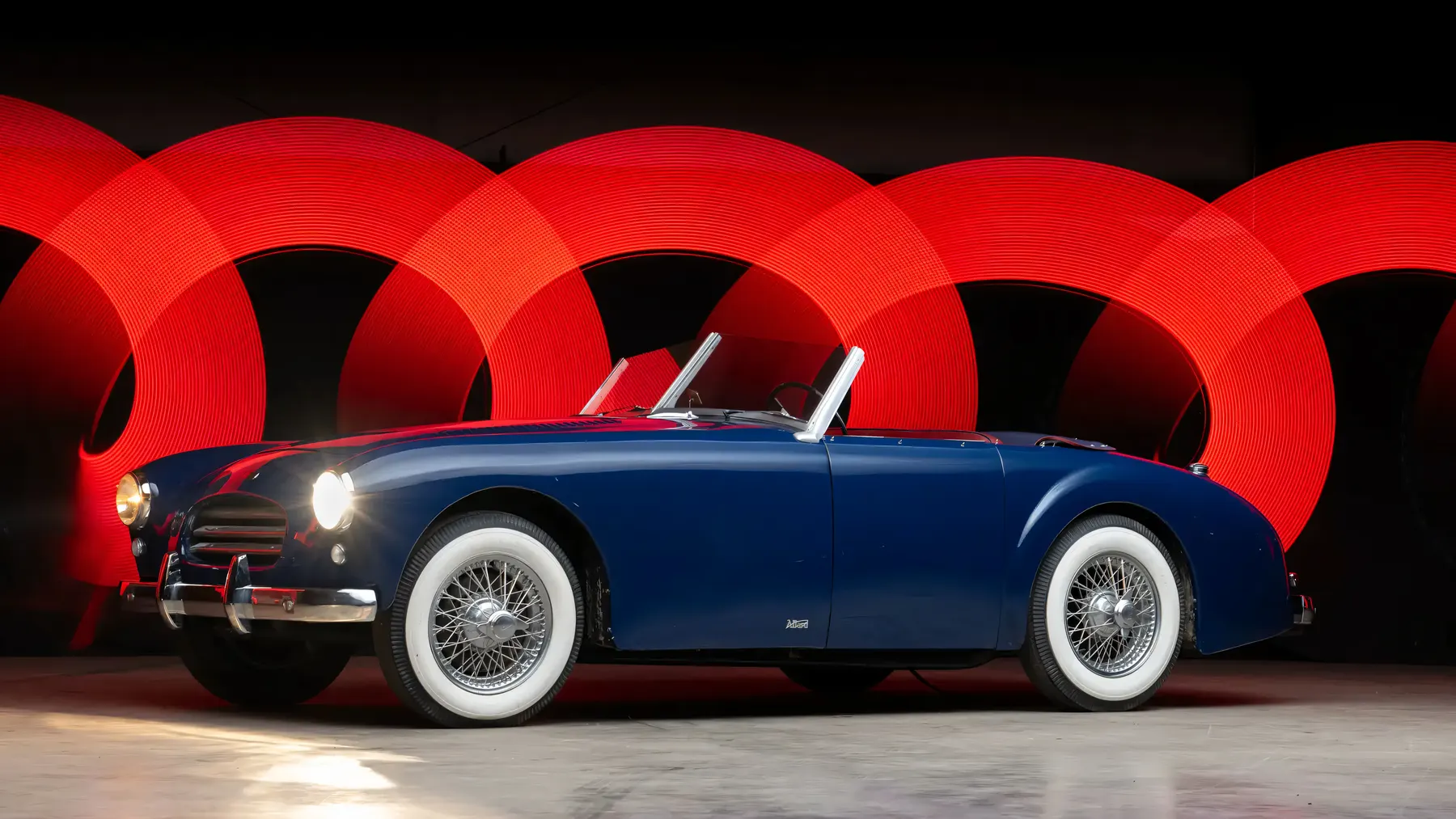
1953 Allard K3
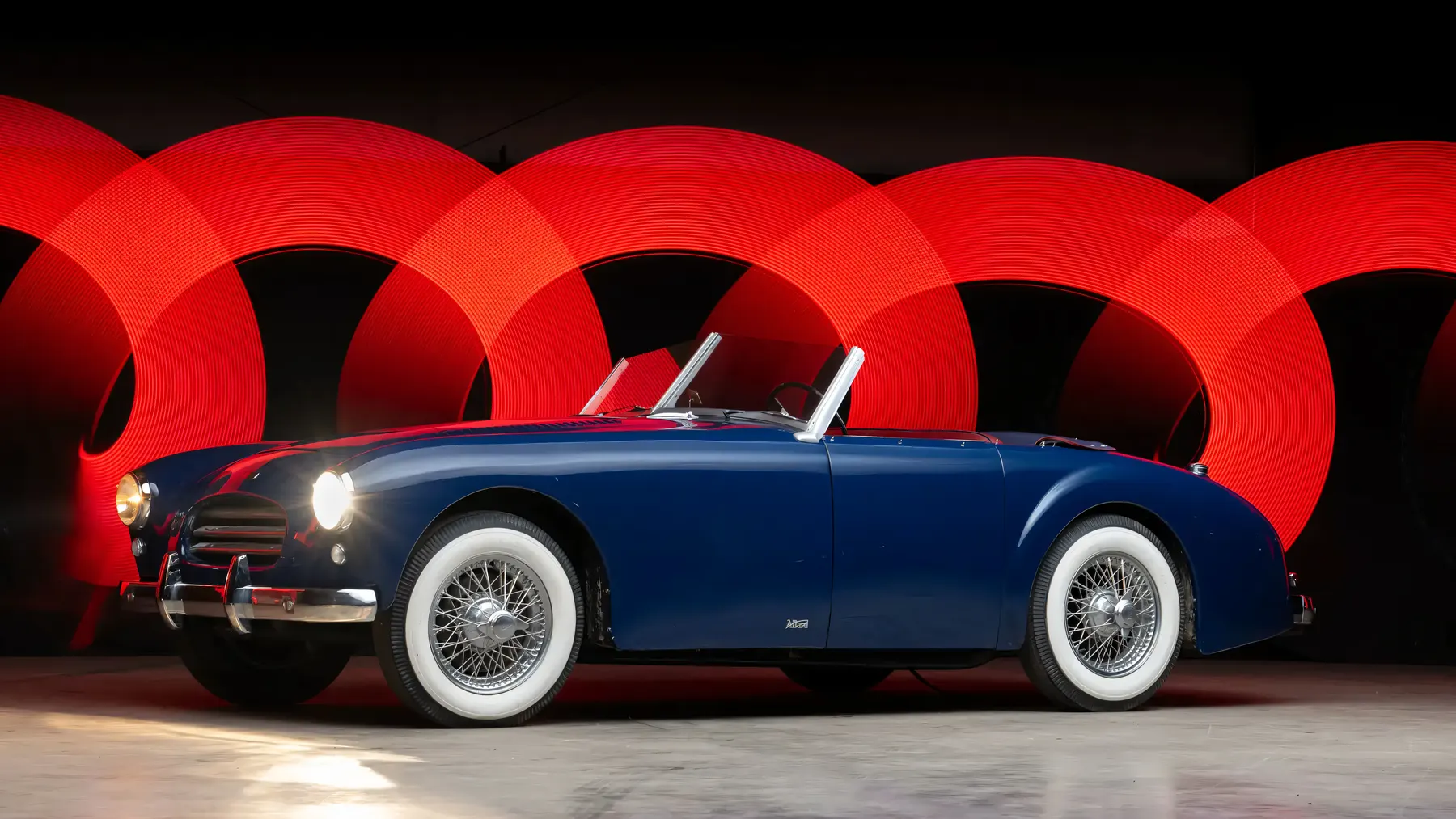
Sydney Allard built cars for people who wanted to win arguments. Not the polite, points-scored-over-dinner kind - the kind settled at traffic lights or, ideally, at Pebble Beach concours where a British roadster with an American heart sits quietly radiating the confidence of something that should not exist but absolutely does. The K3, launched at the 1952 London Motor Show, is perhaps the most contradictory Allard of them all: a car conceived as a grand tourer, born from racing DNA, and ultimately undone by the very ambition that made it compelling.
The K3 arrived as a direct descendant of the J2 and J2X, those brutal, uncompromising sports-racers that had embarrassed far more expensive European machinery on both sides of the Atlantic. Rather than simply continuing the J2’s formula, Allard adapted the elegant fully-enveloping aluminium body from the Palm Beach - its road car of the period - and grafted it onto a completely new, stiffer chassis built from vertically stacked chromoly tubes, welded and reinforced with steel plates, giving a 2,540mm wheelbase that was both lighter and more torsionally rigid than anything the company had produced before. Underneath, the engineering was serious: a semi-independent divided front axle, a deDion rear with inboard drum brakes, and a Marles steering box that, in theory at least, promised a more civilised experience than the J2’s frankly combative setup.
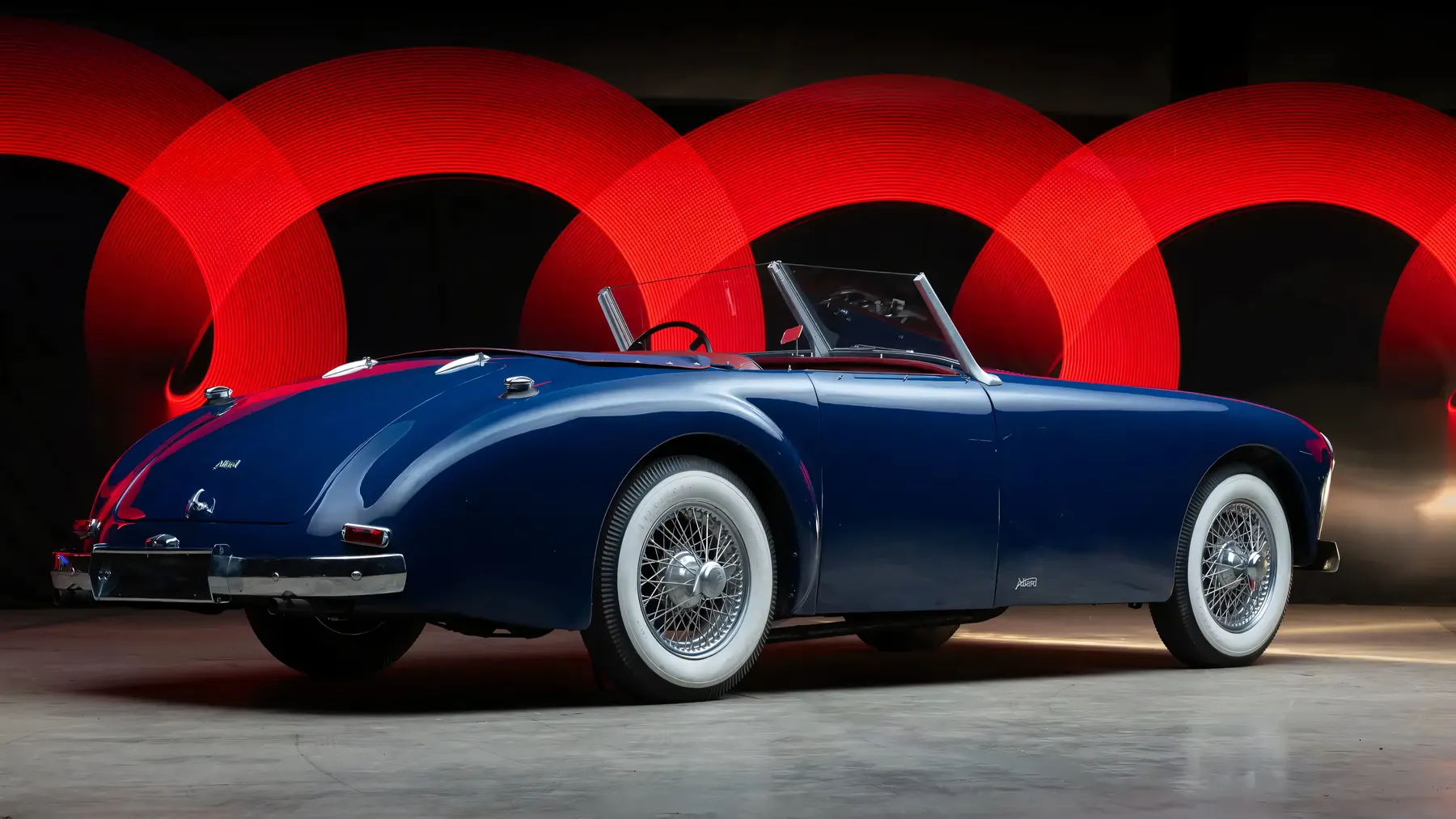
Where the K3 diverged most dramatically from the European sports car orthodoxy of the early 1950s was its engine menu. Allard sold the car predominantly without a powertrain, shipping most of the 63 examples produced to the United States where buyers could fit whatever American V8 suited their ambitions. The default choice for most was the Cadillac 331 cubic-inch overhead-valve unit - the same engine that had made the J2 a Le Mans class-winner - delivering around 160 bhp in standard trim and earning the nickname “Cad-Allard” that followed the marque throughout the American market. The adventurous could specify the Chrysler FirePower Hemi, displacing the same 331 cubic inches but fed by twin four-barrel carburettors and producing upwards of 200 bhp in period specification, a figure that felt almost reckless inside a body weighing just 1,170kg dry. Lincoln, Oldsmobile, and Mercury units also appeared, while the European-market cars made do with a Ford or Mercury flathead, the 3.6-litre unit producing a comparatively modest 95 bhp - enough in a light body, but hardly the stuff of legend.
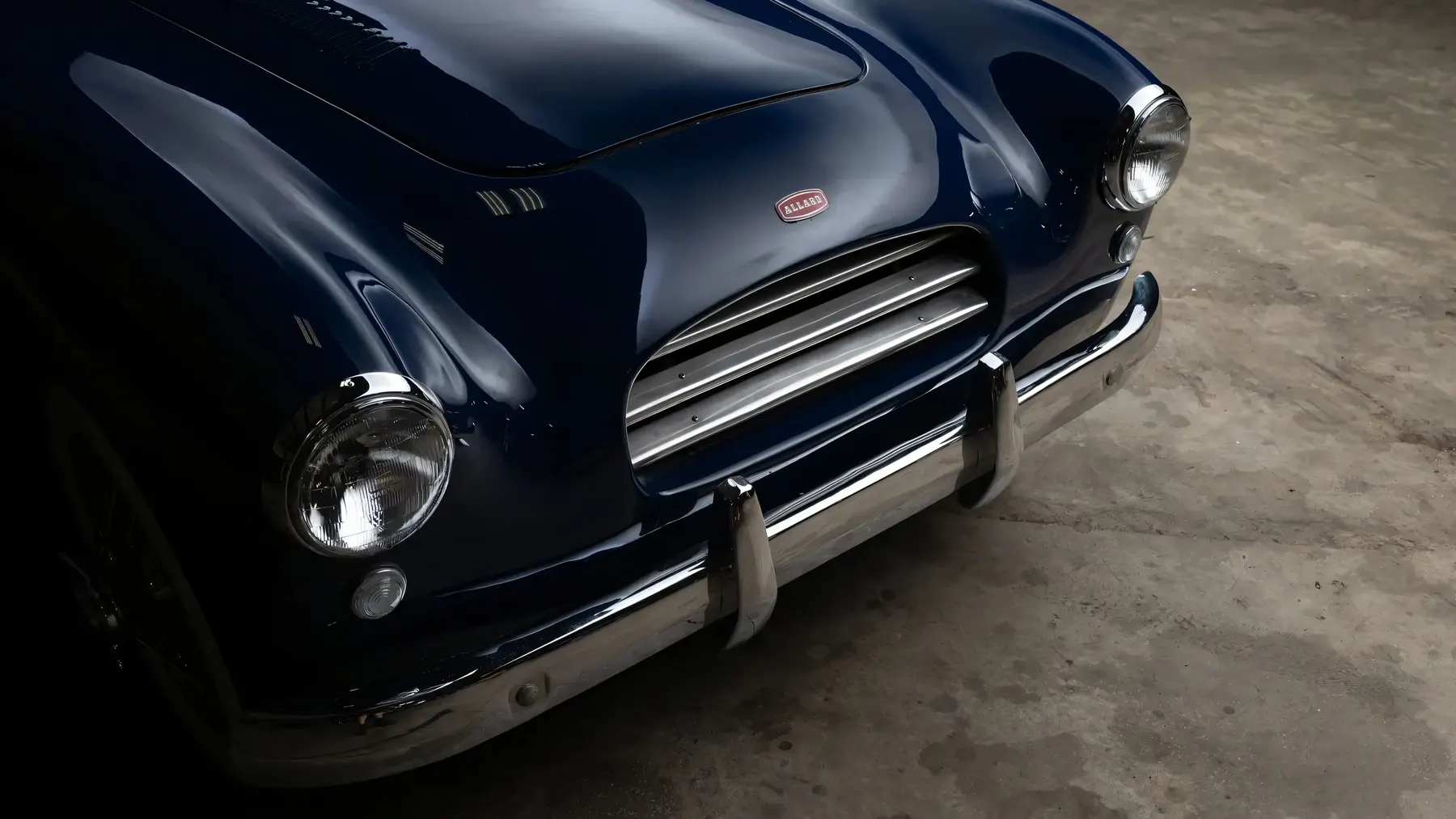
The K3’s body was genuinely attractive in a way that the J2 never tried to be. Where the J2 wore its aggression openly - cycle wings, exposed mechanicals, a face like an argument - the K3 was smooth, slab-sided aluminium, with integrated fenders, a proper folding soft-top, twin fuel tanks flanking the boot, and a bench seat wide enough for three passengers abreast. It was, by any standard of the era, a handsome machine: the long bonnet hinting at the violence lurking underneath, the cockpit pulled well aft to give the proportions of a proper long-bonnet sports car rather than a converted special. The banjo-type steering wheel and four-speed manual gearbox (on later, upgraded examples) added a period-correct tactility that modern sports cars, with their paddles and screens, have entirely abandoned.
On the road, with a Cadillac or Chrysler V8 filling the engine bay, the K3 offered something genuinely startling for 1952: the torque of a large-displacement American unit channelled through a lightweight British chassis with independent-style front suspension and the supple compliance of a deDion rear axle. The result was a car that could cover ground at a pace that embarrassed almost anything built in Europe, not through high-revving power but through the relentless mid-range shove that only a big-bore American V8 could provide. Sydney Allard’s instinct - that European chassis engineering and American drivetrain muscle were the ideal combination - was correct, and the K3 proved it on public roads in a way the J2 could only suggest from the racing paddock.
The K3’s genuine innovations lay in that chassis architecture. The chromoly tube construction was advanced for a low-volume British manufacturer, and the deDion rear axle was a sophisticated choice that kept unsprung weight low while maintaining precise axle geometry - a solution that Ferrari and other top-tier manufacturers were simultaneously adopting. The aluminium bodywork, hand-formed over the new platform, kept the kerb weight competitive against cars with far less powerful engines, and the result was a power-to-weight ratio that, in Chrysler Hemi specification, was genuinely difficult to match anywhere in the world at the time.
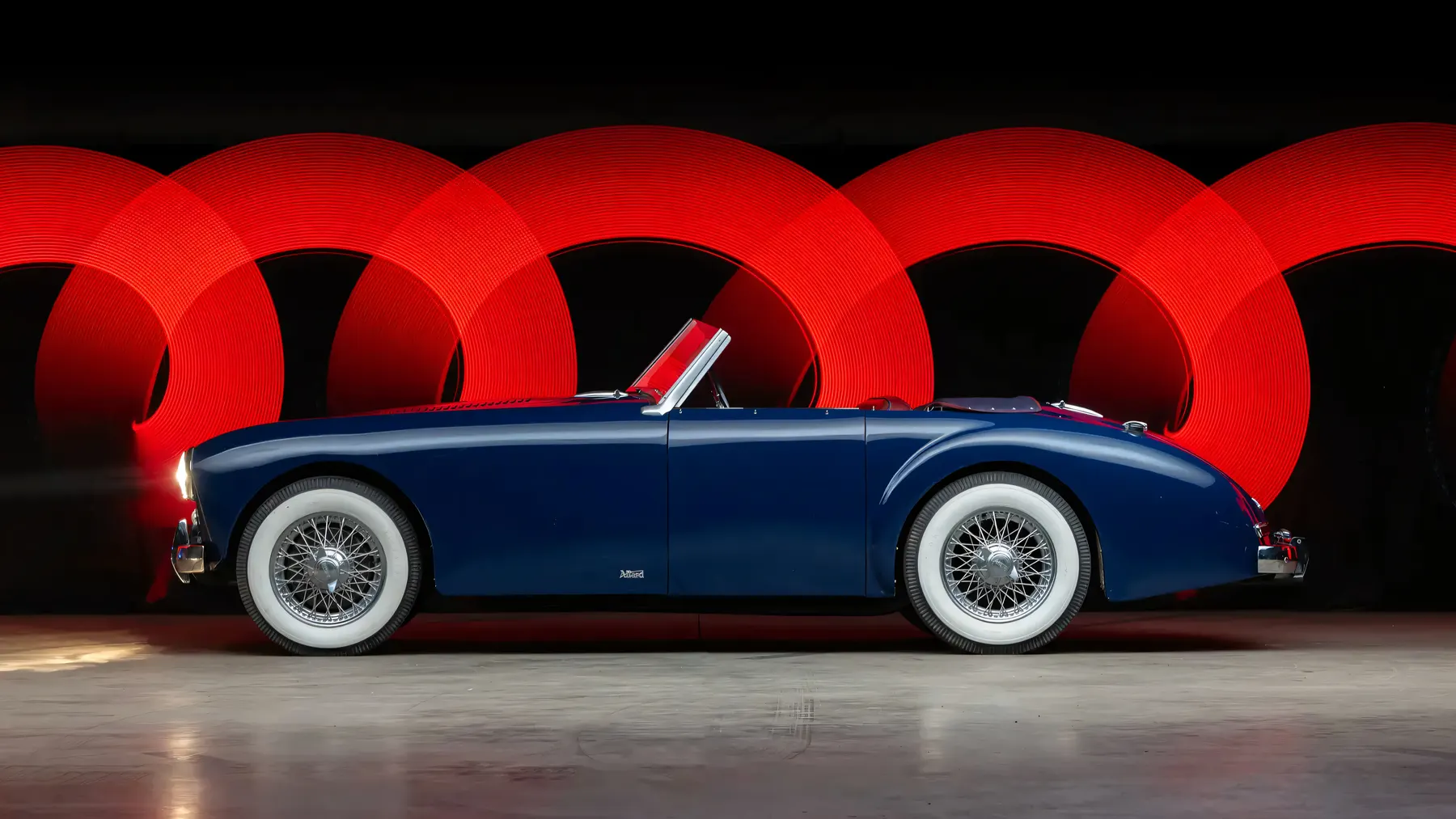
And yet the K3 failed, and it failed in ways that feel frustratingly preventable in retrospect. The steering lock was inadequate, producing a turning circle that made urban driving a genuine ordeal. The doors didn’t open wide enough to board gracefully. The windscreen wipers were an afterthought, and there was no provision whatsoever for heating or demisting - a remarkable omission for a car aimed at the American touring market where winter driving was routine. Most damningly, the K3 cost approximately $5,300 at a time when the J2, which offered more outright performance in a lighter package, could be had for around $2,100. Buyers asking why they should pay two and a half times the price for more comfort found the K3’s answer unconvincing.
The cultural significance of the K3, and indeed of all Allards, is bound up in the Anglo-American hybrid formula that Sydney Allard pioneered and that would later define the AC Cobra and the Sunbeam Tiger. The K3 was specifically marketed in the United States as a potential “Corvette slayer,” with Dodge dealers reportedly clamouring for something to counter the sporting ambitions of General Motors - a remarkable piece of context that places this small-volume British roadster at the heart of the early American sports car market. That only 63 were built, with roughly 46 surviving to the present day, makes the model an object of intense collector interest, with Chrysler-Hemi examples commanding particular premiums at auction - a Monterey 2024 example realising $89,600.
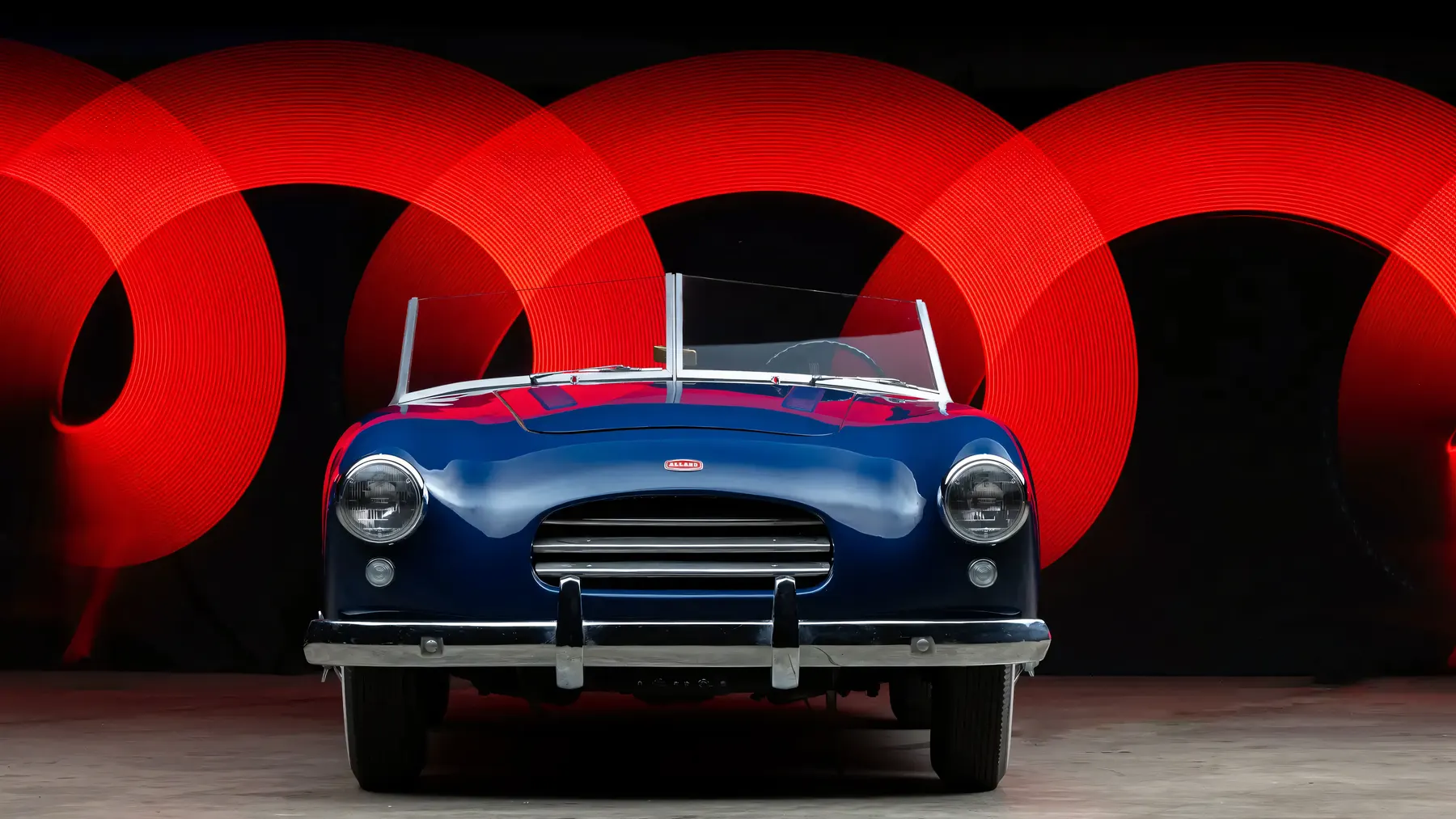
The automotive press of the early 1950s was enthusiastic about the K3’s performance but clear-eyed about its ergonomic shortcomings, a pattern that followed the Allard marque throughout its existence. Road tests praised the effortless high-speed cruising ability that the big V8s provided, while noting that the car demanded a certain tolerance for discomfort that more polished European grand tourers did not. Today, the K3 is regarded as one of the last expressions of the purist Anglo-American sports car formula before the arrival of more sophisticated machinery made the raw approach obsolete - a bridge between the hand-built specials of the immediate post-war period and the engineered sports cars that would follow from Jaguar, Aston Martin, and eventually Shelby.
Sydney Allard died in 1966, and with him went the last serious momentum behind the marque. The K3 endures not as a commercial success but as a mechanical argument made in aluminium and cast iron: that the shortest distance between two points is a light British chassis, a massive American engine, and the nerve to believe that over-engineering a car’s dynamics while under-specifying its heating system is a perfectly reasonable set of priorities. In that sense, it is entirely consistent with its maker.