2008 Bugatti Veyron 16.4
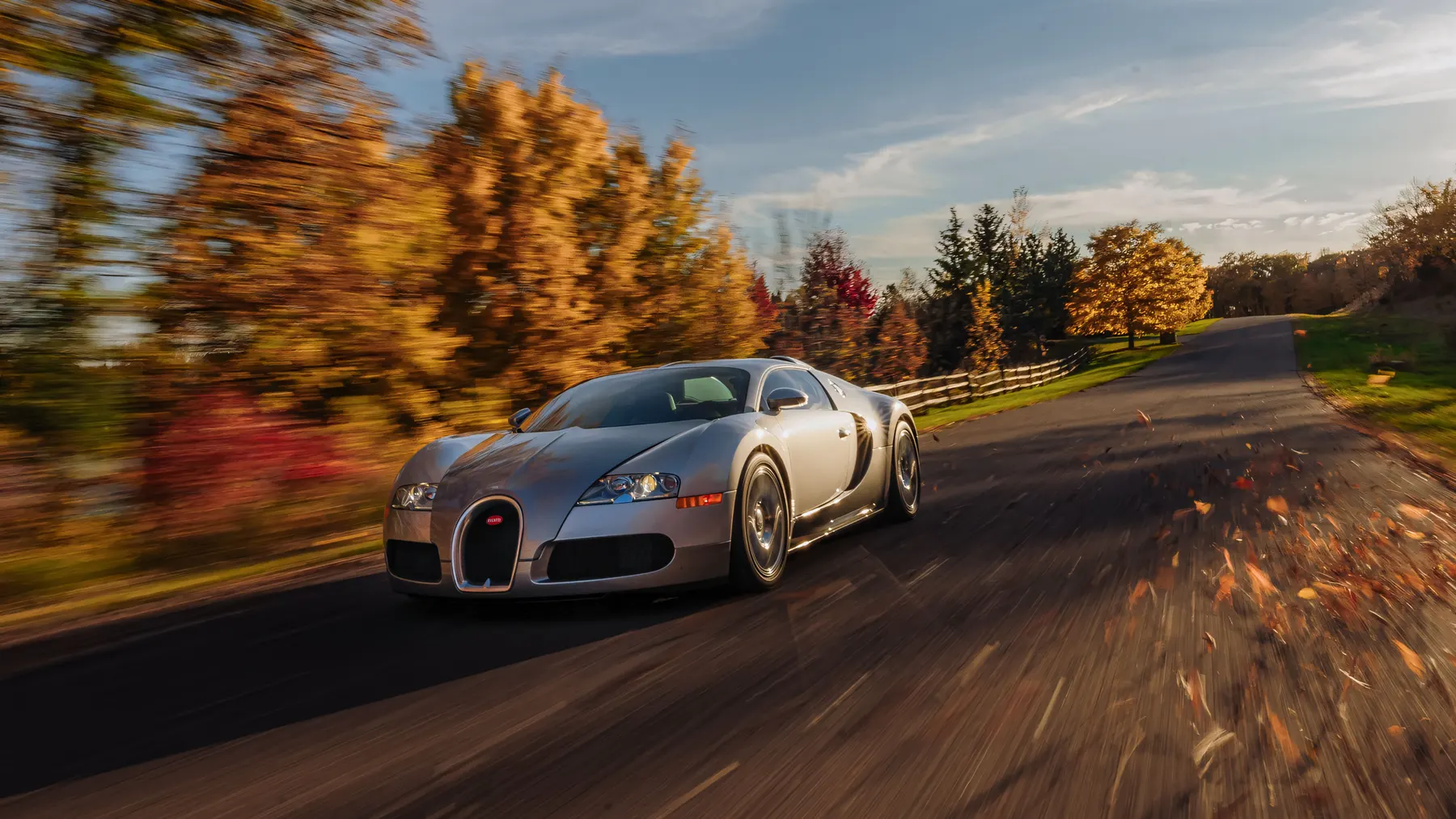
In the heart of the automotive renaissance at the turn of the millennium, the Bugatti Veyron 16.4 emerged as a testament to the audacious ambitions of the Volkswagen Group. Conceived under the visionary Ferdinand Piëch, this masterpiece of engineering was a statement, a roaring declaration of what was possible when limits were pushed, and conventions were shattered.
The year was 1998, and with the acquisition of Bugatti, Ferdinand Piëch’s vision unfolded. His dream wasn’t just to create another sports car; it was to birth a vehicular marvel, a symphony of power and precision. The Bugatti Veyron was to be an 18-cylinder juggernaut, a car that would not only revive Bugatti’s illustrious legacy but would also showcase the formidable engineering prowess of the entire Volkswagen Group.
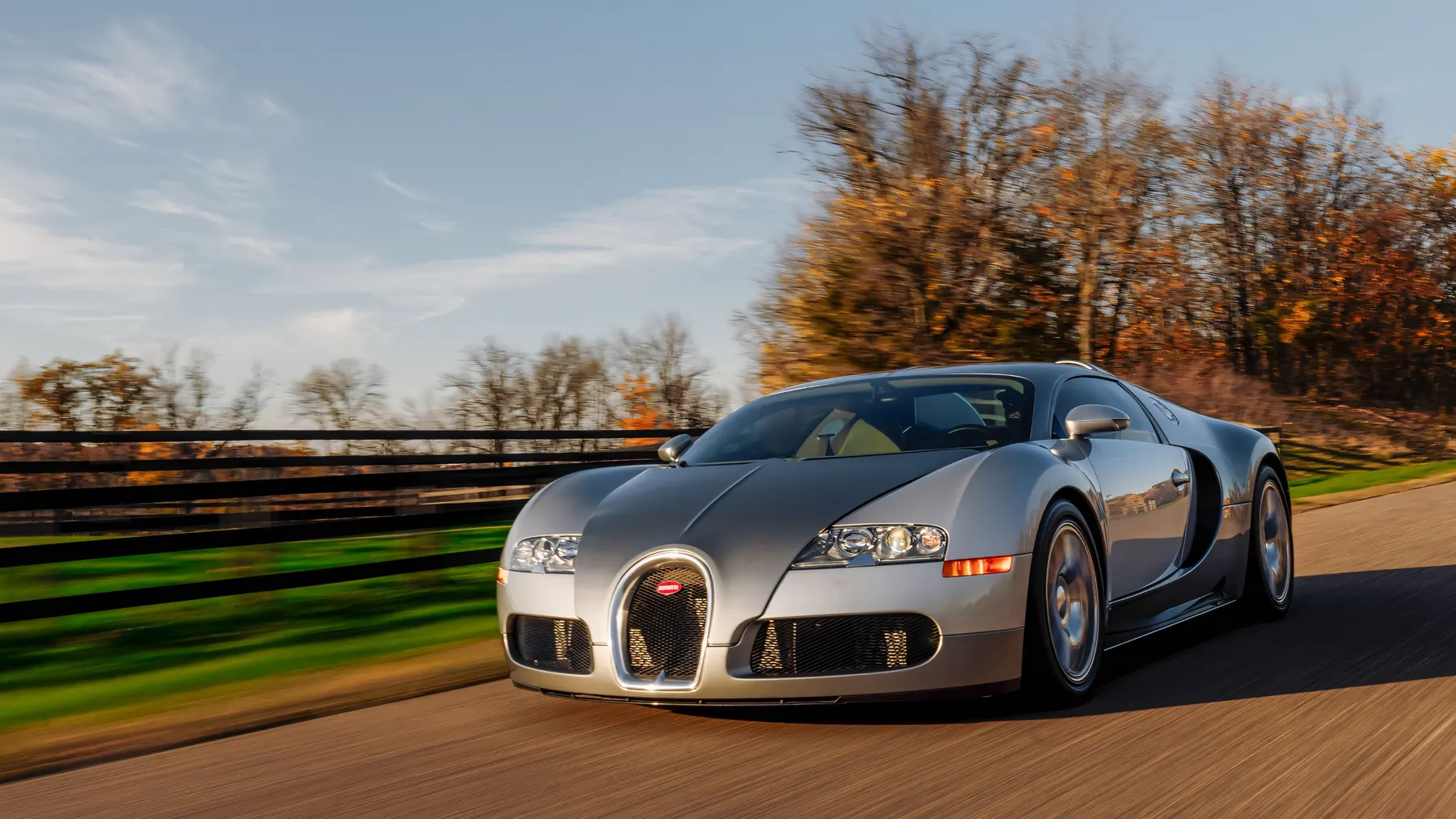
The Bugatti Veyron’s heart was a mid-mounted, quad-turbocharged 8.0-liter W-16 engine. A beastly creation, it boasted four valves per cylinder and was mated to a seven-speed dual-clutch transmission. The numbers were staggering - 1,001 PS, or a jaw-dropping 987 horsepower. This powerhouse catapulted the Veyron from 0 to 62 mph in an eye-watering 2.46 seconds. But it wasn’t just about the sprint; it was about the endurance, the ability to reach a top speed that flirted with the 250 mph mark.
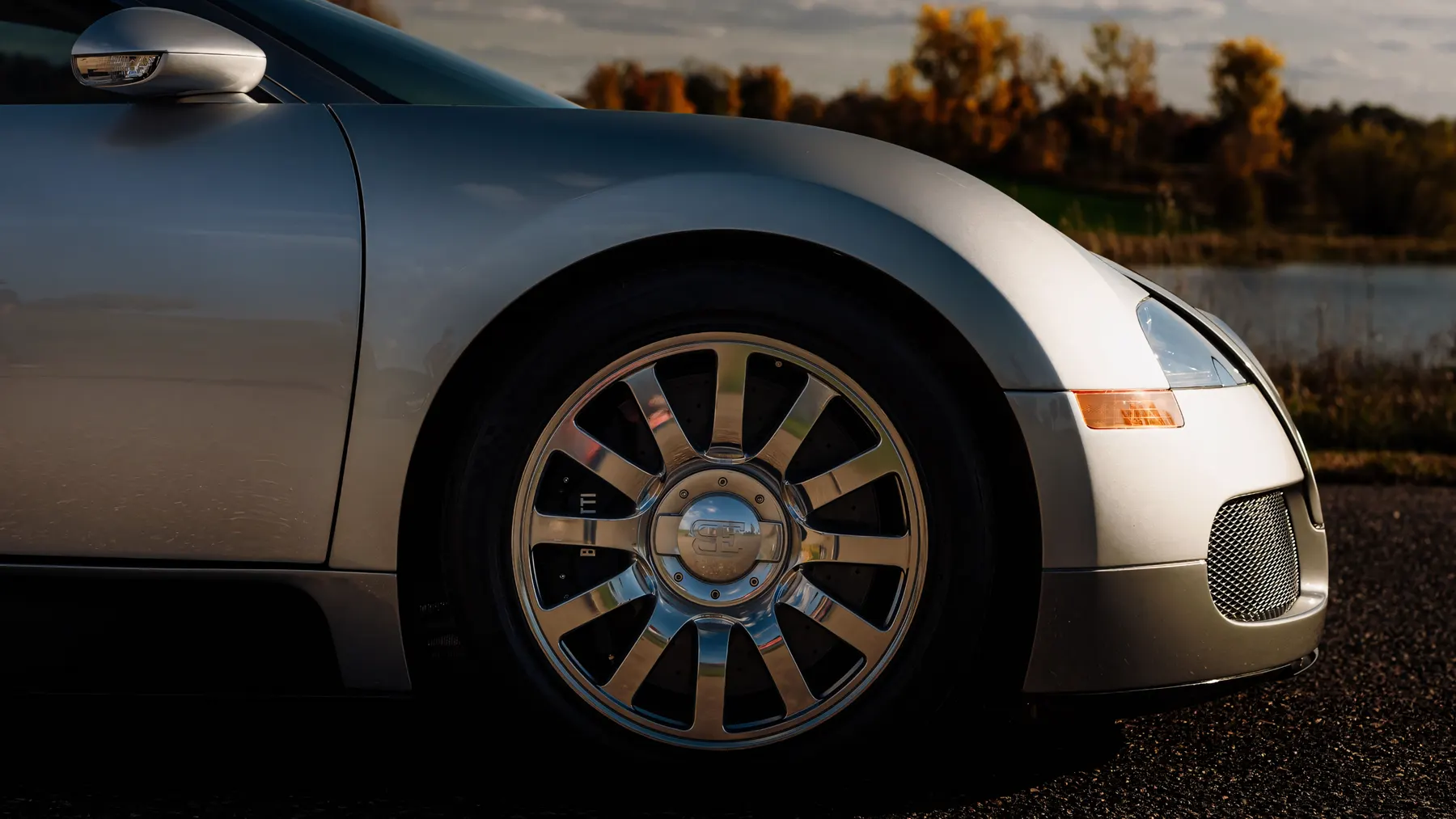
To manage this power, Bugatti implemented a full-time Haldex all-wheel-drive system, ensuring that even at breakneck speeds, the Veyron remained glued to the tarmac. The Michelin Pilot Sport PS2 PAX run-flat tires, specially engineered for the Veyron, gripped the road beneath massive alloy wheels, a colossal 21 inches at the rear and 20 inches at the front.
Velocity of this magnitude necessitated a braking system that could assertively tame the Veyron. Carbon-ceramic disc brakes, measuring a colossal 15.7 inches up front and 15 inches at the rear, coupled with eight-piston and six-piston callipers respectively, achieved just that. The Veyron wasn’t just about speed; it was about the power to halt that speed with unprecedented precision.
The Bugatti Veyron was more than just a speedster; it was a chameleon on the road. Three distinct drive modes - Normal, Handling, and High-Speed - allowed drivers to adapt to various conditions. The Veyron could morph from a comfortable cruiser, with a 4.9-inch ride height, to a track-hungry predator, lowering itself to an astonishing 2.56 inches in High-Speed mode. This adaptability was key to making the Veyron a daily driver with the soul of a race car.
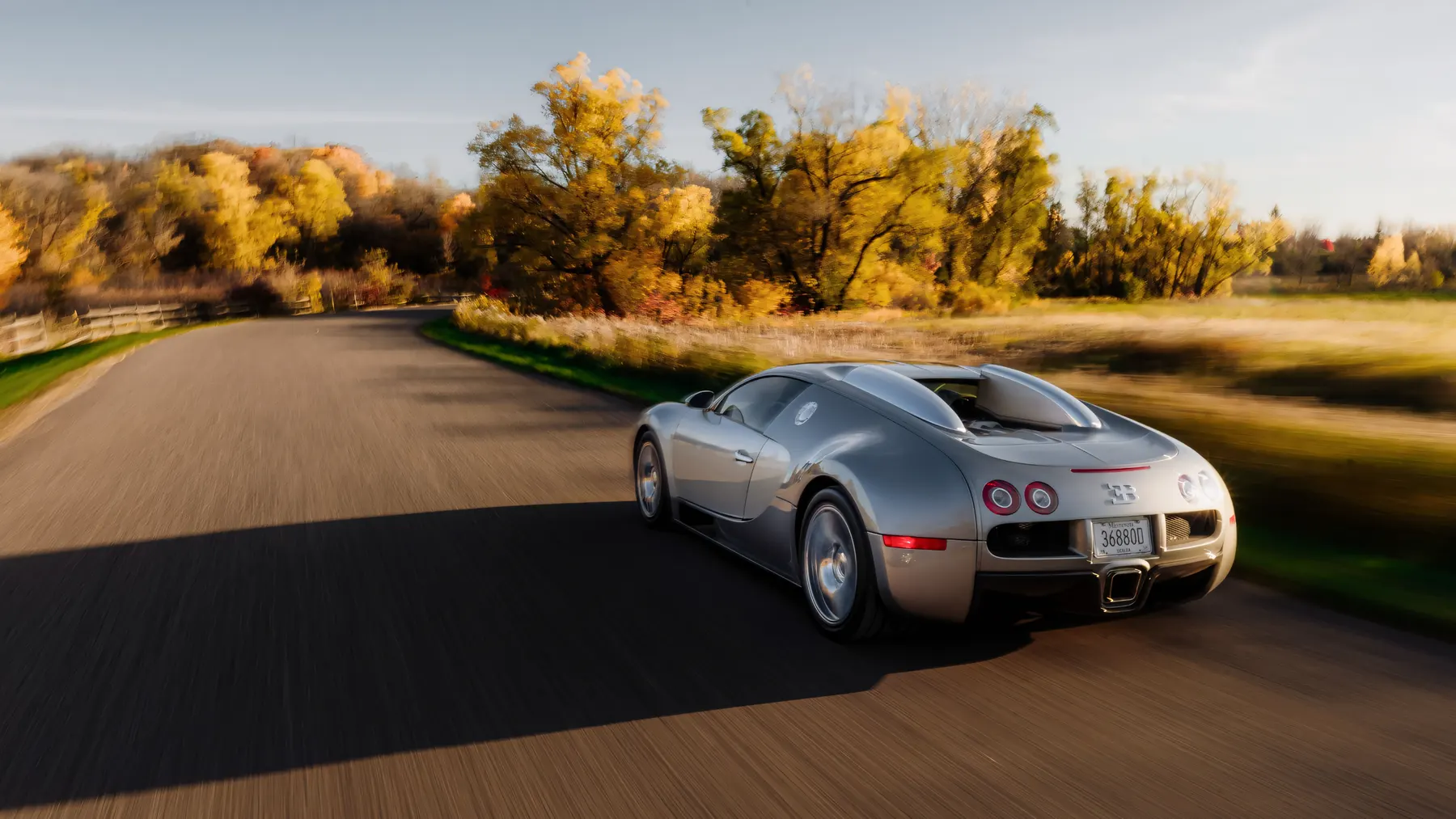
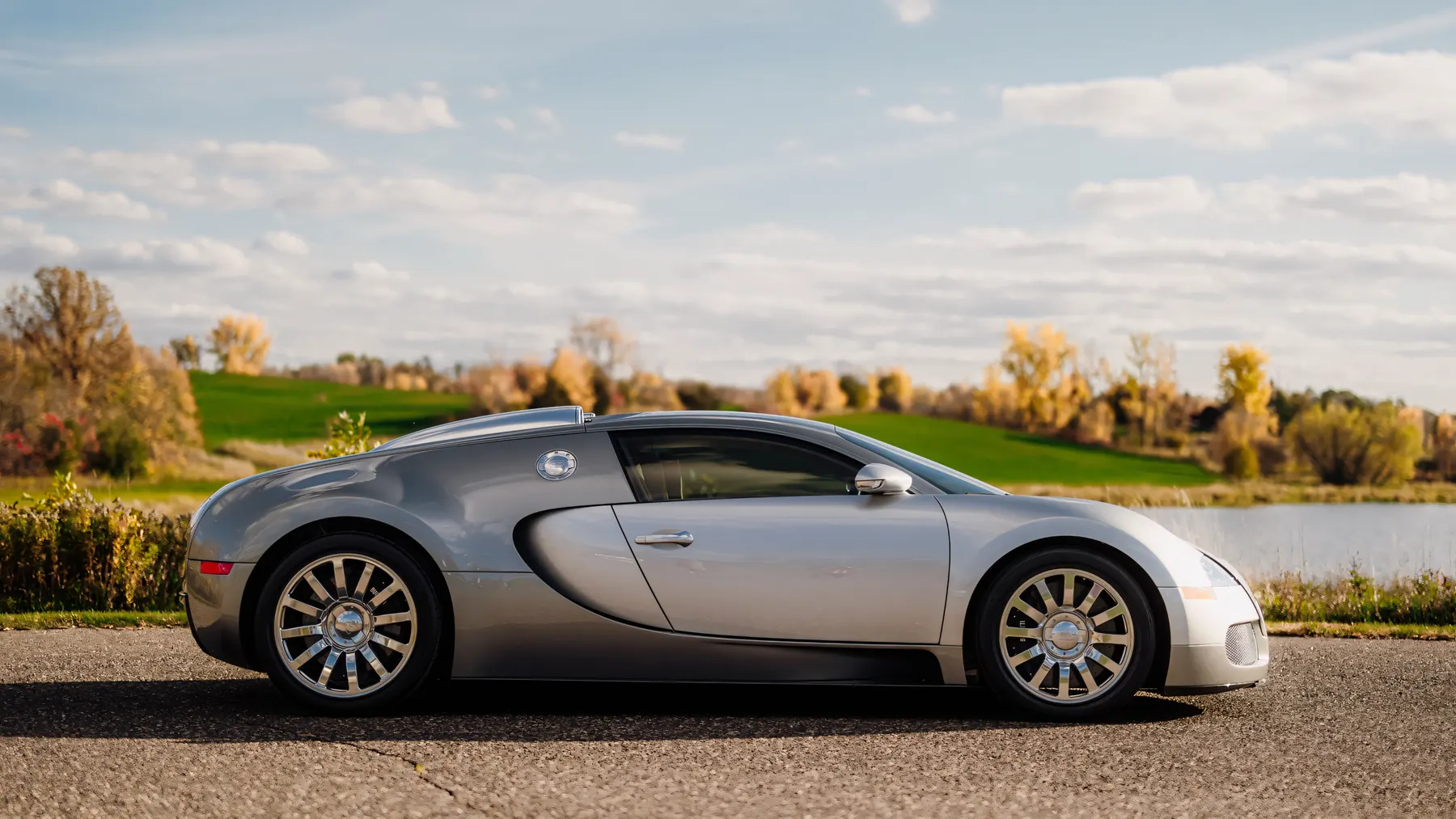
The Veyron’s design was as much a statement as its performance. It stood as a testament to the marriage of form and function. With an overall length shorter than a Porsche 911 but riding on a longer wheelbase, it redefined proportions. Lower and wider than its counterparts, the Veyron was an amalgamation of aerodynamics and aesthetics. The hand-crafted structure was an intricate piece of art, instantly recognizable as the modern Bugatti - a car that dared to be different.
Beyond the roaring engine and the sleek exterior, the Bugatti Veyron concealed a myriad of ancillary marvels. The car boasted a staggering 10 radiators, a testament to Bugatti’s commitment to pushing the boundaries of what was considered standard in automotive engineering. This was a rolling laboratory of technological excellence.
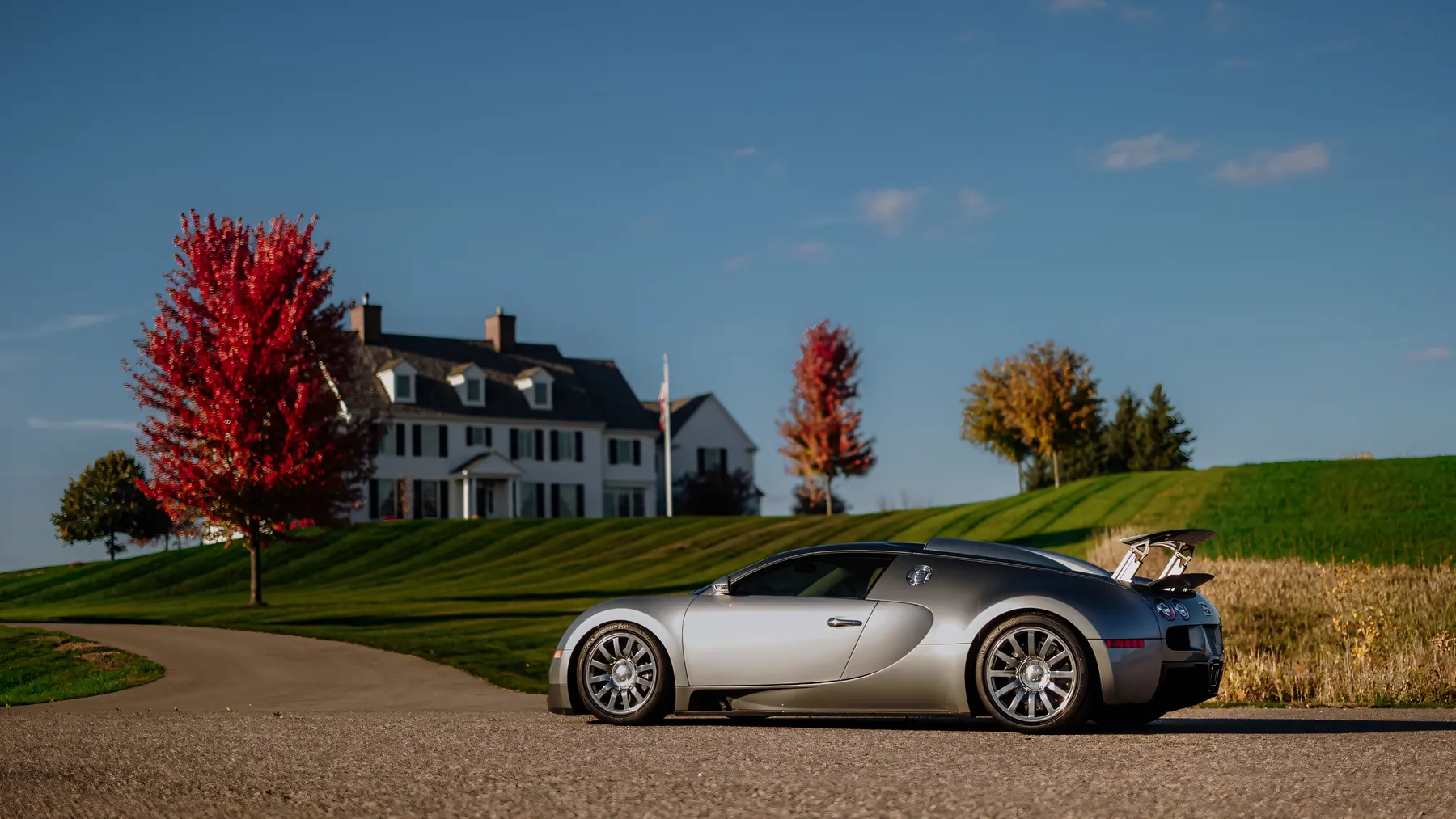
The Bugatti Veyron wasn’t just a car of its time; it was a paradigm shift. Introduced in 2005, it set a benchmark that still holds its ground almost two decades later. Its legacy is not just in the numbers - the speed, the power - but in the sheer audacity of its conception. It was a statement that reverberated through the automotive world, signalling that limits were meant to be surpassed.
Today, the Veyron stands as a symbol of the relentless pursuit of excellence. In an era where technology propels automotive evolution, the Bugatti Veyron remains an icon - an embodiment of what happens when engineering meets passion, and a car becomes a piece of living, breathing art. As we look back at the Bugatti Veyron of 2008, we don’t just see a car; we see a revolution on wheels, a manifestation of what happens when the pursuit of perfection knows no bounds.