1973 Ferrari 365 GTC-4 by Pininfarina
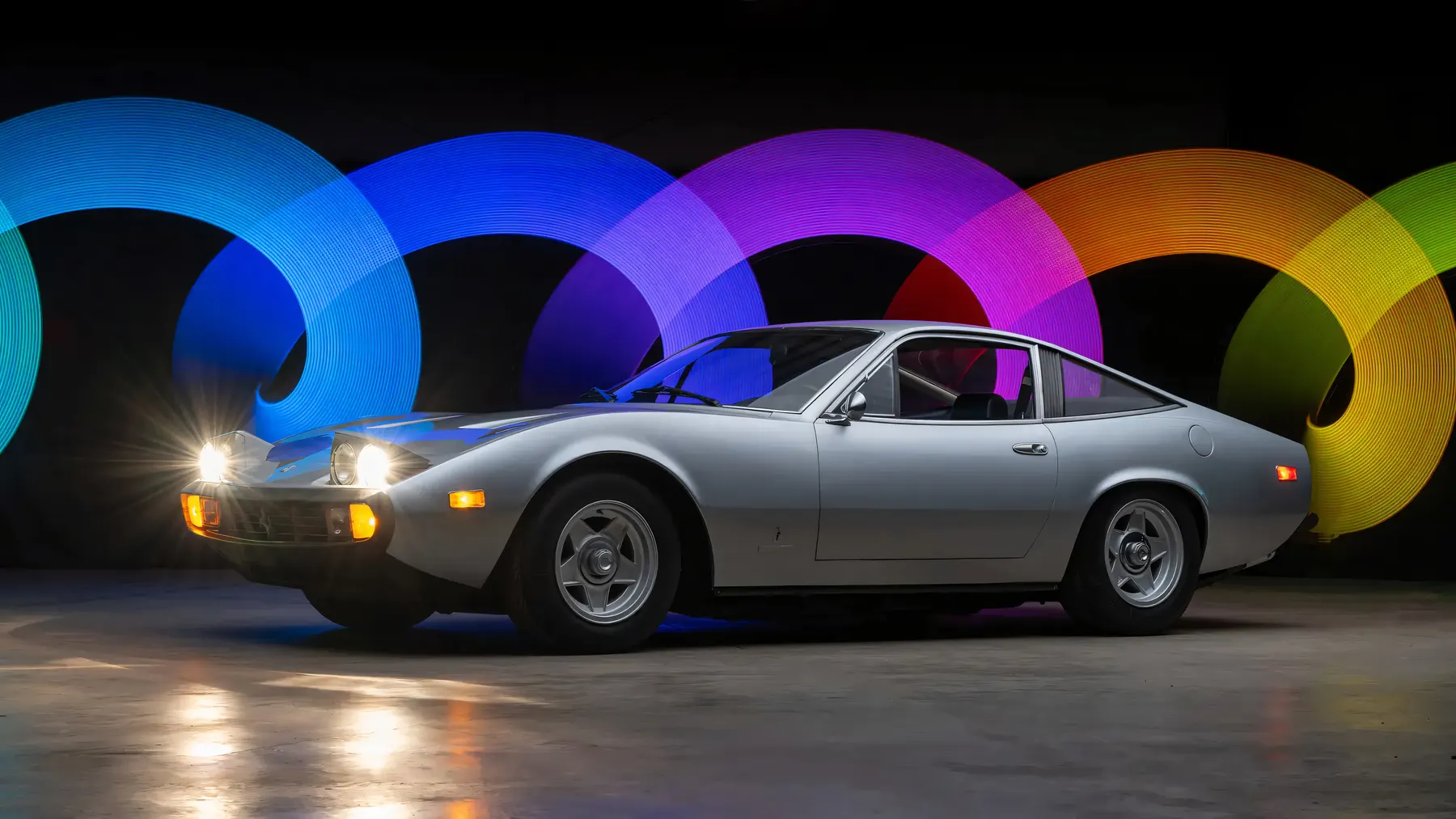
The Ferrari 365 GTC/4 inhabits a strange and quietly fascinating place in the Ferrari canon - not aggressive enough for the Daytona crowd, not roomy enough to be a proper family car, and yet somehow more accomplished as a daily grand tourer than either of the models it replaced. It arrived at Geneva in March 1971 wearing an identity crisis as a badge of honour, and the automotive world has been slowly catching up to it ever since.
Filippo Sapino of Pininfarina drew the body lines in the first half of 1970, and what he produced was genuinely unlike anything Ferrari had shown before. The wedge-shaped silhouette, with its low-slung bonnet and thin roof pillars that make the glasshouse appear to float above the body, was a conscious departure from the upright formality of the 365 GTC and the baroque grandeur of the 365 GT 2+2. Italians dubbed it il Gobbone - the hunchback - a reference to the sweeping lower sill line that rises gently along the flanks, while other markets simply called it “the Banana.” Neither nickname is quite fair, but both capture how unusual it looked relative to its contemporaries. The pop-up headlights, flush with the nose, contributed to a cleanliness of line that felt ahead of its time in 1971.
The car’s market positioning was inherently complicated. Ferrari was simultaneously replacing two models - the two-seat 365 GTC and the four-seat 365 GT 2+2 - with a single body that occupied the space between them. The GTC/4 was nominally a 2+2, but the rear seats were more honestly described as occasional accommodation: small, angled by the sloping rear window, and genuinely only suitable for shorter passengers or luggage. What it offered in exchange was a more usable and refined front-cabin experience than the 365 GTB/4 Daytona, along with a lower driving position and a significantly more composed ride. It was, for 1971, as close to a practical Ferrari as Maranello was willing to build.
Mechanically, the GTC/4 used a stretched version of the Daytona’s Tipo 251 chassis, with a longer wheelbase to liberate rear-seat space. The engine carried the Colombo V12’s lineage stretching back to 1947 - a 4,390cc unit with a bore of 81mm and a stroke of 71mm - but it was comprehensively retuned for the GTC/4’s character. The critical change was the switch from the Daytona’s downdraft Weber carburettors to six twin-choke side-draught Weber 38 DCOE units, a modification that served a dual purpose: it lowered the induction system’s profile enough to allow Sapino’s sloping bonnet line, and it delivered a more progressive, tractable power curve. Compression dropped to 8.8:1 and the dry-sump lubrication of the Daytona gave way to a conventional wet-sump arrangement. Peak output came in at 340 bhp at 7,000 rpm and 318 lb-ft of torque at 4,000 rpm - down from the Daytona’s 352 bhp, but the torque arrived lower in the rev range, which in the real world of motorway cruising and mountain passes is exactly what you want.
The gearbox was a five-speed unit mounted directly to the engine - unlike the Daytona’s transaxle layout - driving through a torque tube to a ZF limited-slip differential at the rear. Independent suspension via double wishbones and coil springs featured at both ends, with hydraulic self-levelling at the rear to cope with the extra weight of passengers and luggage. Four-wheel disc brakes completed a chassis package that was, by the standards of the early 1970s, genuinely sophisticated.
In period road tests, Motor clocked it at approximately 162 mph, with 0–60 mph dispatched in around 6.2 seconds. US-market cars, fitted with emission-control equipment, lost meaningful power - dropping to around 315 bhp - and were identifiable by rectangular side marker lights on the front and rear wings. For American buyers at the time, the GTC/4 was slightly defanged but remained one of the fastest and most refined grand tourers available. The bulk of the 500-odd production run went to the United States, a fact that speaks both to Ferrari’s commercial priorities and to the GTC/4’s natural fit with the long-haul demands of the American continent.
Inside, the GTC/4 marked a genuine shift in Ferrari’s attitude toward comfort. Air conditioning, power windows, and heated windscreens appeared on the options list - features that the spartan Daytona refused to take seriously. The cabin was trimmed with a level of attention that Ferrari’s road cars had not always prioritised, and the lower, wider driving position gave the car an intimacy that the taller 365 GT 2+2 could never quite match. The example originally delivered through William Harrah’s Modern Classic Motors distributorship in Reno, finished in Grigio Argento over a distinctive Nero Cogolo tartan cloth, represents the GTC/4 as its most characterful self - understated in colour, individual in trim, and equipped with every available comfort option.
The weaknesses are real and worth naming. The rear accommodation was genuinely marginal, and Ferrari’s decision to market the car as a 2+2 always required a certain generosity of spirit from its owners. The wet-sump lubrication, pragmatic as it was for packaging, was a step back from the Daytona’s engineering purity. The transmission, mounted conventionally at the front of the car rather than as a rear transaxle, contributed to a front-heavy weight distribution that enthusiasts raised on the Daytona would notice in demanding corners. And the production run of around 505 examples over roughly 18 months - ended in autumn 1972 - was brief enough to suggest that Ferrari itself was uncertain about where the car sat in its lineup.
What followed tells the rest of the story. The mechanical layout of the GTC/4 - stretched chassis, wet-sump V12, front-mounted gearbox - was carried forward almost unchanged into the 365 GT4 2+2, a car that traded the GTC/4’s sculptural drama for practical five-seat accommodation. The GTC/4 was, in effect, the creative apex of a platform that immediately became sensible upon its own departure. That is a peculiar form of greatness: the most interesting expression of a mechanical formula, sandwiched between the legend of the Daytona and the practicality of what came after.
Critical reception then and since has been broadly warm but never quite effusive. The motoring press in 1971 recognised it as a significant and refined machine, though it inevitably lived in the Daytona’s shadow. In more recent decades, as the collector market has begun to appreciate genuinely usable Ferraris of the early 1970s, the GTC/4 has attracted serious attention - particularly unrestored examples that retain their original specification. The combination of the Colombo V12’s mechanical honesty, Sapino’s elegant and era-defining design, and the comparative rarity of a sub-18-month production window has given the GTC/4 a place in Ferrari’s history that it arguably earned from the very beginning, even if the world needed fifty years to fully agree.