1957 BMW 503 Cabriolet Series I
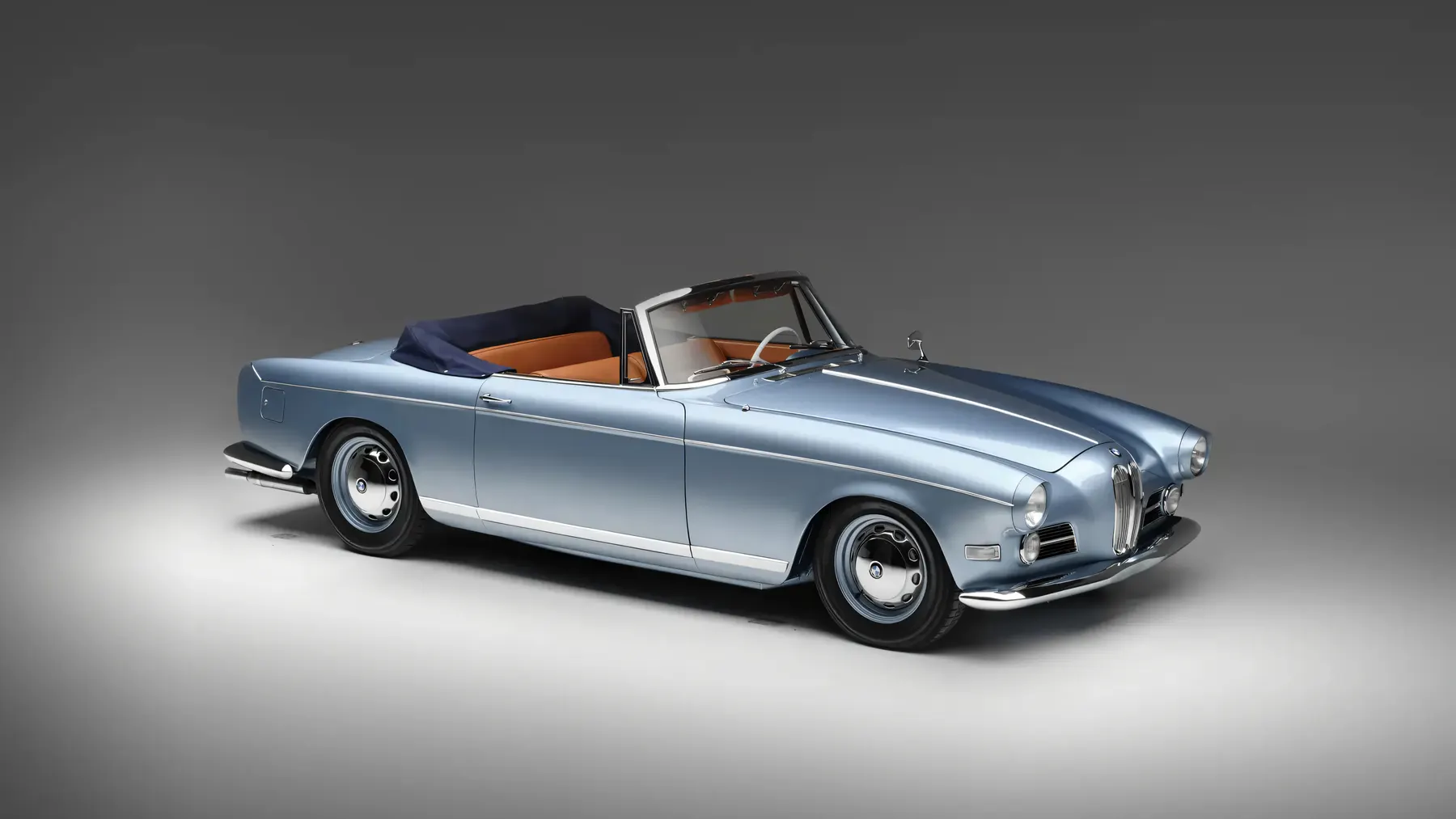
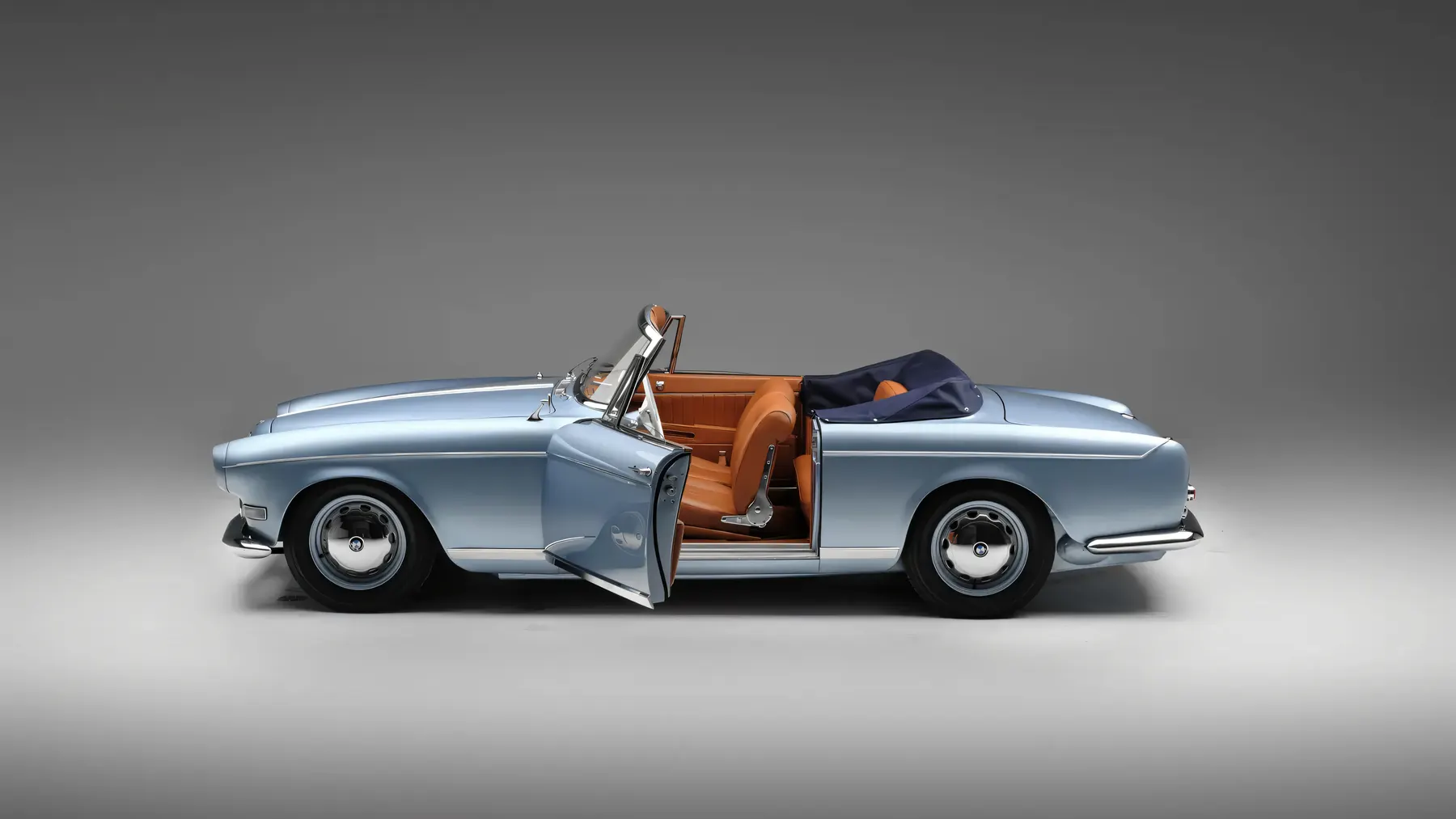
Reach into the cabin of a BMW 503 Cabriolet Series I and feel for the gear lever, and you will discover that it isn’t where you expect it to be. It’s up on the steering column - a vestige of the 502 saloon from which this car drew its mechanical DNA, a reminder that underneath Albrecht Graf von Goertz’s ravishing aluminium skin, the 503’s first iteration was not quite as sporting in its soul as its looks promised. BMW corrected this in December 1957 when the Series II arrived with a proper floor-mounted shifter. But for the first year and a half of production, the column shift was what you got, and that small detail tells you almost everything about what the 503 Cabriolet Series I actually was: an extraordinarily beautiful machine born of genuine ambition, assembled under enormous commercial pressure, and compromised in ways that its creators never fully had time to resolve.
The whole project traces back to a conversation between Max Hoffman - BMW’s sharp, persuasive American importer - and the Munich board. Hoffman had watched the Mercedes-Benz 300 SL cause hysteria across the Atlantic and argued that BMW needed its own glamour play for the American market. He pushed for two cars at once: a rakish roadster to wear the halo and a more practical 2+2 gran turismo to actually generate revenue. The roadster became the 507. The gran turismo became the 503. Hoffman’s logic was sound. The execution was, commercially speaking, catastrophic.
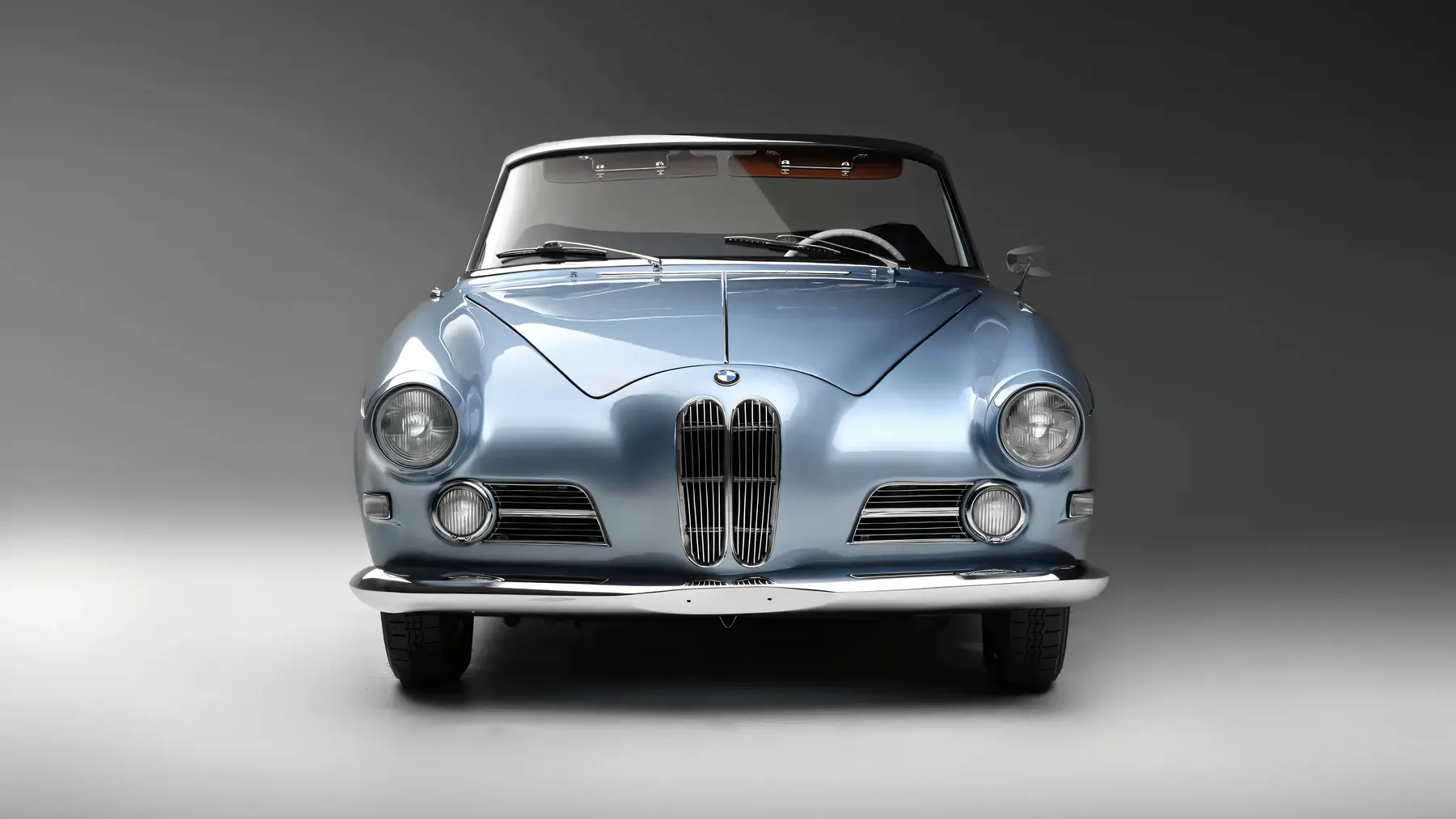
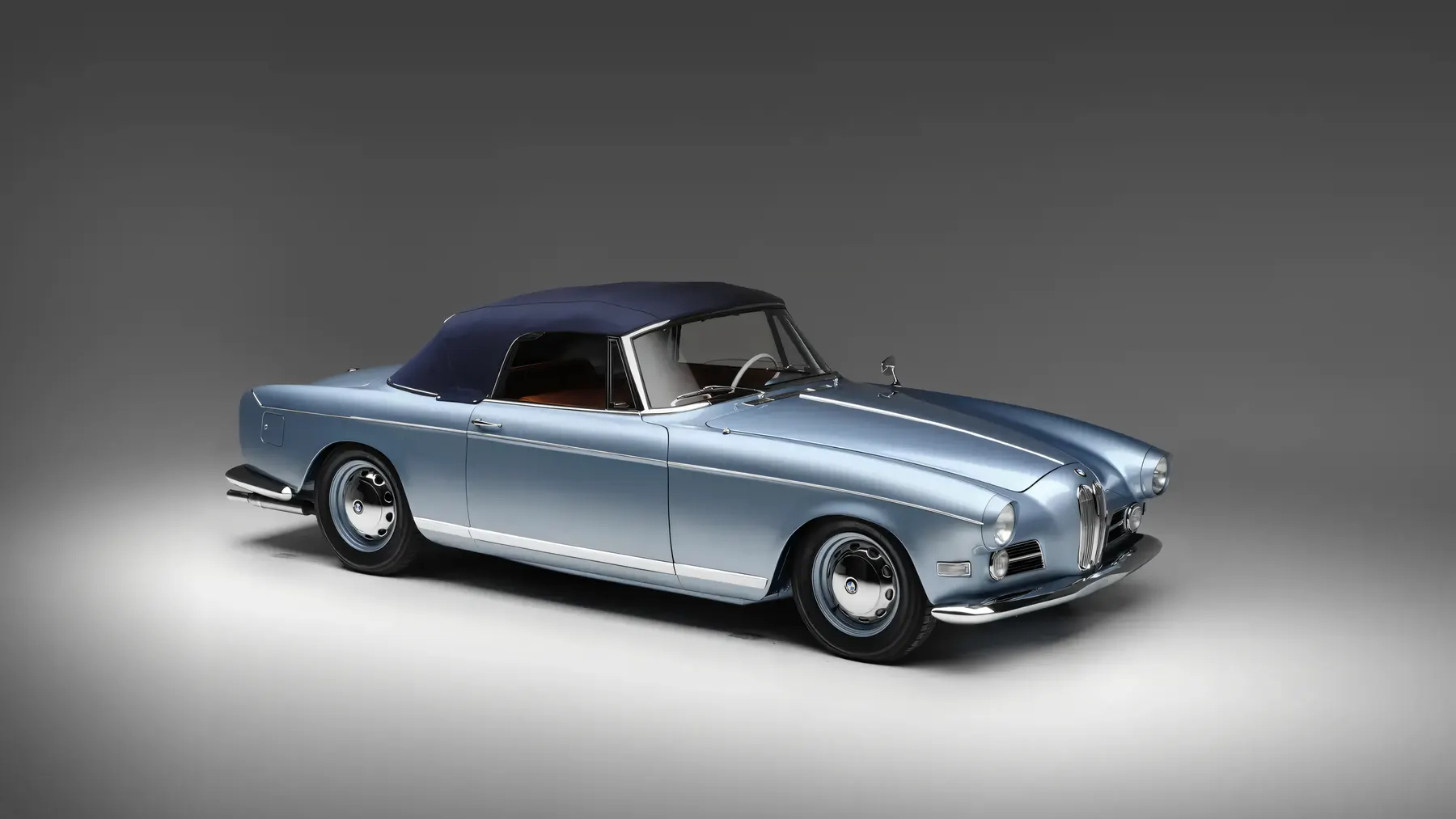
Goertz, a German aristocrat who had somewhat improbably reinvented himself as an industrial designer in America after the war, won the design brief over a competing proposal from Ernst Loof. He brought with him a sensibility shaped by American postwar optimism but refined by European restraint. The result - particularly in Cabriolet form - was a car that looked simultaneously of its era and entirely outside it. The body was handcrafted from aluminium sheet over wooden forms, with a slim, vertical twin-kidney grille flanked by auxiliary lamps, long sweeping flanks, and a tail that tapered with aristocratic restraint. In cabriolet form, the car’s proportions were arguably better resolved than the coupé’s, the roofline’s absence allowing the body’s long, low greenhouse line to breathe.
The Series I cabriolet was positioned as a machine for the era’s Wirtschaftswunder elite - those prosperous, status-conscious West Germans and European aristos who wanted luxury, pace, and theatre in a single package. At DM 29,500 when production began in May 1956, it cost roughly twice what Hoffman had originally envisioned, and it sat considerably above the 507 roadster in price. This wasn’t strategic premium positioning. It was BMW’s manufacturing cost reality laid bare: building bodies by hand, fitting a complex hydraulic soft-top mechanism - which made the Series I one of the very first German production cars with a power-operated convertible roof - and sourcing the engineering content required to match the car’s visual promises simply cost more than anyone had budgeted.
At the heart of the 503 sat an aluminium overhead-valve V8 of 3,168 cc, shared in architecture with the 502 saloon but breathing more freely through twin Zenith carburettors and a revised lubrication system using a chain-driven oil pump. Compression was a modest 7.5:1, yielding 140 bhp at 4,800 rpm. Sixteen-inch wheels were standard, and buyers could choose between a 3.90:1 final drive ratio or the longer-legged 3.42:1 option for more relaxed high-speed cruising. A handful of cars destined for the UK market were tuned to 507 specification by AFN Ltd, BMW’s British concessionaires, extracting 150 bhp - a reminder that the engine had more in reserve than BMW’s conservative state of tune suggested.
Performance by contemporary standards was solid rather than startling. Estimates - and they remain estimates, since no reliable contemporary test data exists - put the 0–100 km/h sprint at somewhere between 11 and 13 seconds, with a top speed in the region of 190 km/h. These are numbers that need context: in the mid-1950s, 190 km/h from a hand-built, aluminium-bodied 2+2 cabriolet was genuinely impressive. The chassis carried traditional BMW construction with a tubular steel frame, and the suspension delivered the kind of civilised, long-legged ride expected of a grand tourer rather than the crisp responses of a sports car.
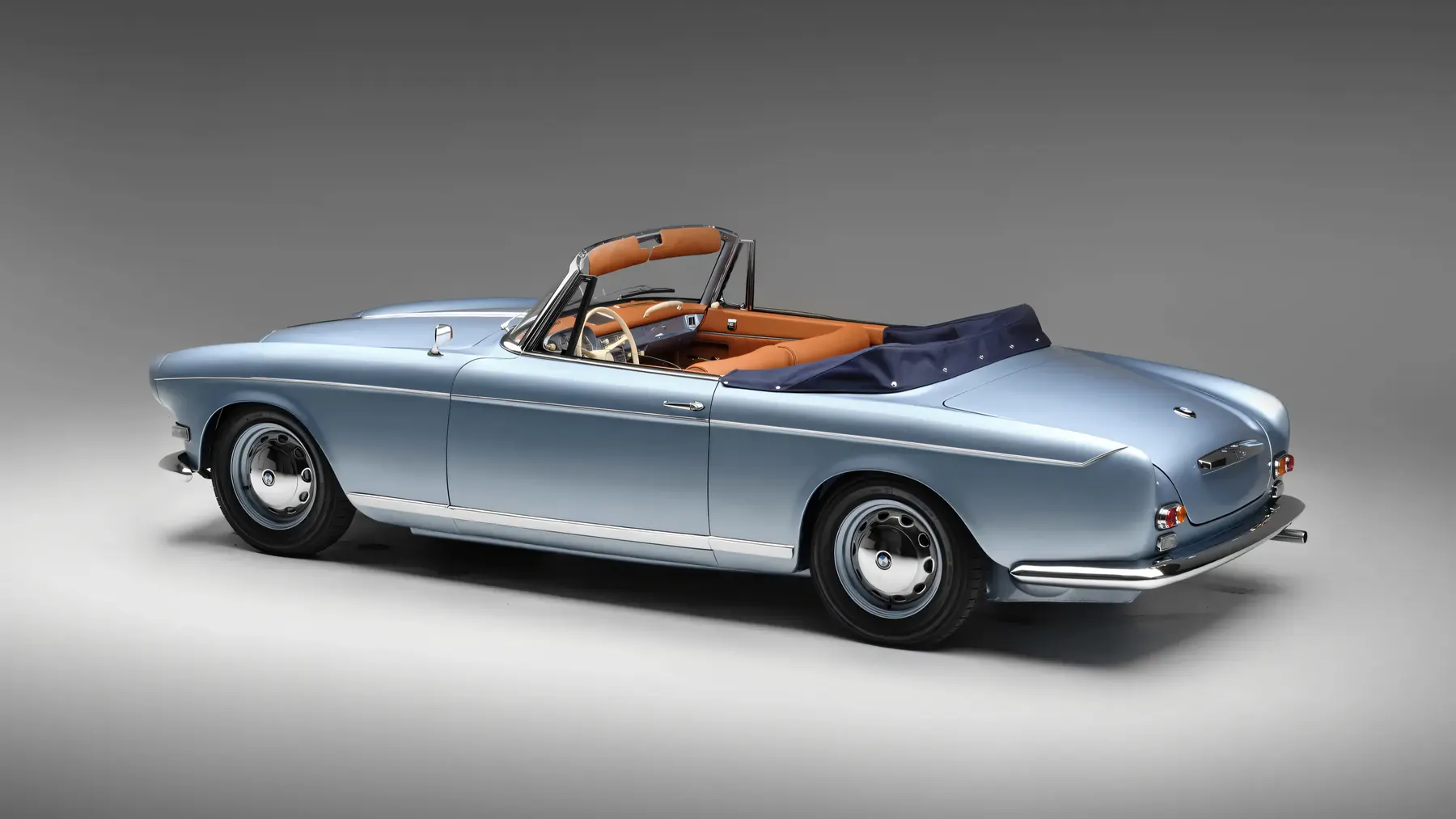
The Series I’s cabin experience was a mixture of genuine luxury and vestigial pragmatism. Leather upholstery, a wood-trimmed dashboard, and carefully considered ergonomics created a compelling ambience. But then there was that column gearshift. And hydraulic window lifters that, unlike the electric units introduced in the Series II, had a certain agricultural deliberateness about them. The Series I’s rear chrome trim also curved upward at the tail rather than running straight across, a detail quietly modified in the later cars. These distinctions matter to enthusiasts and collectors today, but in the 1950s they underscored that BMW was still refining the 503 as it went - a car learning what it wanted to be in real time.
What it was genuinely brilliant at was making progress feel effortless. The aluminium V8 was notably smooth for its displacement class, its torque delivery broad and linear rather than peaky, perfectly suited to long-distance cruising at a time when European motorways were just beginning to proliferate. The cabriolet’s power hood mechanism, for all its novelty, worked reliably enough to be genuinely usable rather than merely a party trick. And Goertz’s bodywork - all hand-formed aluminium - was both lighter than equivalent steel construction and possessed of a sculptural quality that photographs have never fully captured.
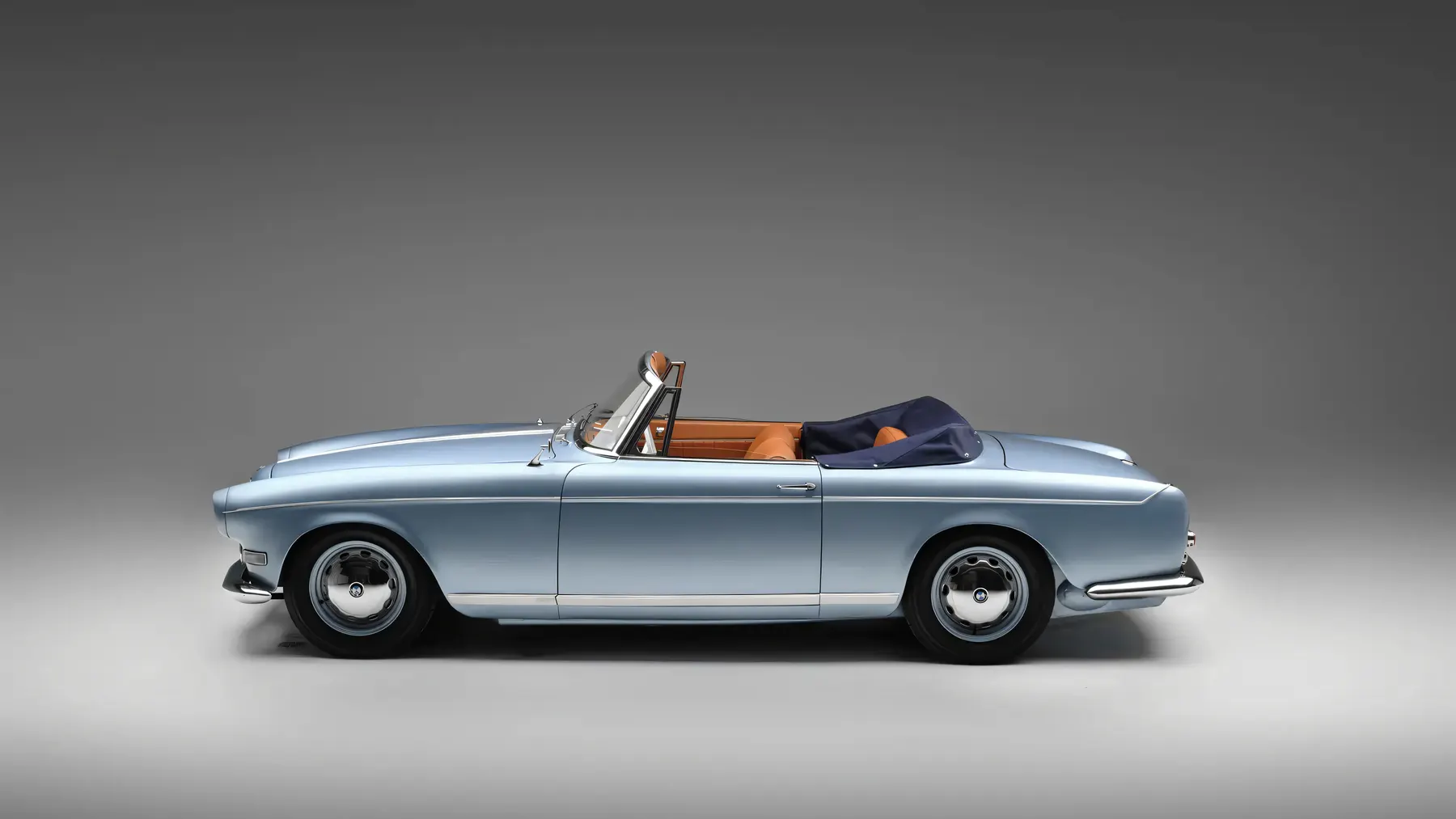
The honest criticism is equally clear-eyed. The 503 was never fast enough to compete with the sports cars of its era, nor was it spacious enough to genuinely challenge the luxury saloons that cost less. The 2+2 rear seating was more notional than practical, as is usually the case with cars in this form. The price point alienated almost everyone who might otherwise have been tempted by the American market ambitions that had motivated the project in the first place. And the column gearshift, however charming in hindsight, was indefensible on a car of this cost and intent in 1956. BMW sold fewer than half of all 503s in cabriolet form - 139 of the 413 total built across the entire production run - and even those numbers tell the story of a car that was admired far more than it was purchased.
The financial consequences cascaded. The 503 and its glamorous sibling the 507 cost approximately twice their projected development and manufacturing budgets without coming close to recovering either. By 1959, BMW stood genuinely on the precipice of bankruptcy, with Daimler-Benz circling and most of the supervisory board ready to sell. It took Herbert Quandt’s extraordinary act of financial faith - buying more shares as others fled, injecting fresh capital when the prognosis looked terminal - to keep BMW alive. The irony is profound: the cars that came closest to killing BMW were also the ones that proved its engineering and design ambition were worth preserving.
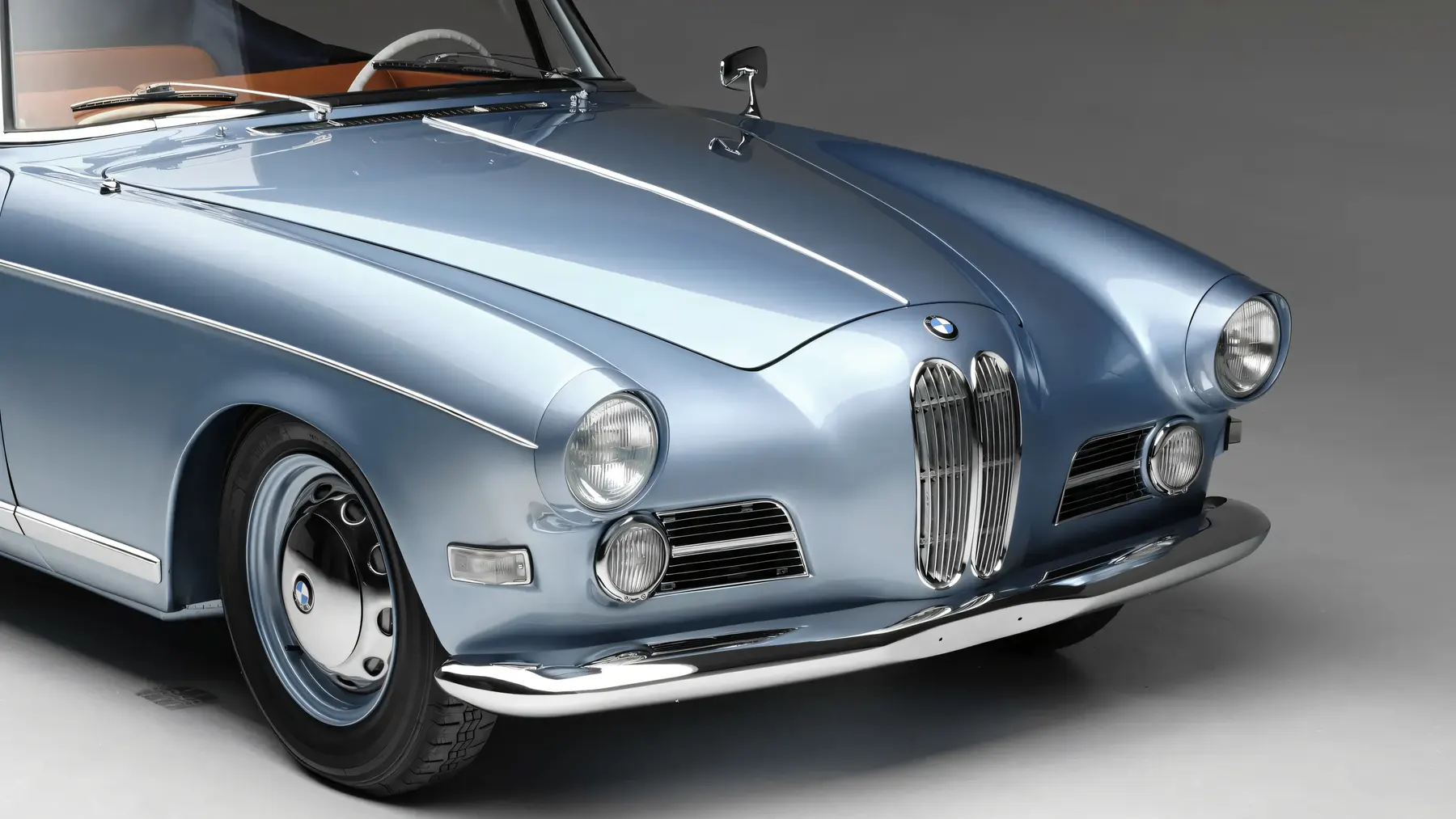
The press of the era recognised the 503’s beauty immediately but was equally frank about its commercial limitations. The absence of a proper US distribution network compounded the pricing problem - Hoffman’s dream of American sales volumes never materialised in the way that might have justified the investment. European buyers admired the car in showrooms and occasionally bought it, but the numbers never lied.
What has happened since is the peculiar justice that automotive history occasionally delivers. The 503 Cabriolet - particularly the Series I, with its column shift and hydraulic windows and upswept chrome tail trim - has become precisely the kind of object its original buyers perhaps suspected it might one day be: rare, covetable, and valued at multiples of its original asking price. The hand-formed aluminium bodywork that made it expensive to build is now the quality that makes it extraordinary to own. The 139 cabriolets built across the entire production run ensure that encountering one remains an event. And the column gearshift, that emblem of the Series I’s transitional character, is no longer an embarrassment but a fingerprint - the mark of the model in its first, unresolved, entirely fascinating form. BMW went on to rebuild itself around smaller, more profitable cars, and eventually became one of the most commercially successful automotive enterprises in the world. The 503 Cabriolet Series I had almost nothing to do with that recovery. It may, however, be the most beautiful thing BMW has ever built.
Related Notes
1954 Porsche 356 ‘Pre-A’ 1500 S Cabriolet by Reutter 1957 Porsche 356 A 1600 Speedster by Reutter 1959 Porsche 356 A 1600 Coupe by Reutter 1959 Borgward Isabella Coupé