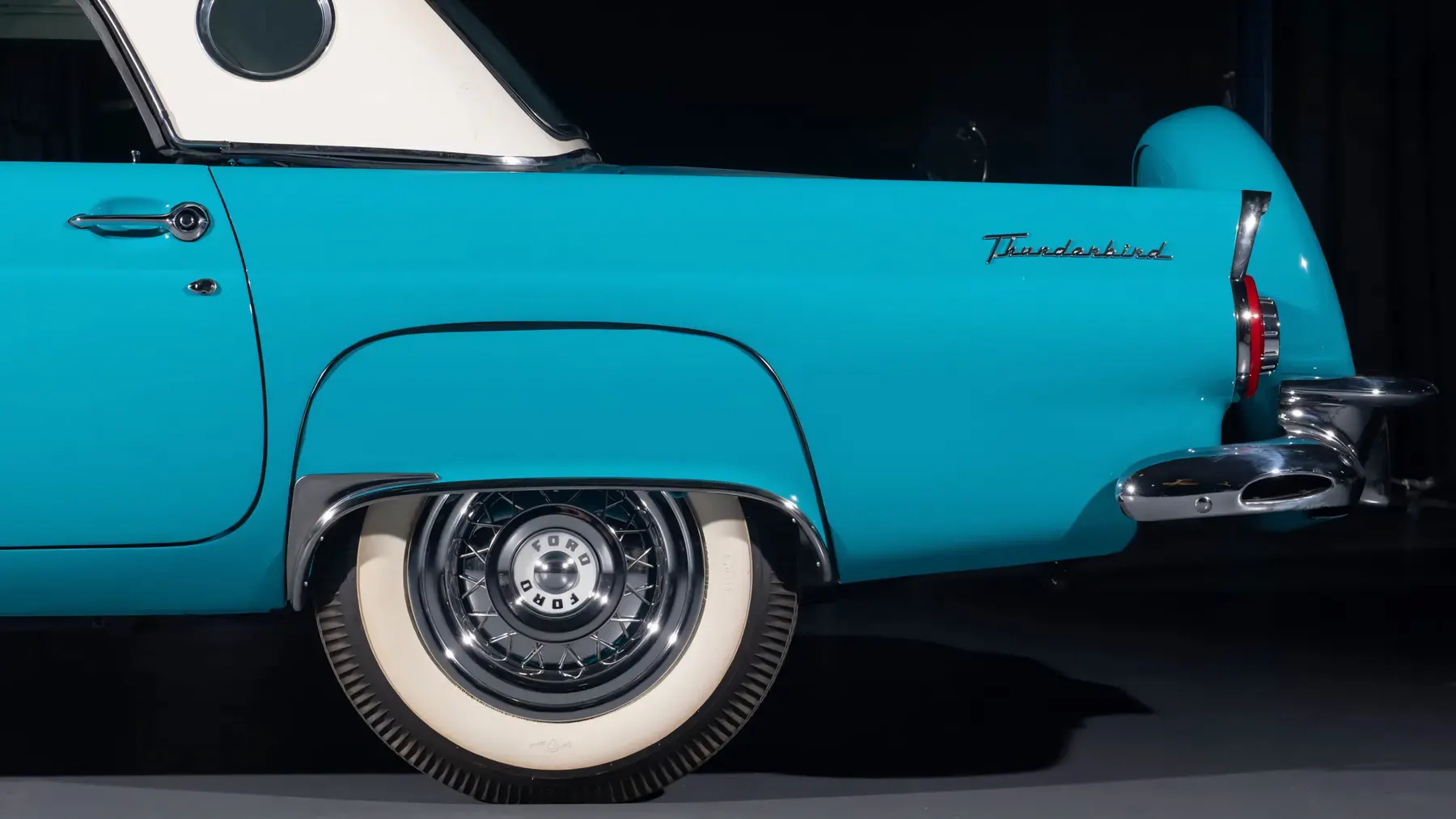
1956 Ford Thunderbird
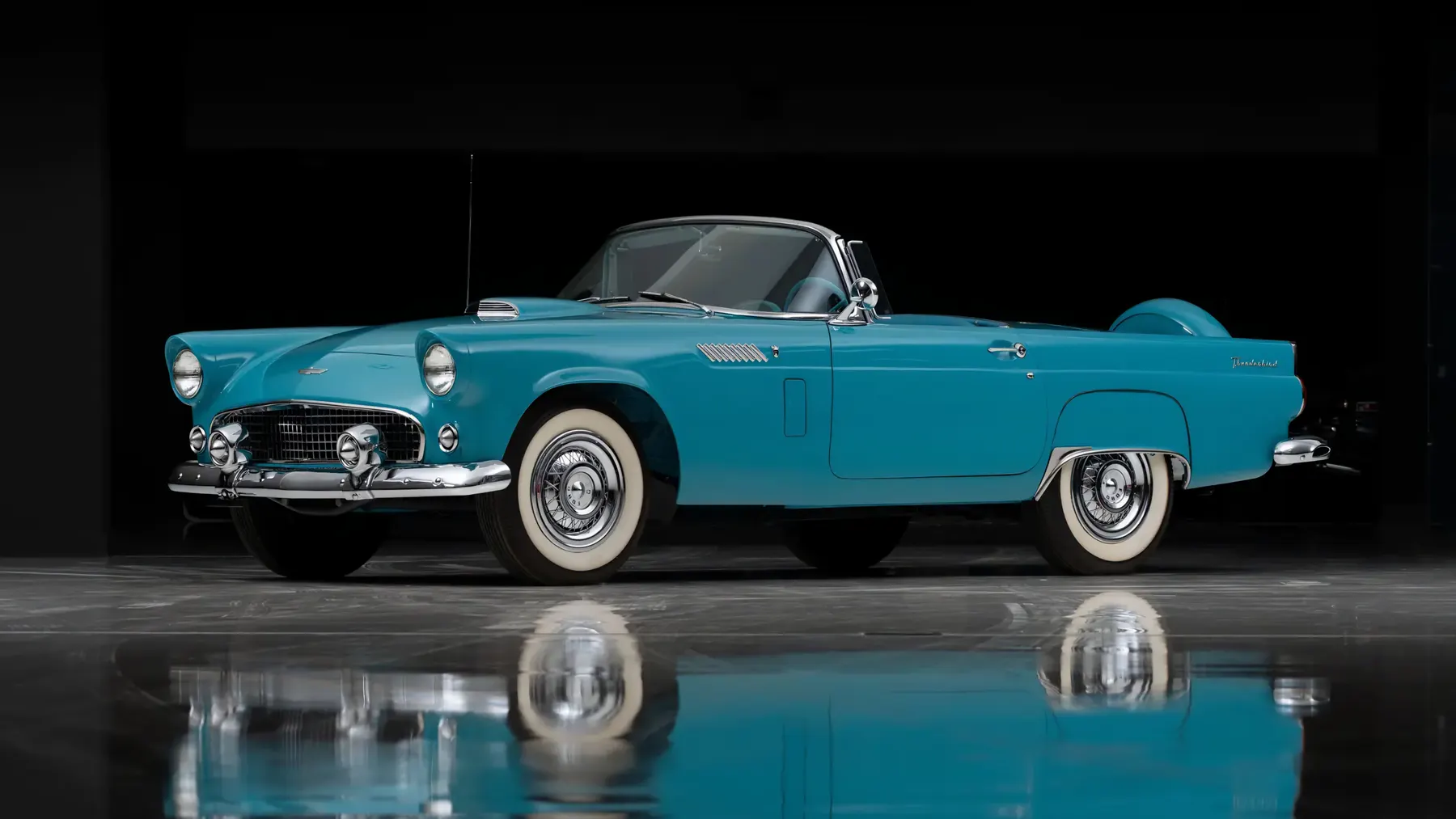
The automotive landscape of the mid-1950s witnessed the arrival of a car that would forever change how Americans viewed personal transportation. When the Ford Thunderbird debuted in 1955, it represented something entirely new-not quite a sports car, not quite a luxury cruiser, but rather what Ford brilliantly marketed as “a personal car of distinction.” This two-seat convertible, produced from 1955 to 1957, captured the imagination of the American public and created an entirely new market segment that would influence automotive design for decades to come.
The story of the Thunderbird began in October 1951 when Lewis Crusoe, a former General Motors executive who had been lured out of retirement by Henry Ford II, found himself walking through the Grand Palais in Paris with George Walker, Ford’s chief stylist. As they admired European sports cars, Crusoe posed a simple question: “Why can’t we have something like that?” This chance conversation sparked what would become one of Ford’s most iconic creations.
Back in Dearborn, Walker contacted designer Frank Hershey, who immediately began developing the concept. The vision was clear: create a two-passenger open car weighing approximately 1,145 kg, powered by Ford’s upcoming overhead-valve V8 engine, and capable of speeds exceeding 161 km/h.
By May 18, 1953, a clay model closely resembling the final design was presented to Crusoe, who gave his enthusiastic approval. Henry Ford II, returning from the Los Angeles Auto Show later that year, gave the final go-ahead to develop this new vehicle as a competitor to Chevrolet’s recently introduced Corvette.
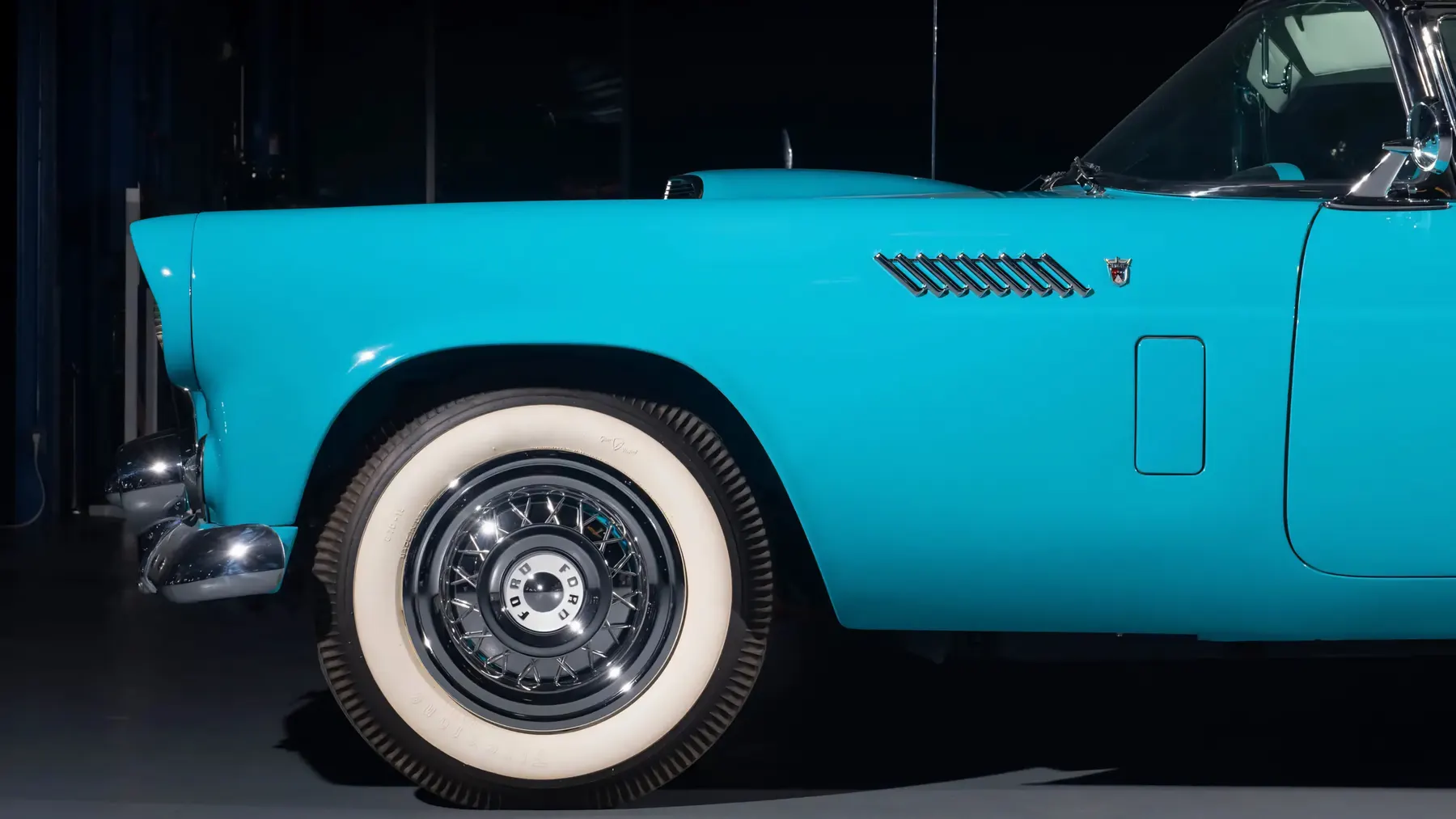
The name “Thunderbird,” suggested by a Ford stylist familiar with the southwestern United States, referenced the mythological thunderbird of Native American legend-a supernatural bird of power and strength. Coincidentally, Ford chairman Ernest Breech was a member of the Thunderbird Country Club in California and reportedly received the club’s blessing to use the name.
When the Thunderbird was unveiled at the Detroit Auto Show on February 20, 1954, it made an immediate impression. Unlike the Corvette, which was marketed as a pure sports car, the Thunderbird positioned itself as a personal luxury vehicle that offered both performance and comfort.
The first production Thunderbird rolled off the assembly line on September 9, 1954, and went on sale October 22 as a 1955 model. Featuring a body-on-frame construction with a 102-inch wheelbase (identical to the Corvette), the Thunderbird represented a masterclass in repurposing existing Ford components while creating something entirely new.
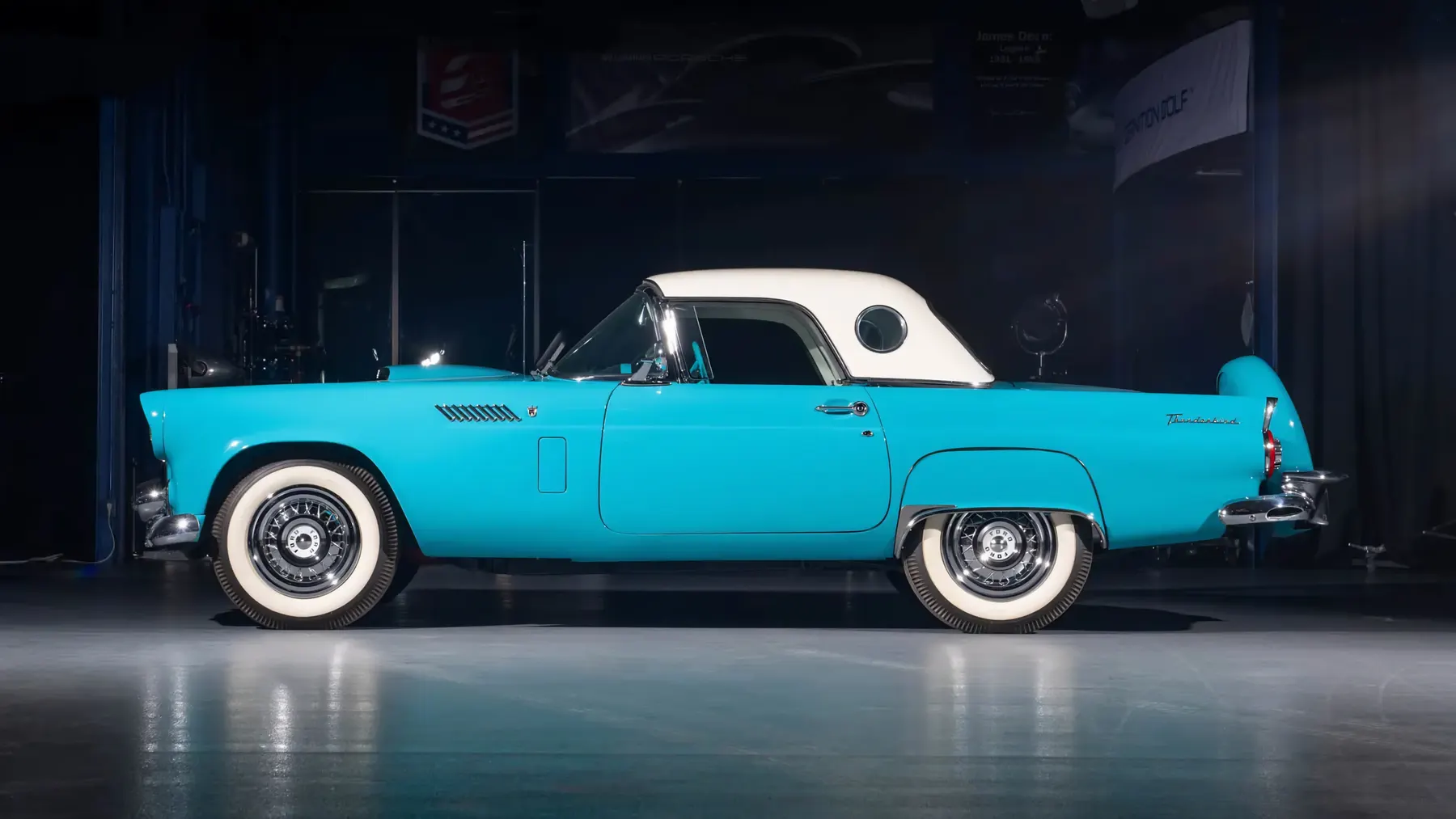
The car came standard with a removable fiberglass hardtop, while a fabric convertible top was a popular option. Under the hood sat Ford’s 292-cubic-inch (4.8-liter) OHV Y-block V8, producing 193 horsepower with the standard transmission or 198 horsepower when paired with the automatic. This powerplant gave the Thunderbird respectable performance for its era, with Motor Trend achieving 0-60 mph times of around 11 seconds and estimating a top speed of about 120 mph.
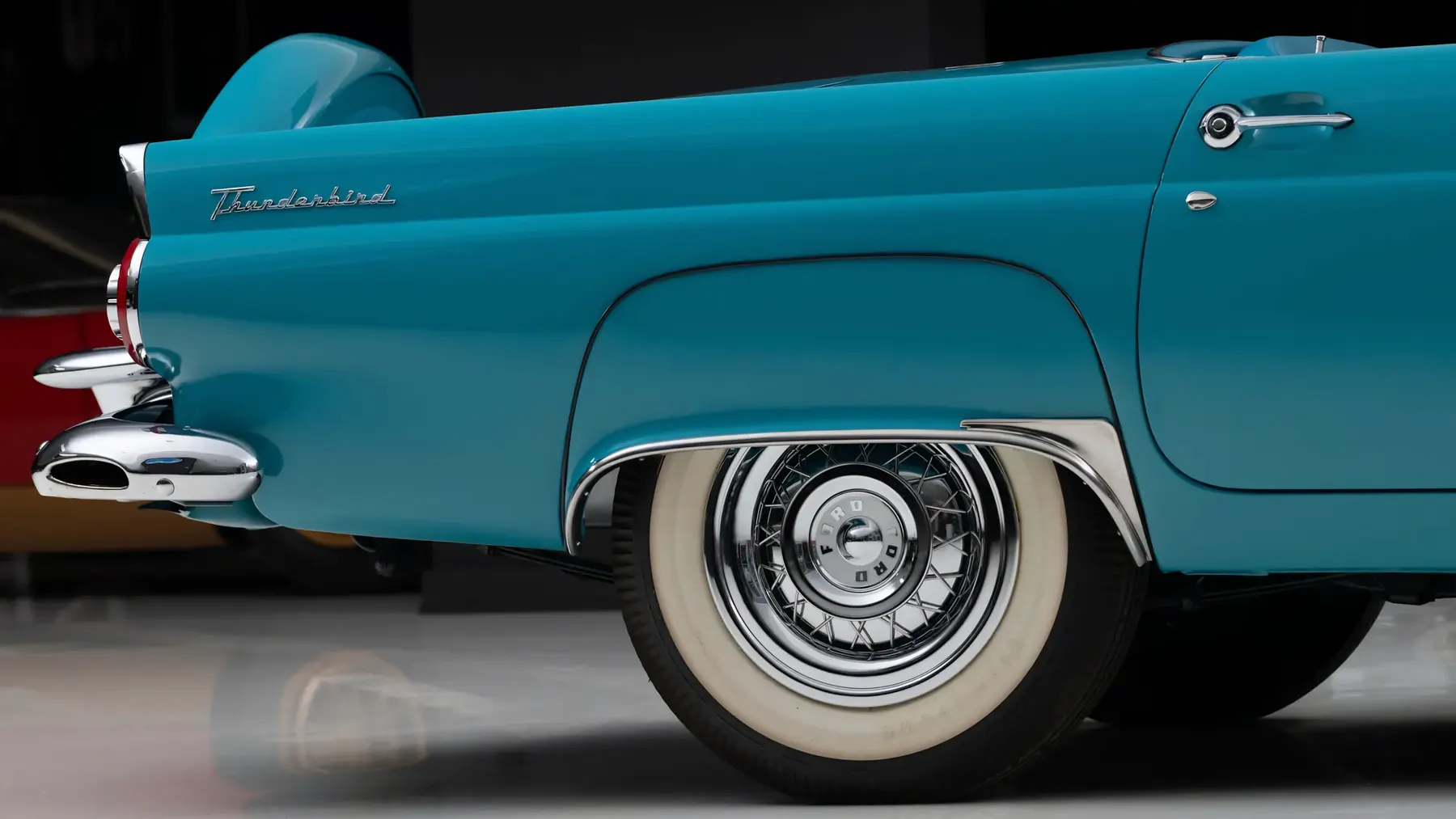
What truly set the Thunderbird apart were its luxury features. Unlike the somewhat spartan Corvette, the T-Bird offered four-way power seats, push button interior door handles, a telescoping steering wheel, and a tachometer-amenities rarely found in American two-seaters of that era. These features reinforced Ford’s position that this was a “personal car” rather than just another sports car.
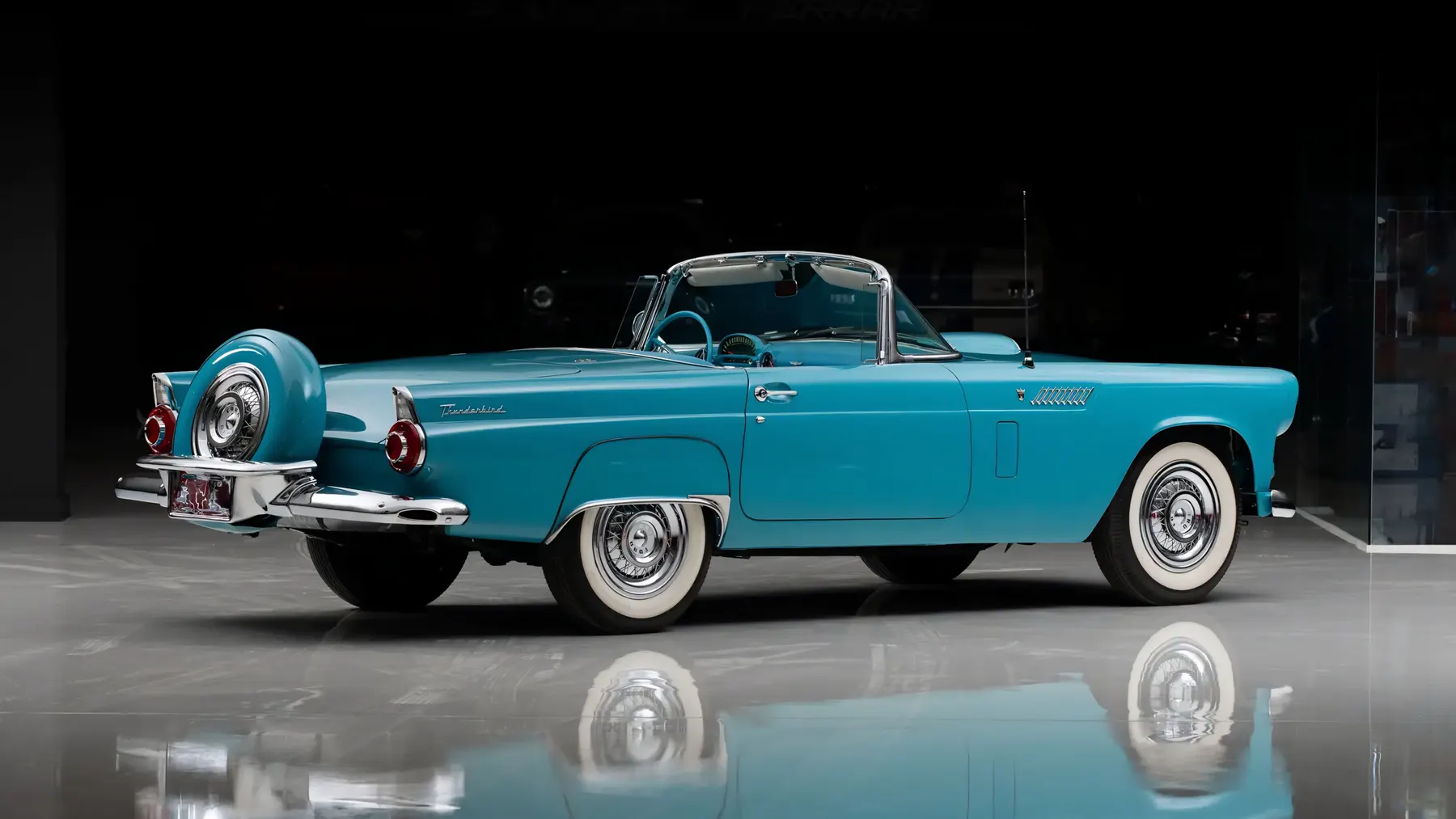
The Thunderbird didn’t remain static during its first generation. For 1956, Ford addressed owner feedback by increasing trunk space and mounting the spare tire externally in a “Continental kit” configuration. Distinctive “porthole” windows were added to the hardtop as a no-cost option to improve rear-quarter visibility. Power increased with the optional 312-cubic-inch (5.1-liter) Y-block V8 that produced up to 225 horsepower.
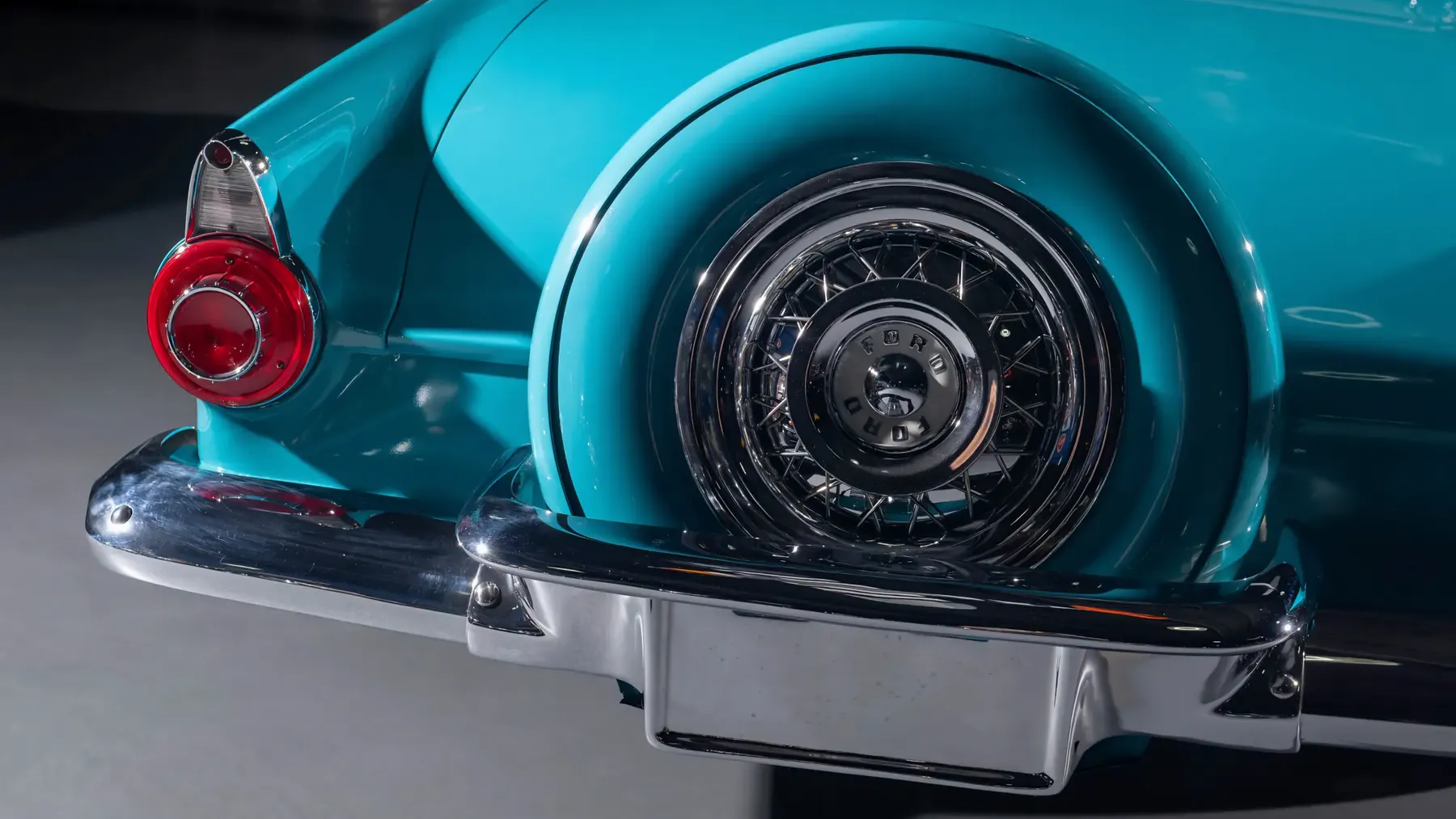
The 1957 model year brought more significant changes, including a reshaped front bumper, larger grille, tailfins, and larger tail lamps. The 312-cubic-inch V8 became standard equipment, now rated at 245 horsepower, with optional versions available including a Holley four-barrel carburetor setup or even a Paxton supercharged variant producing an impressive 300 horsepower.
The Thunderbird’s market impact was immediate and profound. While Ford had initially planned to build just 10,000 units, the overwhelming public response led to a production total of 16,155 for the 1955 model year. This success was particularly striking when compared to Chevrolet’s struggling Corvette, which sold just 674 units that same year.
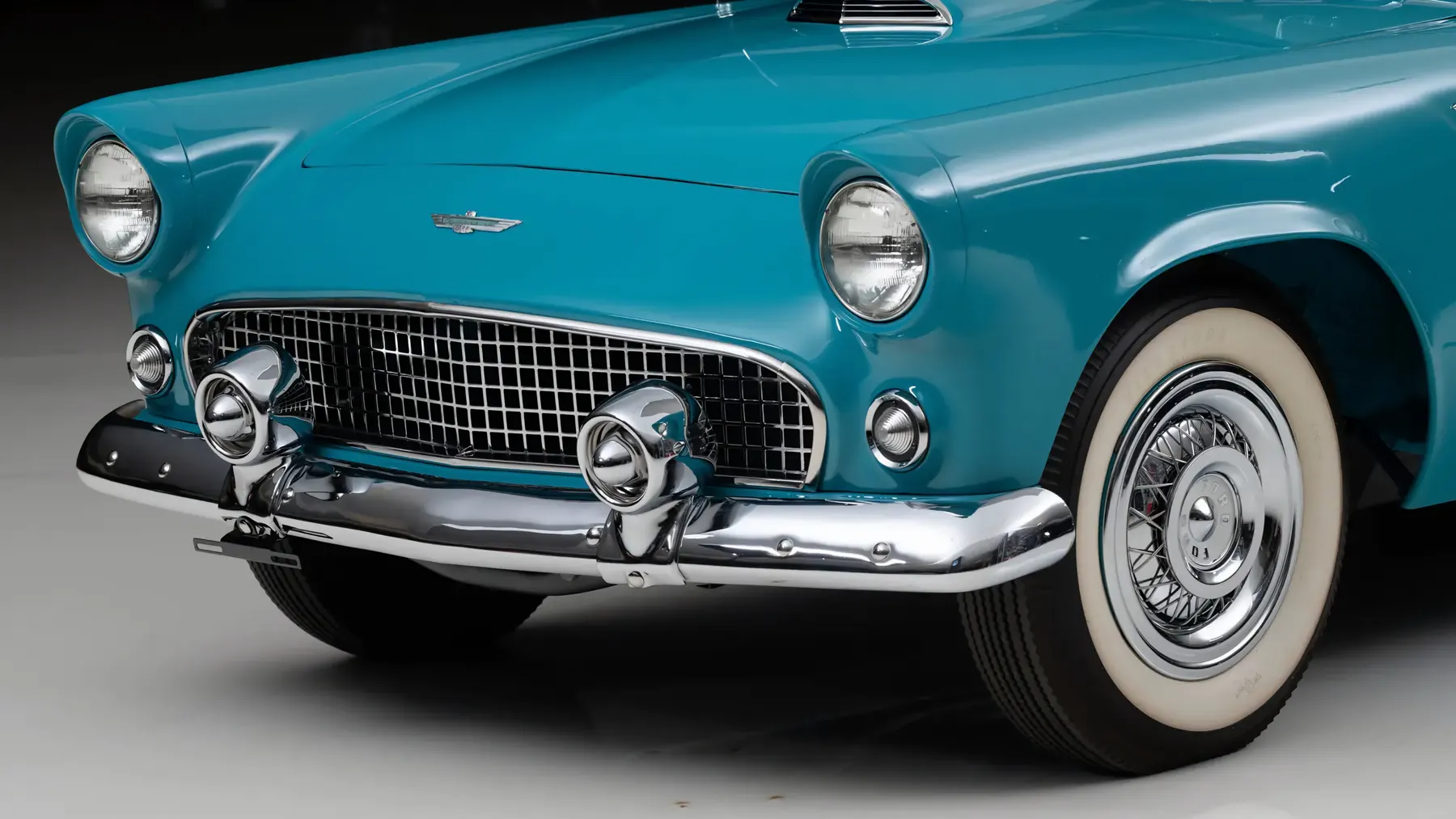
The Thunderbird quickly became a celebrity favorite. Clark Gable was photographed cruising Hollywood in his 1955 model, while Marilyn Monroe owned a 1956 Thunderbird painted in Sunset Coral. This association with Hollywood royalty only enhanced the car’s status as a symbol of American success and style.
Production for the first generation totaled 53,166 units across three years: 16,155 in 1955, 15,631 in 1956 (the lowest of the three years), and 21,380 in 1957. While these numbers weren’t staggering by mass-market standards, they represented a remarkable success for what was essentially a niche vehicle.
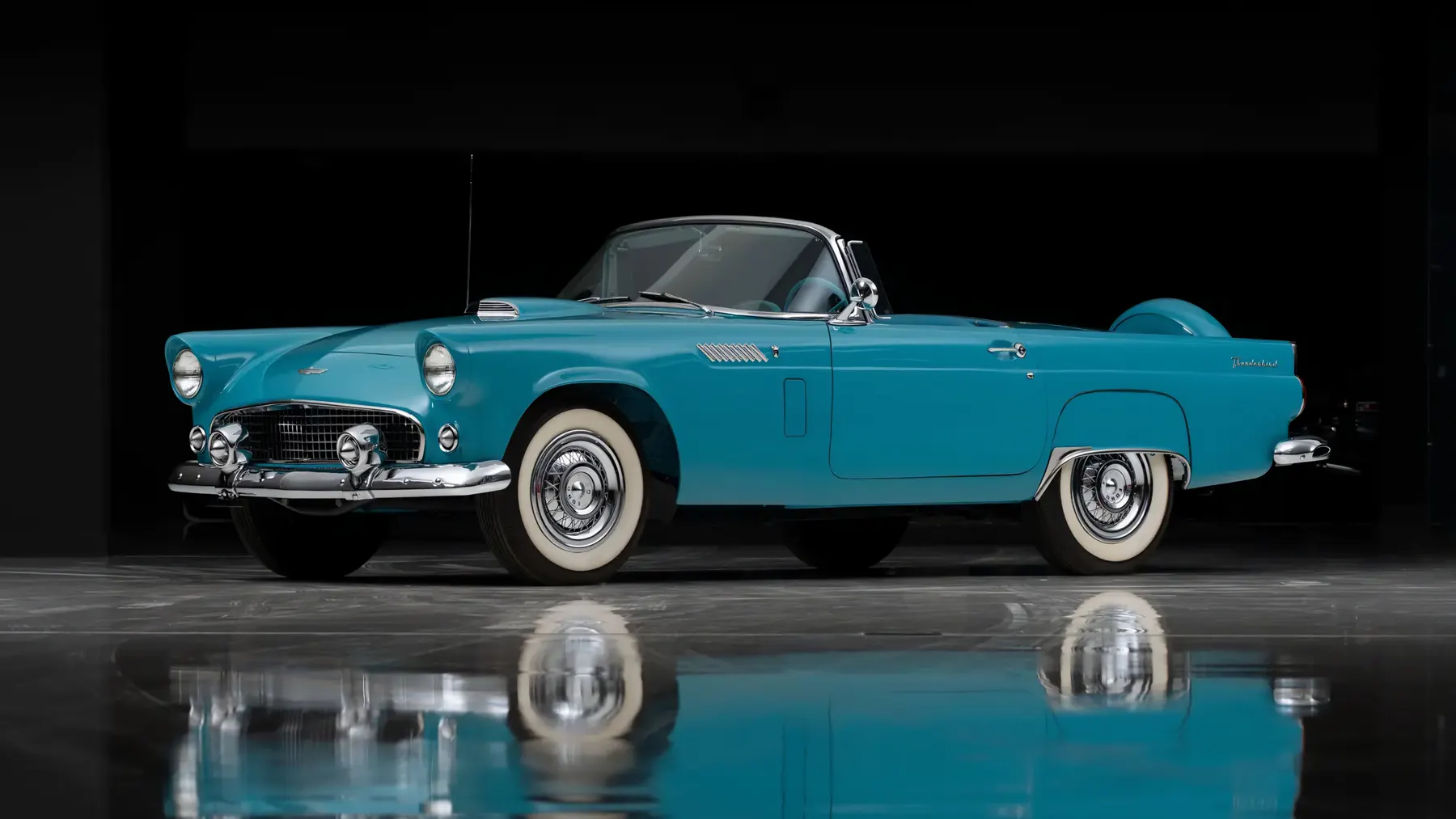
Perhaps the Thunderbird’s greatest achievement was creating an entirely new market segment. By emphasizing luxury and comfort alongside performance, Ford established what would come to be known as the “personal luxury car” category. This approach proved prescient-in 1958, Ford would expand the Thunderbird to include rear seats, further emphasizing its luxury credentials and setting the pattern for personal luxury cars for decades to come.
Today, first-generation Thunderbirds remain highly sought-after collector’s items, cherished for their timeless design, historical significance, and the pure joy they bring to driving enthusiasts. The “Little Birds,” as enthusiasts affectionately call them, represent a pivotal moment in American automotive history when Ford brilliantly identified and filled a market niche that even they didn’t fully recognize existed.
The Thunderbird wasn’t just a successful product-it was a cultural touchstone that helped define an era of American prosperity, confidence, and style. In creating this remarkable automobile, Ford didn’t just build a car; they created an enduring icon that continues to capture our imagination nearly seven decades after its introduction.